
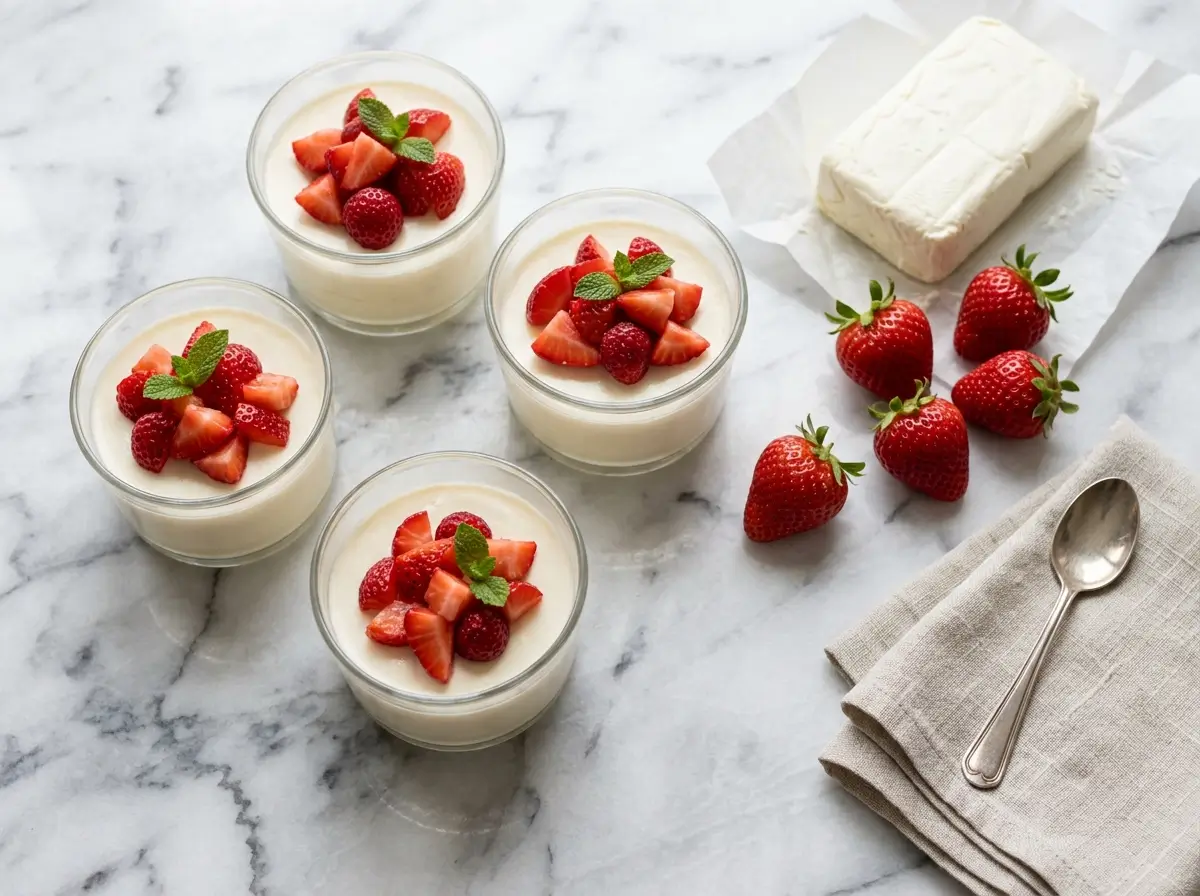
Sugar-free cheesecake jello is having a moment — it’s the dessert that tastes like cheesecake, sets like jello, and skips the sugar entirely. But if you’ve tried the boxed-mix versions, you already know the problem: they turn out grainy, they don’t fully set, or they taste like the artificial sweetener rather than cheesecake. The fix isn’t a better packet. It’s understanding how gelatin and dairy actually work together.
This guide does it from scratch. As a site built around gelatin, we’ll show you the method that gives you a clean, creamy set every time, how to keep it genuinely sugar-free without the aftertaste, and the one mixing step that stops the graininess for good.
⚕️ Medical Disclaimer: This article is for informational purposes only and does not constitute medical advice. The recipes and ideas shared here are not designed to treat, prevent, or cure any condition. If you are pregnant, breastfeeding, taking medication, or managing a health condition — including diabetes — speak with a licensed healthcare provider before changing your diet.
Why Make It From Scratch Instead of a Box?
Boxed sugar-free jello and no-bake cheesecake mixes are convenient, but they hand you three problems you can’t fix once they’re in the box: a fixed sweetener you may not like the taste of, a set strength you can’t adjust, and fillers that often cause the grainy texture people complain about. Making it from unflavored gelatin puts all three back in your control — you choose the sweetener, you dial the set, and you skip the fillers.
There’s also the protein angle. Plain gelatin is nearly pure protein — about 6 to 7 grams per tablespoon — so a from-scratch cheesecake jello starts with a protein base a boxed mix doesn’t have. If you want the full breakdown, we cover it in our guide on does gelatin have protein.
The Base Recipe
This is your reliable foundation. It sets clean because the gelatin ratio is dialed in, and it tastes like cheesecake because of the dairy base — not a flavor packet.
Ingredients
- 1 tablespoon (7g) unflavored gelatin powder (Knox, or beef gelatin for a pork-free version)
- ¼ cup cold water, for blooming
- ¾ cup milk (whole or 2% for the creamiest result)
- 8 oz cream cheese, softened to room temperature
- ½ cup plain Greek yogurt, at room temperature
- Sweetener of choice, to taste (see the sweetener section below)
- 1 teaspoon vanilla extract
- 1 teaspoon lemon juice (for that signature cheesecake tang)
- Pinch of salt
Instructions
- Bloom the gelatin. Sprinkle the gelatin evenly over the cold water. Let it sit 5 minutes until it looks like wrinkled gel.
- Warm the milk. Heat the milk until hot but not boiling. Pour it over the bloomed gelatin and whisk 30–60 seconds until fully dissolved and clear.
- Cool it to lukewarm — the anti-grain step. Let the gelatin-milk mixture cool at room temperature until it’s lukewarm, about 10 minutes. Adding it hot to the cream cheese is what causes graininess.
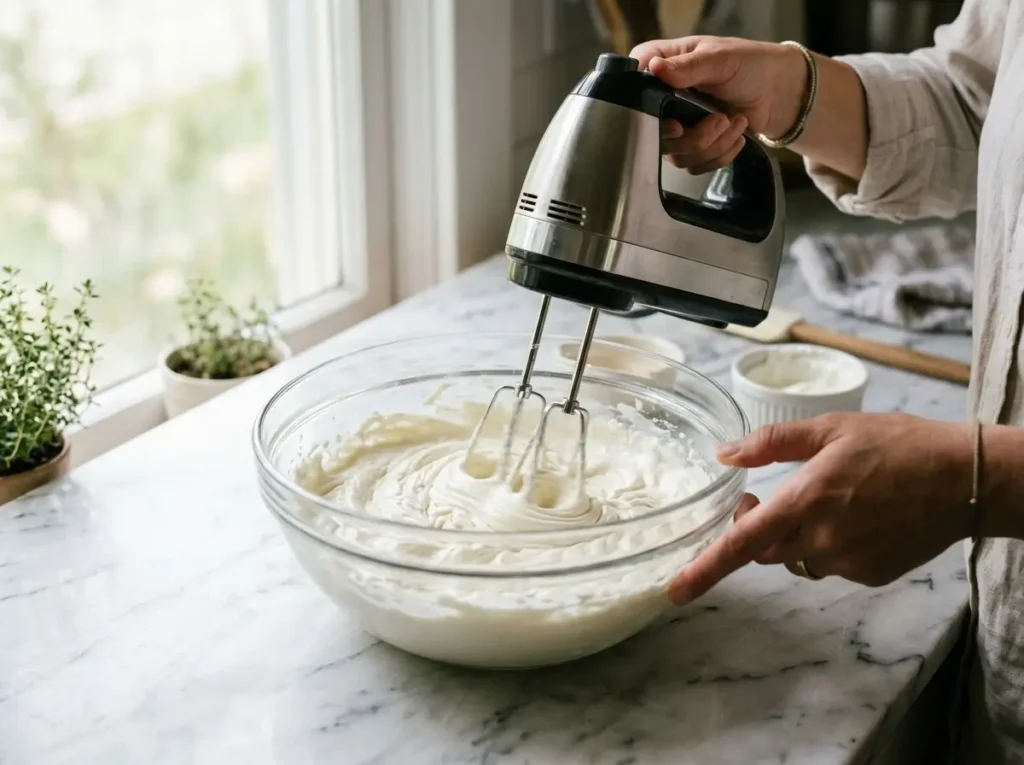
- Blend the cheesecake base. In a blender or with a hand mixer, blend the room-temperature cream cheese, Greek yogurt, sweetener, vanilla, lemon juice, and salt until completely smooth.
- Combine. With the blender running (or mixer going), slowly pour in the lukewarm gelatin-milk mixture and blend until fully incorporated and silky.
- Pour and chill. Divide into cups or a dish. Refrigerate at least 4 hours, or overnight for the cleanest set.
Why Sugar-Free Cheesecake Jello Turns Grainy or Won’t Set
Here’s what the boxed-mix recipes never explain — and the reason so many sugar-free versions come out wrong.
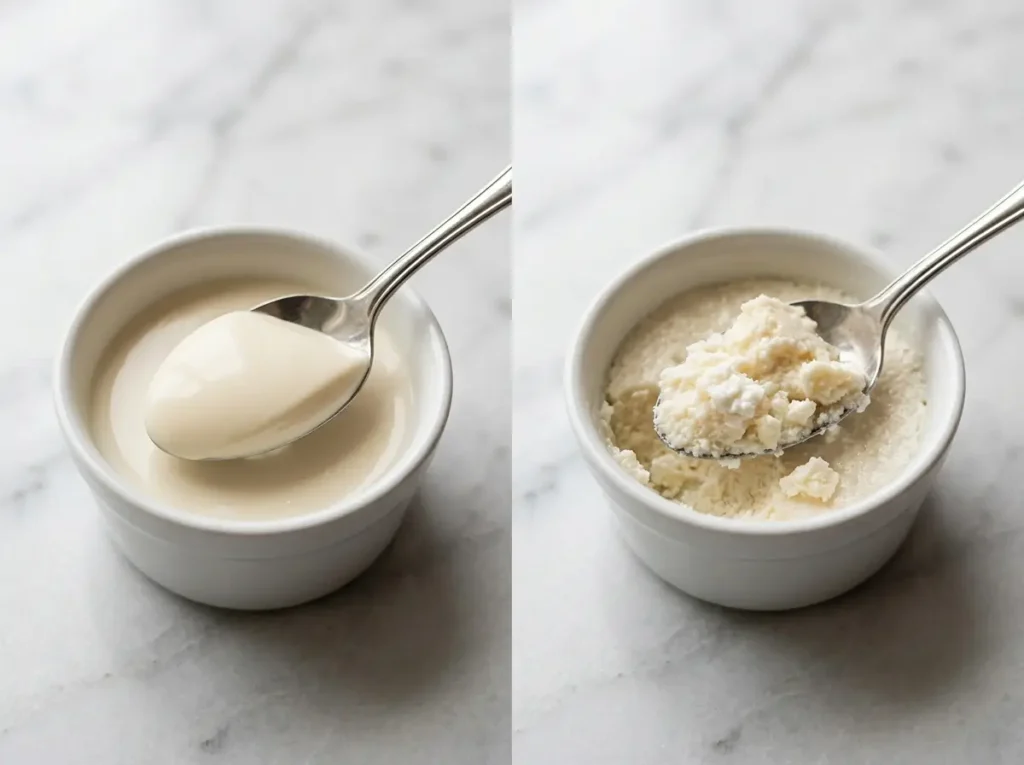
Graininess is a temperature problem. When hot gelatin liquid hits cold cream cheese, the fat and proteins seize instead of blending, leaving a grainy, curdled texture. The fix is the same principle that matters in any dairy-gelatin dessert: bring both to a moderate temperature. Let the gelatin mixture cool to lukewarm and let the cream cheese soften to room temperature before combining. Blending — rather than hand-whisking — also breaks up any last lumps for a truly silky finish.
The “won’t set” problem usually comes from too much liquid or too much acid. Cream cheese and Greek yogurt add moisture, and the lemon juice adds acid — both can weaken the gelatin’s grip if you overdo them. Stick to the ratio: 1 tablespoon of gelatin sets roughly 2 cups of total liquid and soft dairy. Keep the lemon to about a teaspoon; more than that lowers the pH enough to soften the set. The same gelling principles apply across every gelatin dessert — our panna cotta recipe walks through the ratio science in a cream-based context.
A few more set-killers to avoid:
- Fresh pineapple, kiwi, mango, papaya, or figs in a topping. Their enzymes break down gelatin and stop it setting. Use canned or cooked versions instead.
- Cold dairy straight from the fridge. Always bring the cream cheese and yogurt to room temperature first.
- Skipping the blend. Hand-whisking cream cheese rarely gets it fully smooth — a blender or mixer is what gives you the cheesecake texture.
- Rushing the chill. Gelatin needs a minimum of 4 hours; overnight is more reliable.
Choosing a Sweetener (Without the Aftertaste)
This is where most sugar-free desserts fall down, and where from-scratch wins. Because you’re adding the sweetener yourself, you can pick one that suits your taste and avoid the metallic aftertaste boxed mixes are known for. The FDA maintains a list of approved non-nutritive sweeteners if you want to understand what each one is.
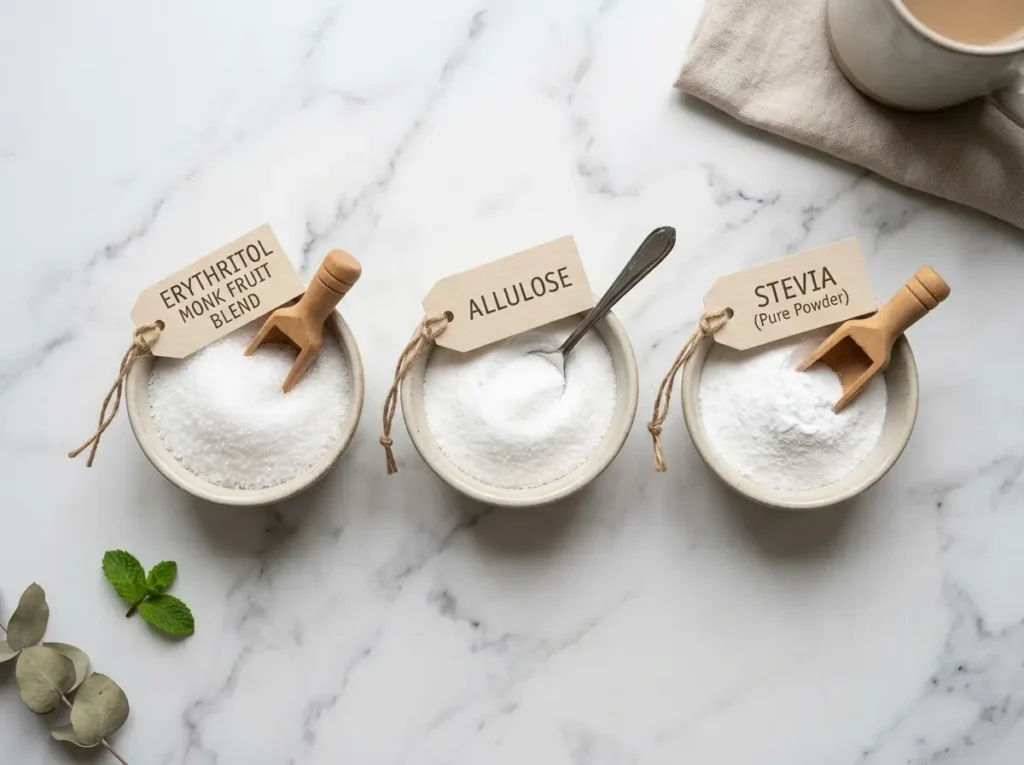
| Sweetener | Sugar / Calories | Notes for this recipe |
|---|---|---|
| Erythritol / monk fruit blend | 0g sugar, near-zero calorie | Clean taste, dissolves best when blended in — the most popular choice |
| Allulose | Near-zero net carbs | Dissolves smoothly, no cooling aftertaste, mild sweetness |
| Stevia | 0g sugar, zero calorie | Very concentrated — start small; can turn bitter if overused |
| Powdered form of any of the above | Same | Powdered dissolves more smoothly than granular in a no-cook base |
A practical tip: powdered sweeteners dissolve more cleanly than granular ones in a no-cook, blended base, which helps you avoid any gritty texture on top of the graininess we already solved.
Variations Worth Trying
Strawberry Cheesecake Jello. Blend a few fresh strawberries into the base, or spoon a sugar-free strawberry coulis over the top after it sets.
Higher-Protein Version. Increase the Greek yogurt and add a scoop of vanilla protein powder to the blend for a protein-forward dessert. If that’s your goal, our protein jello guide covers how to add protein without weakening the set. For more layered, creamy-style desserts built the same way, check out our layered jello cups.
Pumpkin Cheesecake Jello. Blend in a few tablespoons of pure pumpkin purée and a pinch of pumpkin spice for a fall version.
No-Dairy Version. Swap the cream cheese and yogurt for a thick coconut-based alternative. The set works the same, though the flavor leans coconut-cheesecake.
Make-Ahead & Storage
Sugar-free cheesecake jello is a strong make-ahead dessert. Keep it covered in the fridge for up to 5 days — cover each cup so it doesn’t absorb other fridge flavors.
Do not freeze it. Freezing breaks the gelatin structure and the dairy separates on thawing, leaving a grainy, watery result.
Print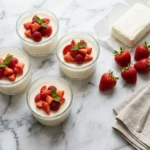
Sugar-Free Cheesecake Jello (The Creamy Version That Actually Sets)
- Total Time: 4 hours 15 minutes
- Yield: 6 servings 1x
Description
Creamy sugar-free cheesecake jello made from scratch with unflavored gelatin — no added sugar, no boxed mix, and it sets clean every time.
Ingredients
- 1 tablespoon (7g) unflavored gelatin powder
- ¼ cup cold water, for blooming
- ¾ cup milk (whole or 2%)
- 8 oz cream cheese, softened to room temperature
- ½ cup plain Greek yogurt, at room temperature
- Sweetener of choice, to taste
- 1 teaspoon vanilla extract
- 1 teaspoon lemon juice
- Pinch of salt
Instructions
- Sprinkle the gelatin evenly over the cold water. Let it bloom for 5 minutes until it looks like wrinkled gel.
- Heat the milk until hot but not boiling. Pour it over the bloomed gelatin and whisk 30–60 seconds until fully dissolved and clear.
- Let the gelatin-milk mixture cool at room temperature until lukewarm, about 10 minutes. This prevents graininess.
- Blend the room-temperature cream cheese, Greek yogurt, sweetener, vanilla, lemon juice, and salt until completely smooth.
- With the blender running, slowly pour in the lukewarm gelatin-milk mixture and blend until silky.
- Divide into cups or a dish. Refrigerate at least 4 hours, or overnight for the cleanest set.
Notes
Bring the cream cheese and yogurt to room temperature and cool the gelatin mixture to lukewarm before combining — this is what prevents graininess.
Powdered sweeteners dissolve more smoothly than granular in a no-cook base.
Avoid fresh pineapple, kiwi, mango, papaya, or figs in toppings — their enzymes stop gelatin from setting.
Do not freeze — freezing breaks the gelatin structure and the dairy separates on thawing.
Store covered in the fridge for up to 5 days.
- Prep Time: 15 minutes
- Category: Dessert
- Method: No-Bake
- Cuisine: American
Nutrition
- Serving Size: 1 serving
- Calories: 120
- Sugar: 3g
- Sodium: 130mg
- Fat: 9g
- Carbohydrates: 4g
- Protein: 5g
Keywords: sugar free cheesecake jello, keto cheesecake jello, no sugar cheesecake, cheesecake jello
Frequently Asked Questions
Is sugar-free jello OK for people with diabetes?
Sugar-free jello made with non-nutritive sweeteners is lower in sugar and carbohydrates than the regular version, which is why some people managing blood sugar choose it. According to Mayo Clinic, most artificial sweeteners don’t affect blood sugar, though some research suggests regularly eating a lot of artificially sweetened foods instead of sugar may not be as helpful as once thought. That said, individual needs vary and this isn’t medical advice — if you’re managing diabetes, talk with your healthcare provider or a registered dietitian about how a specific dessert fits your plan.
How do you make sugar-free cheesecake jello without it tasting artificial?
Two things help most: choosing a cleaner-tasting sweetener like an erythritol–monk fruit blend or allulose rather than saccharin-based ones, and using real cream cheese and vanilla for genuine cheesecake flavor. From-scratch has the edge because you control the sweetener instead of being stuck with whatever the box uses.
Why is my cheesecake jello grainy?
Almost always because hot gelatin liquid met cold cream cheese, causing the dairy to seize. Cool the gelatin mixture to lukewarm, bring the cream cheese to room temperature, and blend rather than hand-whisk. Do those three things and the texture turns silky.
Can I make it without cream cheese?
Yes — you can use all Greek yogurt or blended cottage cheese for a lighter, tangier version. It won’t be quite as rich, but it sets the same way and bumps up the protein.
How much gelatin do I need for it to set firm?
One tablespoon of gelatin sets roughly 2 cups of total liquid and soft dairy for a soft, spoonable set. For a firmer, sliceable cheesecake texture, increase to 1½ tablespoons — but don’t go overboard, or you lose the creamy mouthfeel.
Can I use a sugar-free jello packet instead of unflavored gelatin?
You can, but you give up the control that makes the from-scratch version better — the sweetener is fixed, the set strength isn’t adjustable, and packet fillers are a common cause of graininess. Unflavored gelatin plus your own sweetener gives a cleaner result.
The Bottom Line
Sugar-free cheesecake jello lives or dies on two things: keeping it genuinely sugar-free without the aftertaste, and getting a smooth, clean set. Both come down to going from scratch — your sweetener, your ratio, and the lukewarm-plus-blend method that stops the graininess the boxed versions can’t. Do that, and you get a creamy, cheesecake-flavored dessert with zero added sugar that holds in the fridge all week.