
By Hannah Bell | jelloandwellness.com | Updated October 2026
| Medical Disclaimer This article is for informational purposes only and does not constitute medical advice. The recipes and ideas shared here are not designed to treat, prevent, or cure any condition. If you are pregnant, breastfeeding, taking medication, or managing a health condition, speak with a licensed healthcare provider before changing your diet. |
Does gelatin have protein? Yes. Plain unflavored gelatin has about 6 to 7 g of protein per tablespoon (7 g), with no carbs and no fat. Does Jell-O have protein? Only a little: a serving of the flavored mix has about 2 g (1 g for the zero-sugar version), because most of the box is sugar or sweetener.
| Product (per serving) | Calories | Protein | Sugars |
| Plain gelatin, 1 tbsp (7 g) | 25–35 | 6–7 g | 0 g |
| Jell-O Strawberry (¼ of the box) | 90 | 2 g | 19 g |
| Jell-O Zero Sugar Strawberry (¼ of the box) | 10 | 1 g | 0 g |
Sources: Jell-O product labels as listed by Stop & Shop and Food Lion; plain gelatin from USDA FoodData Central, below.
This guide covers the exact protein count, the amino acid profile, what WebMD and the NIH say about daily intake, and the smartest ways to add gelatin to your routine without overclaiming what it can or cannot do.
Does Gelatin Have Protein? The Short Answer
Yes. According to the USDA FoodData Central, dry gelatin powder is roughly 85–90% protein by weight, with the remaining percentage being water and trace minerals. Every calorie in plain gelatin comes entirely from protein — there is no fat, no sugar, no carbohydrate.
Here’s what 1 tablespoon (7g) of plain, unflavored gelatin powder typically delivers:
| Nutrient | Per 1 tbsp (7g) plain gelatin powder |
| Calories | 25–35 kcal |
| Protein | 6–7g |
| Carbohydrates | 0g |
| Fat | 0g |
| Sugar | 0g |
| Sodium | ~10mg |
| Dominant amino acids | Glycine, Proline, Hydroxyproline |
Sources: USDA FoodData Central; WebMD Nutrition Review (Jan 2025)
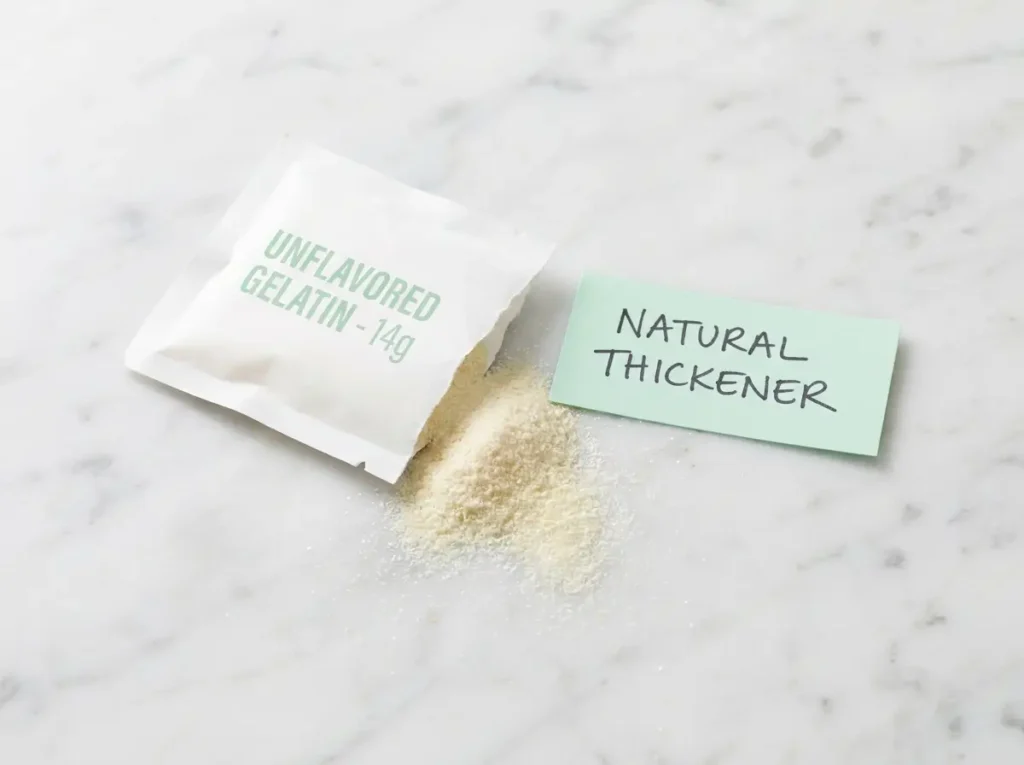
A standard Knox unflavored gelatin envelope (about 7g) delivers around 6–7g of protein — roughly the same as one large egg white. If you are curious where it comes from, see how gelatin is made, from collagen to powder.
What Kind of Protein Is in Gelatin?
Gelatin protein comes from collagen — the structural protein found in animal bones, skin, and connective tissue.Medical News Today has a detailed overview of gelatin’s health profile if you want the fuller picture before choosing a vegan substitute.
- Glycine — the most abundant amino acid in gelatin; a PubMed study links it to gut lining support and sleep quality
- Proline — plays a role in skin elasticity and joint cartilage repair
- Hydroxyproline — unique to collagen-based proteins; not found in plant foods or standard muscle meat
Gelatin is nearly a complete protein, containing 8 of the 9 essential amino acids. The only one it lacks is tryptophan — which means gelatin works best as a protein booster alongside other sources, not as your sole protein. This is especially relevant if hitting daily protein targets while eating lighter is a priority for you.
Gelatin vs. Collagen Peptides: Which Has More Protein?
People often confuse gelatin with collagen peptides (hydrolyzed collagen). Both come from the same collagen source but behave differently in the kitchen — and collagen peptides edge out gelatin slightly on protein per tablespoon. Healthline covers the full breakdown.
| Gelatin (plain powder) | Collagen Peptides | |
| Protein per tbsp | 6–7g | 9–10g |
| Dissolves in cold water | No | Yes |
| Gels when chilled | Yes | No |
| Best use | Jello, gummies, panna cotta | Smoothies, coffee, drinks |
| Price range | $ | $$–$$$ |
Gelatin gels when chilled — it’s what makes jello set. Collagen peptides dissolve in cold water and don’t gel. Both provide collagen-derived protein with a similar amino acid profile. For jello and gummies use gelatin; for smoothies and coffee use collagen peptides.
Does Flavored Jello Have Protein?
The protein content of jello depends entirely on the product.
Plain unflavored gelatin powder (Knox, Great Lakes, etc.)
- 6–7g protein per tablespoon — zero sugar, zero additives, best for high-protein cooking
Great Lakes Beef Gelatin is a popular halal-certified option; see our beef gelatin benefits article for a full brand comparison
Flavored jello mix (Jell-O brand, store generics)
- ~2g protein per serving — contains sugar, artificial colors, and flavors
- Regular Jell-O (strawberry): 90 calories and 19 g of sugar per serving (¼ of the box)
Sugar-free jello mix
- about 1g protein per serving and 10 calories, with no sugar
Bottom line: plain unflavored gelatin gives you 3–4x more protein per gram than a flavored jello mix. The Mayo Clinic recommends prioritizing minimally processed protein sources — plain gelatin fits that profile far better than a sweetened packet.
Is Gelatin Good for Weight Loss?
Research does suggest that high-protein, low-calorie foods may support satiety. A study indexed on PubMed found that glycine-rich proteins may slow gastric emptying, helping people feel full longer.
- Gelatin has roughly 25–35 calories per tablespoon — far fewer than most protein powders
- Some bariatric surgery programs use plain gelatin as a post-op protein source during the liquid and puree stages, as part of a broader physician-guided nutrition plan
- Gelatin contains zero carbohydrates, making it compatible with low-carb and ketogenic eating plans
- The NIH notes that up to 10g of gelatin per day for up to six months appears safe for most healthy adults
What gelatin will not do: it will not melt fat, it cannot replace a balanced diet, and it is not comparable to GLP-1 medications. People use it for protein support within a balanced plan. Cleveland Clinic has a useful overview on dietary protein and satiety if you want the full science.
How to Use Gelatin to Boost Daily Protein
The simplest way to get gelatin’s protein without a complicated recipe:
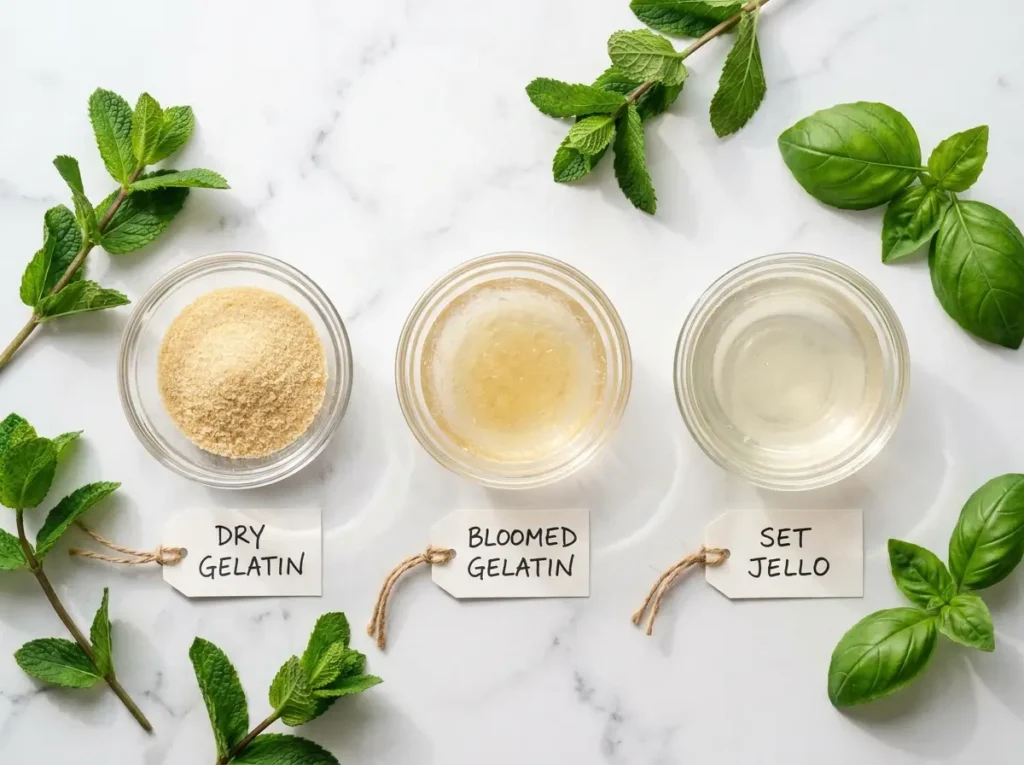
- Bloom 1 tbsp plain gelatin in 2 tbsp cold water for 5 minutes
- Heat until just dissolved — do not boil
- Stir into broth, soup, smoothie, or sugar-free jello mix
- Enjoy 6–7g of added collagen protein in under 10 minutes
High-Protein Gelatin Ideas for the Week
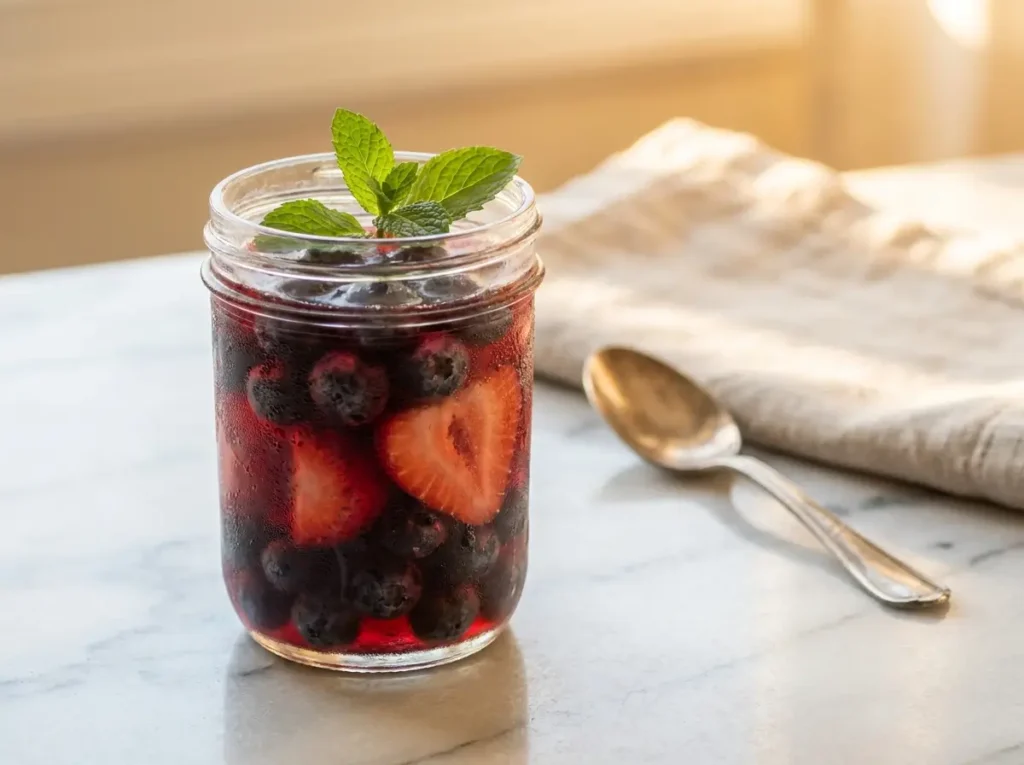
- Greek yogurt gelatin cups — set Greek yogurt with bloomed gelatin and berries for 15g+ protein per cup
- Bone broth gelatin shots — add 1 tbsp gelatin to 1 cup warm bone broth for a clean savory collagen boost
- Protein jello fluff — sugar-free jello + plain gelatin + light whipped topping, whipped into a light protein-rich treat
- Cottage cheese gelatin mold — layers of cottage cheese and fruit set in plain gelatin
Frequently Asked Questions
Is gelatin a complete protein?
Gelatin contains 8 of the 9 essential amino acids. The one missing is tryptophan. Harvard Health explains that pairing incomplete proteins with complementary sources like eggs, dairy, or lean meat builds a full amino acid profile throughout the day.
How much protein is in a full packet of Knox gelatin?
One Knox unflavored gelatin envelope (7g) delivers 6–7g of protein for approximately 25 calories — zero fat, zero carbs, zero added sugars. For recipes using multiple envelopes, the protein scales linearly: two packets = 12–14g protein.
Does Jell-O have protein?
Yes, but very little. A serving of prepared Jell-O (a quarter of the box) has roughly 2g of protein and 90 calories, most from sugar. Zero-sugar Jell-O has about 1g protein and 10 calories. Plain unflavored gelatin powder provides 3–4x more protein per gram.
Is beef gelatin higher in protein than pork gelatin?
The protein content is nearly identical — both sit in the 85–92% protein range by dry weight. The main difference is source and gelling strength. Beef gelatin is generally halal-certified and slightly firmer. For a pork-free household, Great Lakes beef gelatin is a popular choice. We go deeper in our beef gelatin benefits article.
How much gelatin is safe to eat per day?
According to the National Institutes of Health, consuming up to 10 grams of gelatin per day for up to six months appears safe for most healthy adults. Check with your healthcare provider if you have a pre-existing condition.
Can vegans eat gelatin?
No — gelatin is derived from animal collagen and is not vegan or vegetarian. The closest plant-based alternatives are agar-agar (from red algae) and pectin (from fruit skin). Our guide to gelatin substitutes breaks down agar-agar and other vegan options in detail.
More Gelatin Recipes on JelloAndWellness
Start with our complete gelatin wellness guide — it covers every format, brand, and use case in one place. You might also enjoy our gelatin water recipe, the recipe for gelatin weight loss, and the pink gelatin drink recipe with hibiscus — visually stunning and high on Pinterest saves.
About Hannah Bell
Hannah Bell is the founder of JelloAndWellness.com, a recipe and wellness site focused on gelatin, jello desserts, and everyday wellness drinks. She tests every recipe in her home kitchen and cites peer-reviewed and clinical sources when discussing nutrition.