
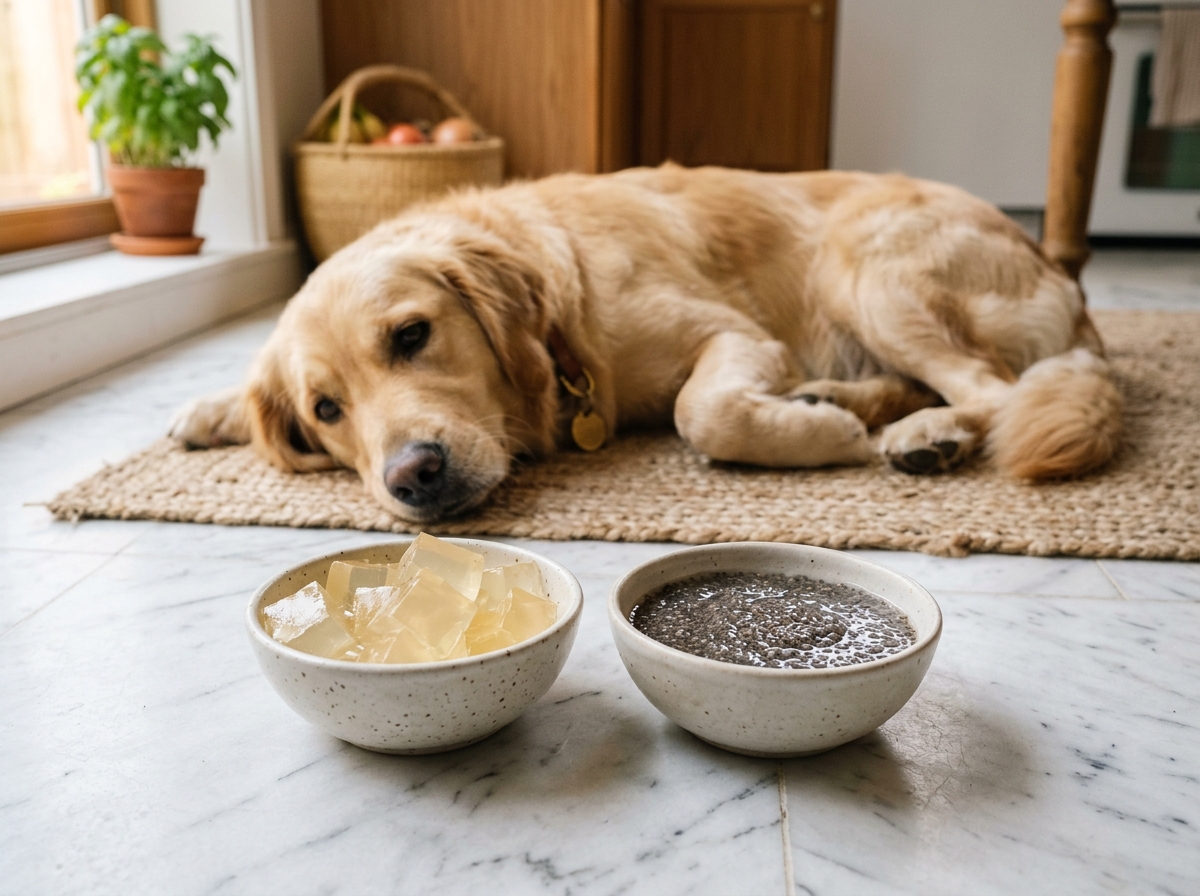
⚠ Pet Safety Disclaimer: This article is for informational purposes only and is not a substitute for veterinary advice. Always consult your veterinarian before introducing any new food to your dog’s diet, especially if your dog has an existing health condition, allergies, or is on medication.
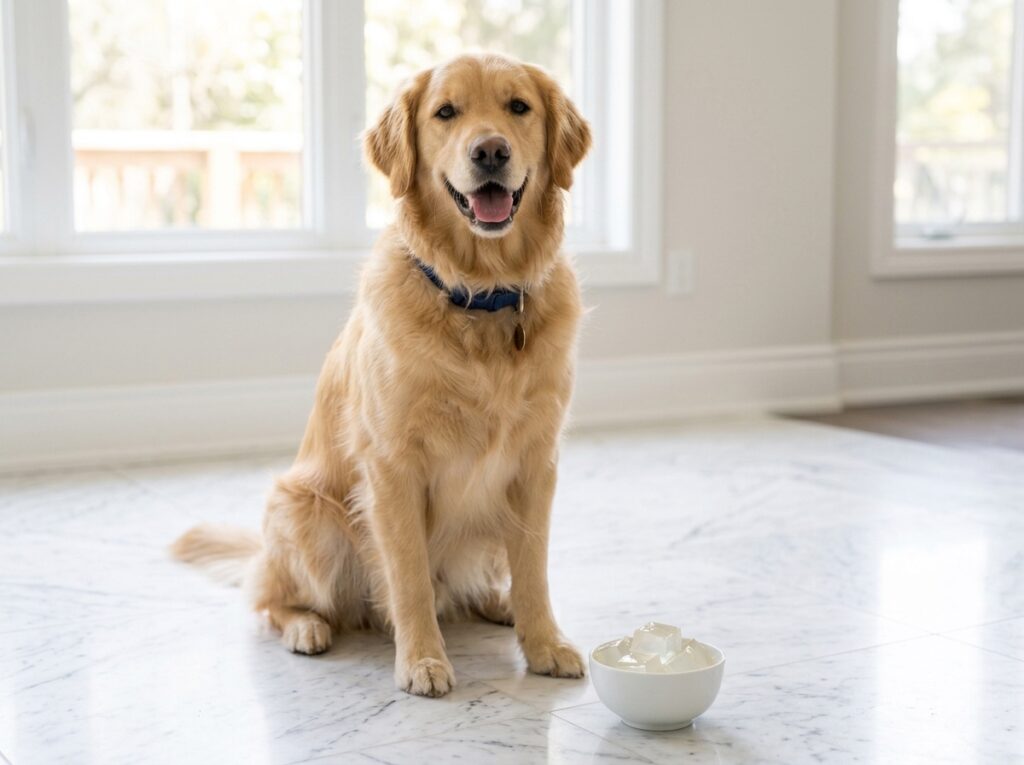
Can dogs have gelatin? Short answer: yes, plain unflavored gelatin is generally safe for dogs in moderation, and the same goes for chia seeds if you prepare them properly. Since both ingredients show up constantly on this site, this is the question I get asked most often — usually from someone wondering if they can share a bite of their own gelatin snack or chia pudding with their dog.
Here’s what’s actually true about both, what to watch out for, and how to serve them safely if you decide to share.
Quick Answer
Can dogs have gelatin? Yes, plain unflavored gelatin is non-toxic and generally considered safe for dogs in small amounts. The concern isn’t gelatin itself — it’s what’s mixed into it. Flavored, store-bought Jello and gelatin desserts are not recommended.
Is Gelatin Safe for Dogs?
Plain, unflavored gelatin — the same kind used in most recipes on this site — is non-toxic to dogs. It’s essentially hydrolyzed collagen, made up of amino acids like glycine and proline. Some owners use small amounts as an occasional supplement, since collagen-derived ingredients are sometimes associated with joint and skin support in dogs, though the evidence for a strong effect is mixed and depends heavily on a dog’s overall diet. To see what gelatin is made of, read does gelatin have protein.
If you want to try it, the safest approach is plain gelatin dissolved in water, with no sugar, flavoring, or sweetener added — essentially the base of our how gelatin is made guide, without any of the flavored add-ins.
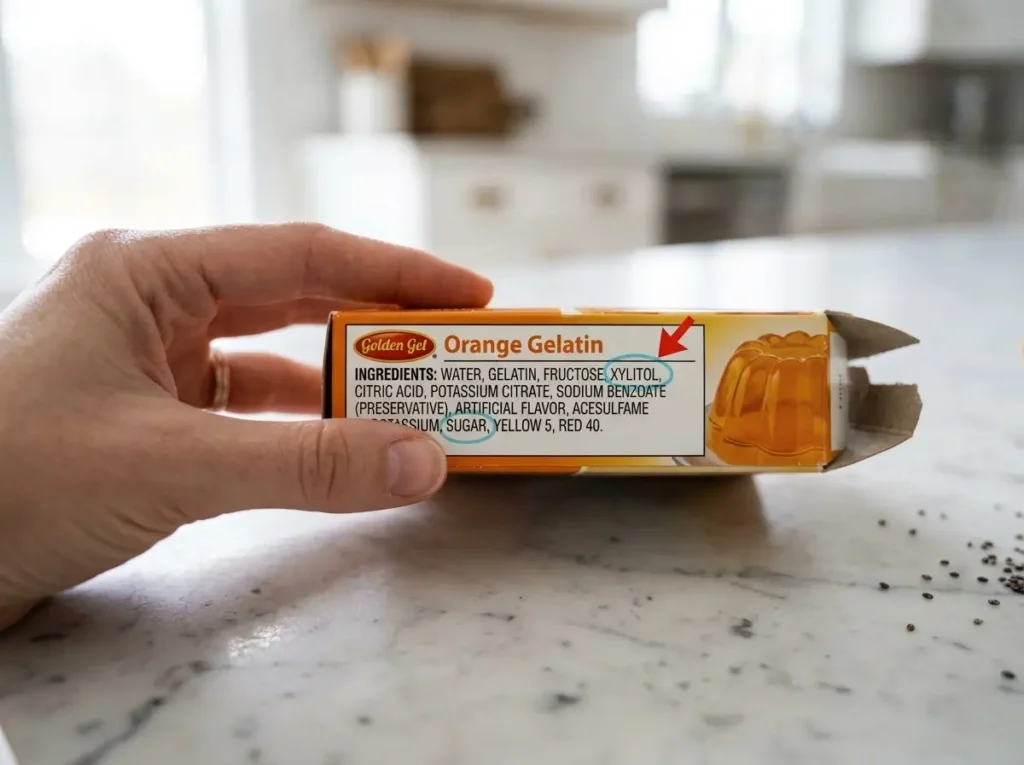
What’s NOT Safe: Flavored Jello and Store-Bought Gelatin Desserts
This is the part that actually matters for safety. Flavored gelatin desserts, including most boxed Jello, are not a good choice for dogs — not because of the gelatin, but because of everything else in the mix:
- High sugar content, which isn’t appropriate for regular canine consumption
- Artificial sweeteners — critically, some sugar-free gelatin products contain xylitol, which is highly toxic to dogs even in small amounts and can cause a rapid, dangerous drop in blood sugar
- Artificial colors and flavorings that offer no nutritional benefit and can cause stomach upset
Always check the label before sharing any flavored product, and when in doubt, stick to plain gelatin you prepare yourself.
Can Dogs Have Chia Seeds?
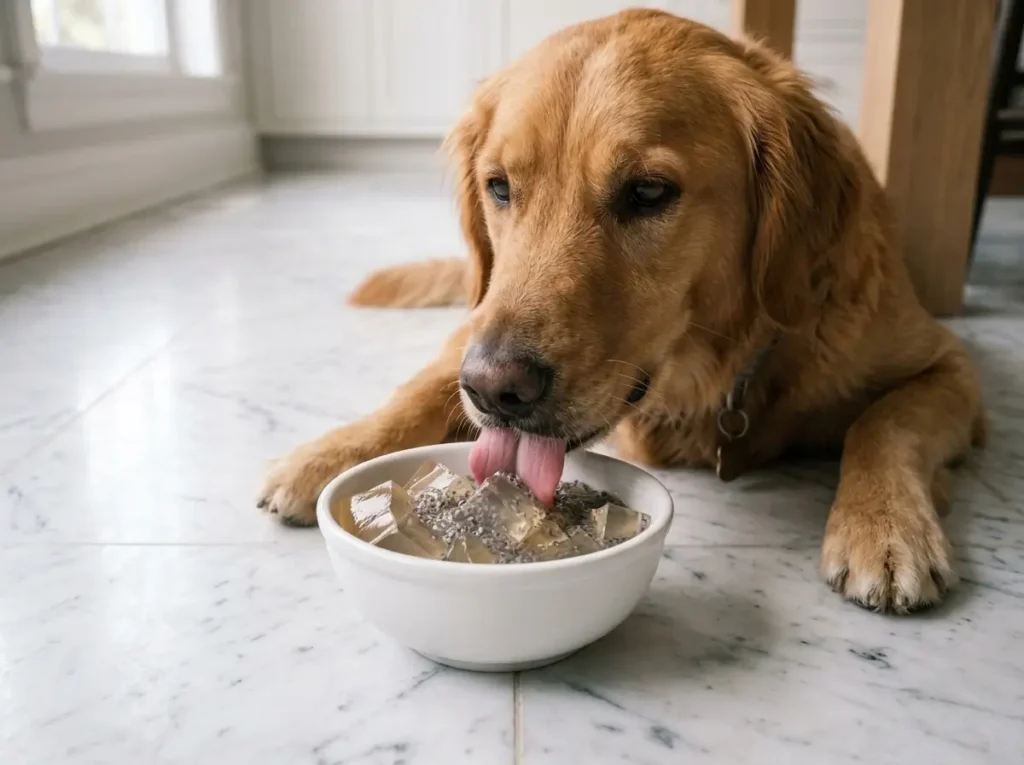
Yes, chia seeds are also generally safe for dogs in small amounts, with one important preparation step: soak them first. Dry chia seeds absorb many times their weight in liquid, which means they can continue expanding after your dog swallows them — a real choking and intestinal blockage risk if fed dry. Soaking them in water for at least 10–30 minutes before serving softens them and removes that risk. If you’re curious how soaked chia works for people, see our chia seed water benefits guide.
- Start with a very small amount, especially the first time
- Always soak chia seeds in water before serving — never feed them dry
- Provide plenty of fresh water alongside them, since the fiber content is high
- Watch for mild stomach upset or, rarely, an allergic reaction after the first serving
Which Dogs Should Avoid These Ingredients
Dogs with certain health conditions — including pancreatitis, existing digestive sensitivities, or food allergies — may not tolerate gelatin or chia seeds well. If your dog is on a specialized diet, takes medication, or has a known health condition, check with your veterinarian before adding either ingredient, even in small amounts.
Gelatin vs. Chia Seeds for Dogs, at a Glance
| Plain Gelatin | Chia Seeds | |
| Generally safe? | Yes, in moderation | Yes, in moderation |
| Prep needed | Dissolve in water, no additives | Soak in water 10–30 min before serving |
| Main risk | Flavored/sweetened versions (xylitol risk) | Choking or blockage if fed dry |
| Vet check first? | Recommended, especially for dogs with health conditions | Recommended, especially for dogs with health conditions |
Frequently Asked Questions
Can dogs eat Jello?
Plain, unflavored gelatin is fine in small amounts, but flavored Jello is not recommended due to sugar, artificial sweeteners, and coloring — always check the label first.
How much gelatin can I give my dog?
There’s no universally agreed dose, and it varies by your dog’s size and health. Ask your veterinarian for a specific amount rather than guessing.
Can dogs have chia seeds every day?
Small, occasional amounts are generally considered fine for most healthy dogs, but daily feeding should really be discussed with your vet, especially for smaller dogs where portion control matters more.
What happens if a dog eats dry chia seeds?
Dry chia seeds can continue absorbing liquid in the digestive tract, which may pose a choking or blockage risk, particularly in smaller dogs. If your dog eats a significant amount of dry chia seeds, contact your veterinarian.