
Is gelatin halal? The honest answer is: it depends entirely on the source and, just as importantly, on how it was certified. This is a different question from simply asking whether gelatin contains pork — a gelatin can be pork-free and still not be considered halal, depending on how the animal was slaughtered and processed.
This guide focuses specifically on the religious compliance side: what makes gelatin halal (not just pork-free), why scholars disagree on one key point, and how to actually verify a product rather than guessing from the label.
Quick Answer
Is gelatin halal? Only when it comes from a halal-certified source. Gelatin from a halal-slaughtered animal (usually beef) or from fish is generally considered halal. Pork gelatin is not. But “not pork” isn’t automatically “halal” — the slaughter method and certification are what actually determine it.
Halal vs. Simply Pork-Free: Why They’re Not the Same
This is the distinction that trips most people up. A product labeled “beef gelatin” is pork-free — but that alone doesn’t make it halal. For beef gelatin to be halal, the animal must have been slaughtered according to Islamic guidelines (dhabiha). A cow that wasn’t slaughtered this way still produces “beef gelatin,” and it still isn’t halal. If your only concern is avoiding pork, our is gelatin pork guide covers how to identify the source animal. This article goes one step further, into religious permissibility.
The Istihala Debate: Where Scholars Disagree
Here’s the part that genuinely divides Islamic scholars, and that most articles skip entirely. The question is whether the process of transformation — called istihala in Islamic jurisprudence — changes the ruling on gelatin.
Istihala refers to a substance changing so completely during processing that it becomes something chemically different from its origin. Some scholars argue that when collagen from a non-halal source is broken down and chemically transformed into gelatin, it has undergone istihala and is therefore permissible. Other scholars hold that the origin remains impermissible regardless of transformation, so gelatin from a non-halal source stays non-halal.
Because of this genuine difference of opinion, some Muslims accept gelatin that has undergone significant processing while others avoid any gelatin without a clear halal-certified source. Neither position is fringe — both are held by recognized scholars. If this matters to you, the safest path is to follow the guidance of the scholarship or authority you personally trust, rather than a general rule.
What Actually Makes Gelatin Halal-Certified
Setting aside the istihala debate, the widely accepted “safe” category is gelatin that carries formal halal certification. Certification means an independent body has verified the entire chain:
- The source animal is permissible (not pork)
- The animal was slaughtered according to dhabiha requirements
- No cross-contamination with non-halal substances occurred during processing
Fish gelatin is a special case: most scholars consider fish halal without requiring dhabiha slaughter, which is why fish-derived gelatin is often treated as halal by default.
How to Verify Halal Gelatin
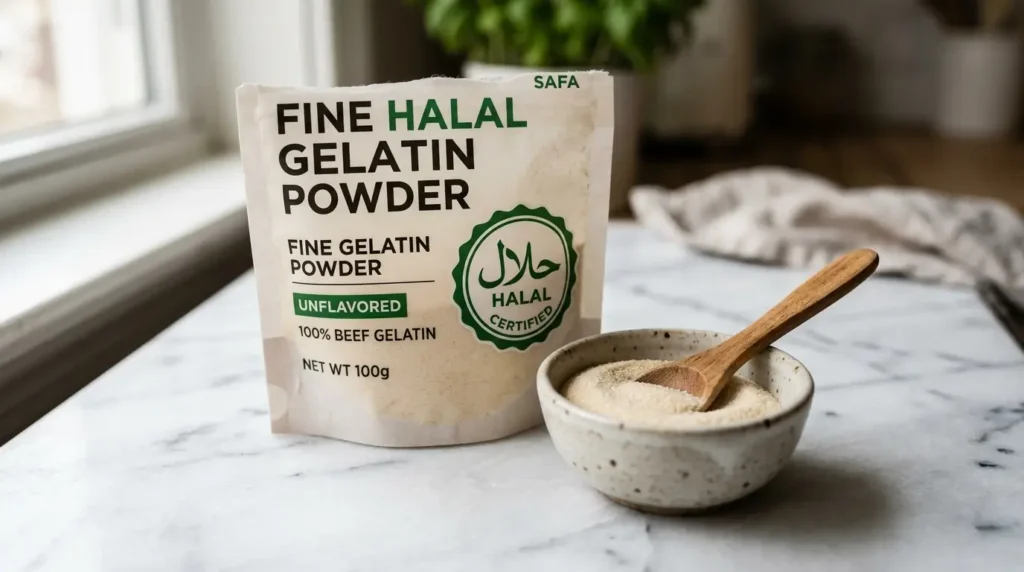
- Look for a recognized halal certification mark, such as the one issued by IFANCA, the leading US halal-certifying body. This is the most reliable single indicator.
- Don’t rely on “beef gelatin” alone — confirm it’s certified, not just pork-free.
- For fish gelatin, verify it’s genuinely fish-derived, since it’s generally accepted as halal by default.
- If no certification is present and it matters to you, contact the manufacturer or choose a plant-based alternative instead.
The Simplest Halal-Safe Options
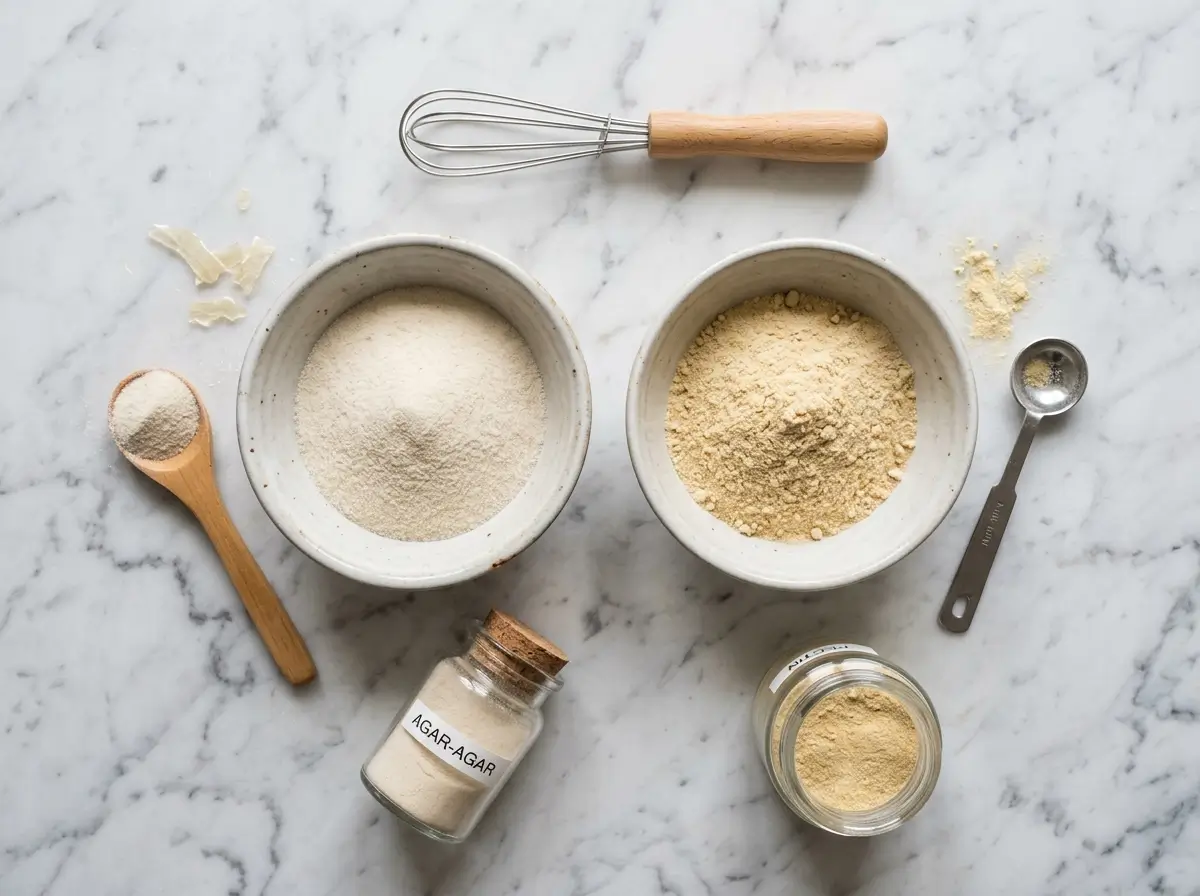
If you’d rather skip the ambiguity entirely, plant-based gelling agents like agar-agar and pectin are halal by default, since they contain no animal product at all. We cover exact substitution ratios in our gelatin substitute guide, so you don’t have to navigate certification questions at all. For fish-based options specifically, our fish gelatin guide goes into more detail. Kosher status follows a different religious standard entirely — see our guide to whether gelatin is kosher if that’s what you’re checking instead.
Frequently Asked Questions
Is beef gelatin automatically halal?
No. Beef gelatin is only halal if the animal was slaughtered according to dhabiha guidelines and the product is certified. For more on what “beef gelatin” tells you nutritionally versus what it doesn’t guarantee religiously, see our beef gelatin benefits guide.
Is gelatin halal according to all scholars?
No — there’s a genuine difference of opinion. Some scholars consider gelatin permissible on the basis of istihala (chemical transformation during processing), while others hold that the original source determines the ruling. Follow the scholarship you trust.
Is fish gelatin halal?
Most scholars consider fish gelatin halal, since fish generally don’t require dhabiha slaughter. It’s often used as a halal-friendly default.
What’s the safest choice if I want to avoid the debate entirely?
Plant-based gelling agents like agar-agar and pectin are halal by default because they contain no animal ingredient, so they sidestep both the source and the transformation questions.