
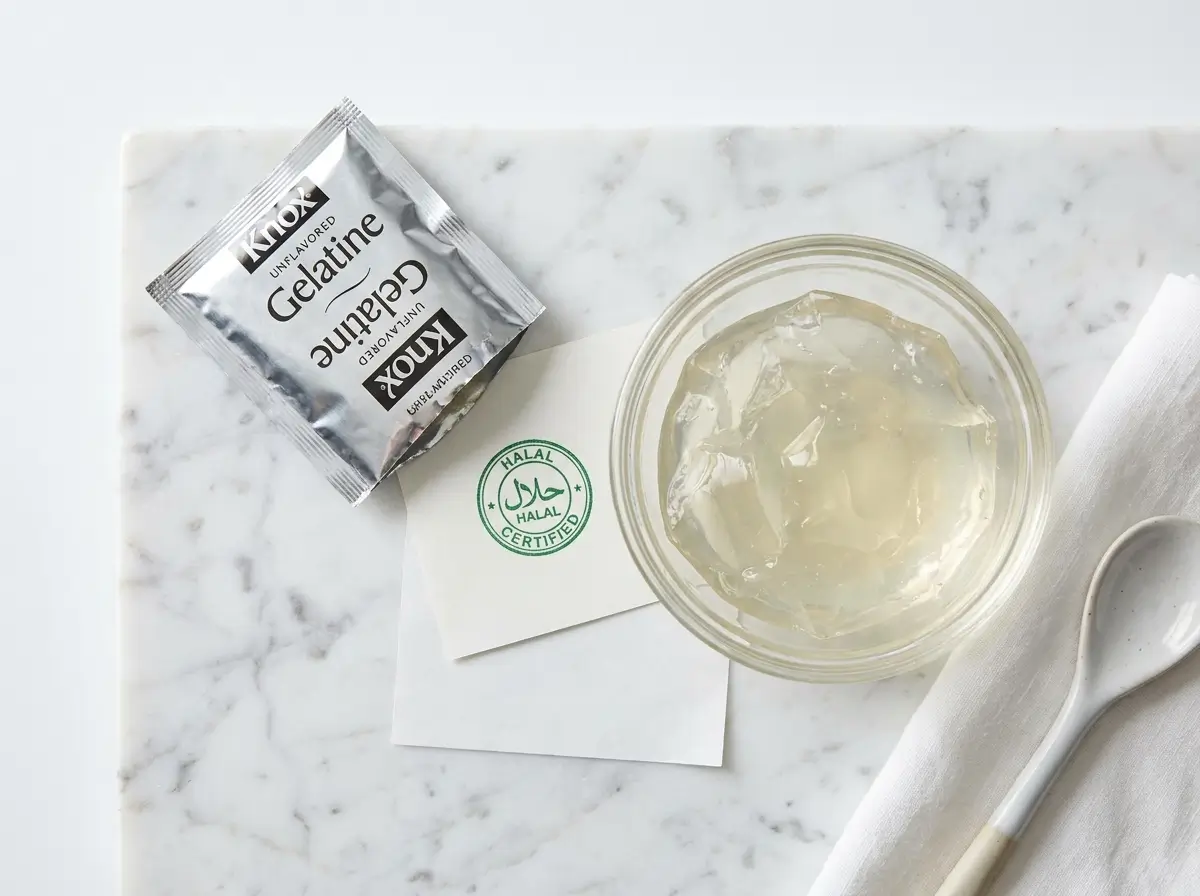
Is gelatin pork? Often, yes. Most commercial gelatin is made from pork skin and bones, but beef gelatin and fish gelatin exist.
The catch: the label usually says only “gelatin” and does not name the animal, and that is true of Jell-O too. The only reliable signs are a halal or kosher symbol, an explicit “beef” or “fish” on the label, or an answer from the manufacturer.
This guide breaks down exactly what gelatin is made from, how to identify pork-free options, and which certified halal or kosher gelatins work best for wellness recipes.
What Is Gelatin Actually Made From?
Gelatin is a protein derived from collagen — the structural protein found in animal skin, bones, and connective tissue. When collagen is boiled and processed, it breaks down into gelatin: the clear, flavorless powder (or sheets) you find in the baking aisle.
The source animal matters a lot, both for dietary reasons and for gelling performance. Here’s what you need to know about the three main types.
Pork Gelatin (Most Common)
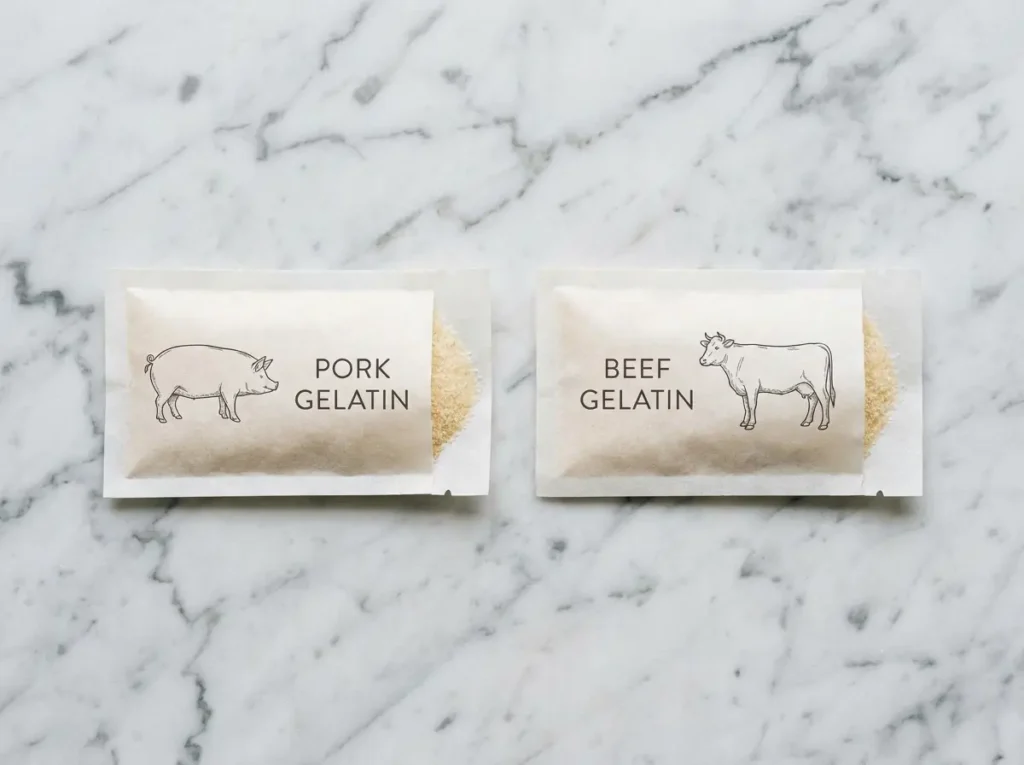
Pork gelatin is made from pigskin and pork bones. It’s the most widely produced gelatin in the world because pork collagen processes efficiently and produces a firm, clear gel.
Major American brands such as Knox and Jell-O list only “gelatin” on the label and do not name the animal. Pork is a common source, but the only way to be sure is a halal or kosher certification, an explicit “beef” or “fish” label, or an answer from the manufacturer.
Beef Gelatin (Halal & Kosher Options Available)
Beef gelatin is made from cow hides and bones. It’s a direct 1:1 substitute for pork gelatin in most recipes and is widely available in certified halal and kosher versions.
Brands like Great Lakes Gelatin and Vital Proteins offer certified beef gelatin. Always check for a halal or kosher certification on the label — the term “beef gelatin” alone doesn’t guarantee the slaughter method met religious standards.
For a deeper look at the nutritional differences, see our guide on beef gelatin benefits.
Fish Gelatin
Fish gelatin is made from fish skin and scales, usually cod or tilapia. It’s popular in kosher kitchens (where mixing meat and dairy is restricted) because it’s pareve — neither meat nor dairy under Jewish law.
Fish gelatin has a slightly lower melting point than pork or beef gelatin, which affects texture in chilled desserts. It works best in mousses and no-bake cheesecakes rather than firm molded recipes.
To understand the full production process behind each type, see our article on how is gelatin made.
Is Knox Gelatin Pork?
Knox lists only “gelatin” on the label and does not name the animal. It is one of the most common gelatins in American kitchens, but without a halal or kosher certification you cannot assume it fits those diets. Ask Kraft Heinz if the source matters to you.
If you’re using gelatin for wellness recipes and need a pork-free option, swap Knox for a certified halal beef gelatin at the same 1:1 ratio. The texture and performance are nearly identical in drinks and desserts.
Is Jell-O Gelatin Pork?
Short answer: usually, yes. Classic Jell-O gelatin dessert is generally made with pork-derived gelatin, and it is not sold as halal or kosher certified. The box only says “gelatin” and does not name the animal, so if the source matters to you, check the packaging or ask Kraft Heinz directly.
The same rule applies to any gelatin-based product: unless the label shows a halal or kosher symbol, the gelatin may be pork. For a full list of products to double-check, see what foods contain gelatin.
People following halal or kosher diets typically avoid Jell-O and use plant-based or beef-based alternatives instead.
How to Tell If Gelatin Is Pork-Free
Reading labels can be confusing because “gelatin” on an ingredient list doesn’t specify the source. Here are four reliable ways to identify pork-free gelatin:
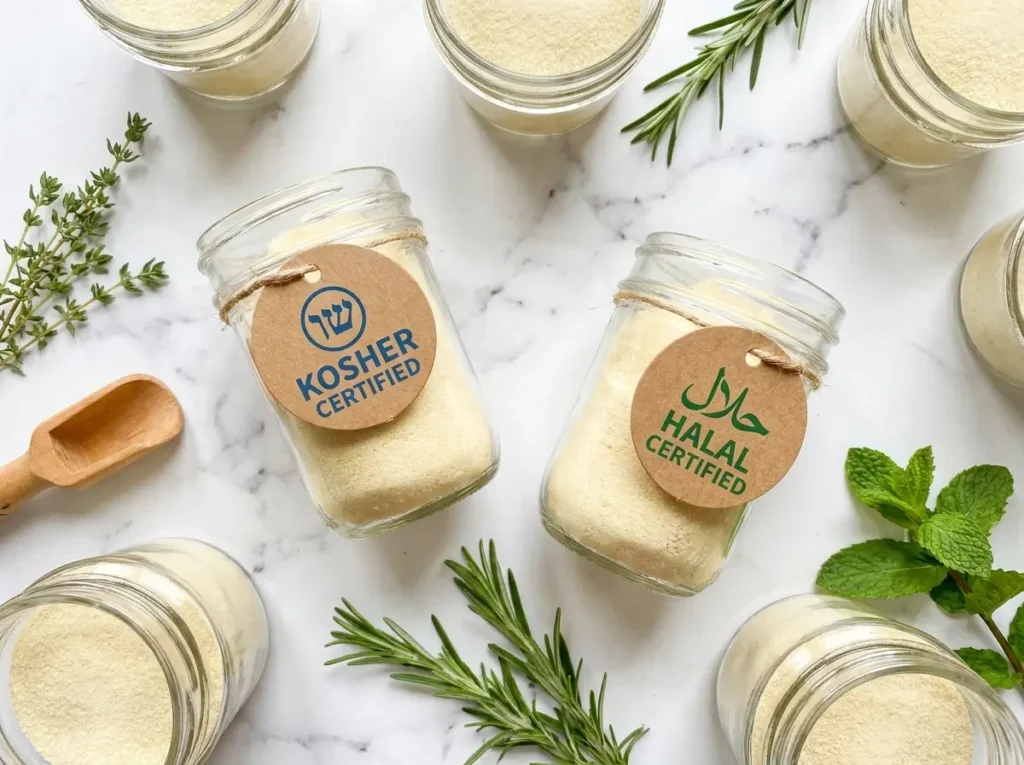
- Look for a certified halal symbol (crescent moon or ISWA/IFANCA logos) — this guarantees no pork and proper slaughter.
- Look for a certified kosher symbol (OU, OK, Star-K, or similar) — kosher gelatin is typically fish or beef-derived.
- Check the label for beef gelatin or fish gelatin written explicitly — these are always pork-free.
- When in doubt, contact the manufacturer directly — many brands publish allergen and source information on their websites.
Pork-Free Gelatin Alternatives at a Glance
| Alternative | Source | Vegan? | Best For | Swap Ratio |
| Beef Gelatin | Cow hide/bones | No | Most gelatin recipes | 1:1 |
| Fish Gelatin | Fish skin/scales | No | Kosher desserts, mousse | 1:1 (softer set) |
| Agar Agar | Red algae | Yes | Firm gels, jellies | 1 tsp gelatin = ¼ tsp agar |
| Pectin | Fruit skins | Yes | Jams, gummies | Different method |
| Carrageenan | Seaweed | Yes | Dairy-free desserts | Different method |
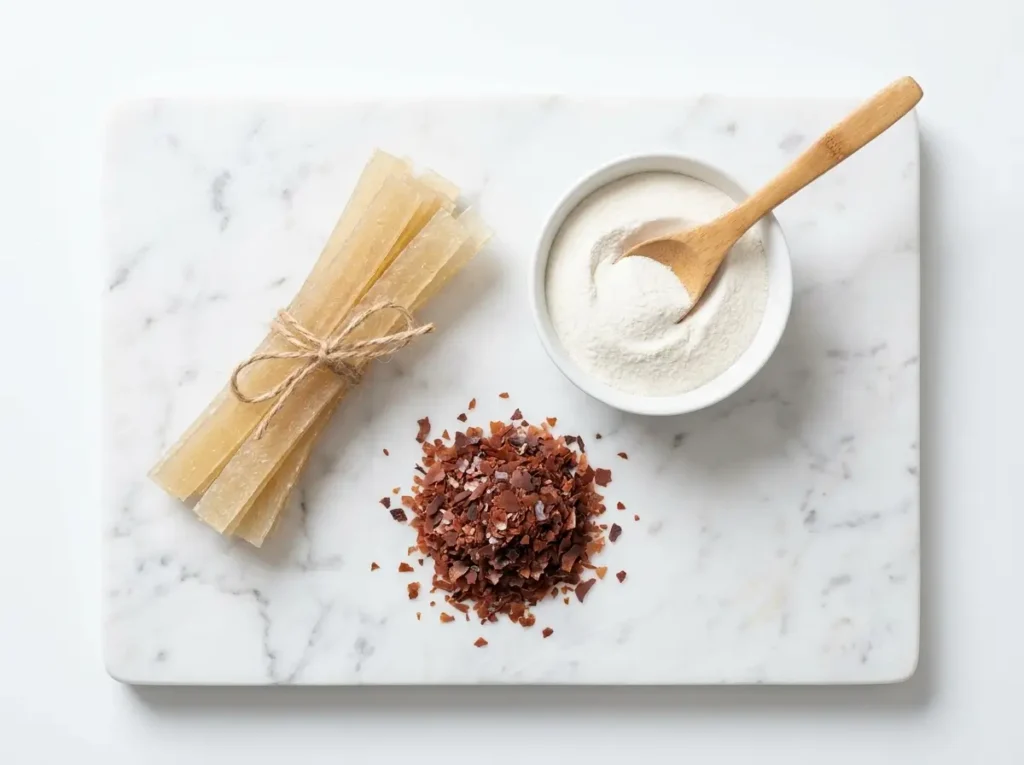
For a full breakdown of how each substitute performs in recipes, visit our guide to the best gelatin substitutes.
Does Gelatin Always Come from Animals?
Traditional gelatin is always animal-derived — that’s what makes it gelatin by definition. However, plant-based gelling agents like agar agar, pectin, and carrageenan can replicate most of what gelatin does in recipes.
Agar agar is the most direct gelatin replacement for wellness drinks and desserts. It sets firmer at room temperature (so it doesn’t melt on the countertop like gelatin does) and has no flavor of its own.
If you’re looking for plant-based wellness recipes that work without animal gelatin, our gelatin substitutes guide includes notes on which recipes can be adapted with agar.
Frequently Asked Questions
Is gelatin made from pork?
Most commercial gelatin is made from pork skin and bones. However, beef gelatin and fish gelatin are widely available pork-free alternatives.
Is Knox gelatin pork?
Knox lists only gelatin on its label and does not name the animal. If you need a pork-free option, look for certified halal beef gelatin or kosher-certified fish gelatin.
What gelatin is halal?
Halal gelatin comes from animals slaughtered according to Islamic guidelines — typically beef or chicken. Look for a certified halal label on the packaging.
Is Jell-O gelatin pork or beef?
Jell-O lists only gelatin on its box and does not name the animal, so it may be pork. People following halal or kosher diets should opt for certified alternatives like Great Lakes beef gelatin.
What can I use instead of pork gelatin?
Pork-free alternatives include beef gelatin, fish gelatin, agar agar (vegan), pectin (vegan), and carrageenan. Each has different gelling properties — see the table above.
The Bottom Line
Much of the gelatin on grocery store shelves is made from pork, and major brands such as Knox and Jell-O do not name the animal on the label. If you follow a halal, kosher, or plant-based diet, the good news is that pork-free options are widely available and work just as well in wellness recipes.
For certified pork-free gelatin: choose halal-certified beef gelatin (Great Lakes, Zint) or kosher fish gelatin. For fully plant-based cooking: agar agar is your best friend.
When shopping, always verify with a certification logo on the label — “beef gelatin” alone isn’t enough if religious compliance matters to you.