
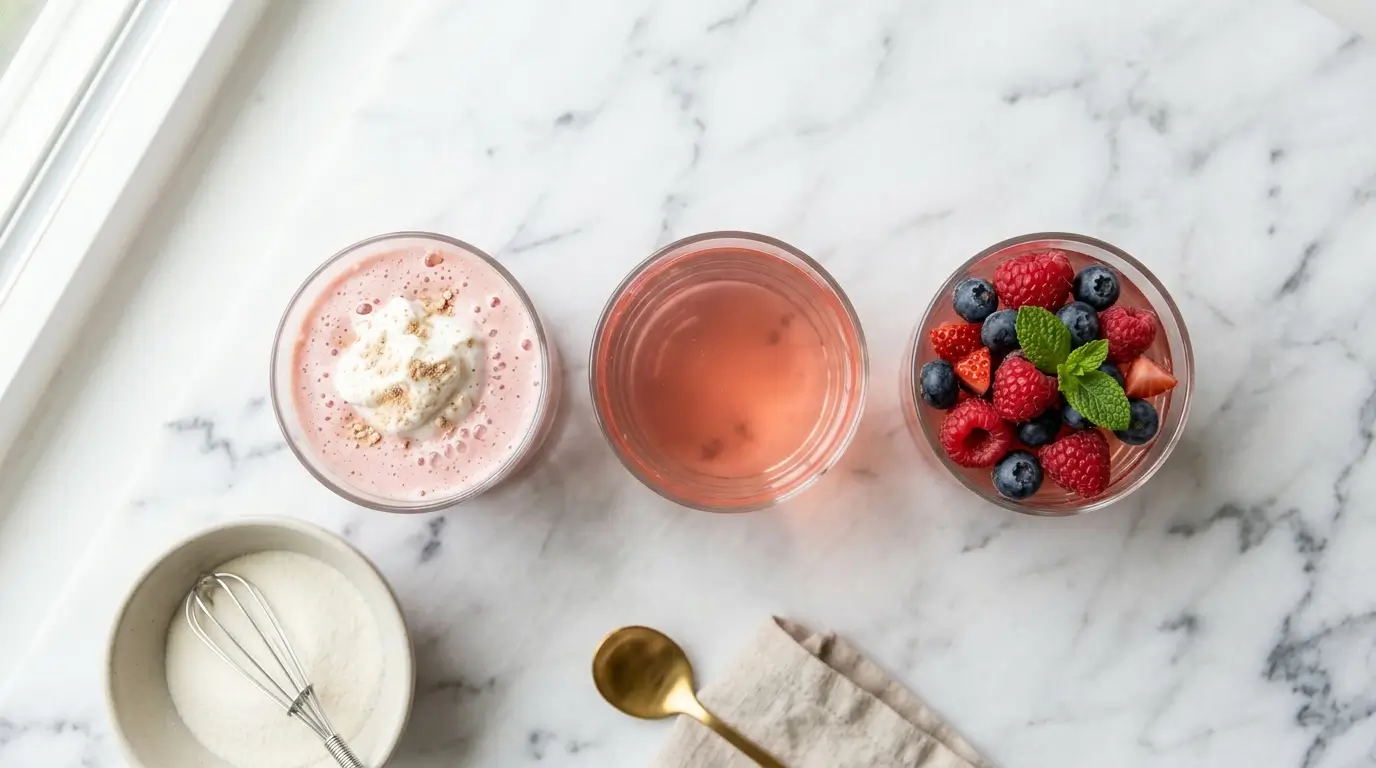
Protein jello has taken over wellness feeds for one simple reason: it’s dessert that actually works for your macros. But if you’ve tried the viral versions and ended up with a curdled mess or a cup that never set, you’ve run into the same wall most recipes don’t warn you about. The problem isn’t you — it’s that nearly every viral recipe starts with a flavored Jell-O packet and skips the part where gelatin chemistry actually matters.
This guide does it differently. As a site built around gelatin, we’re going to show you the from-scratch method that gives you a reliable set every time, four ways to hit whatever protein target you’re after, and the one temperature trick that stops the curdling for good.
⚕️ Medical Disclaimer: This article is for informational purposes only and does not constitute medical advice. The recipes and ideas shared here are not designed to treat, prevent, or cure any condition. If you are pregnant, breastfeeding, taking medication, or managing a health condition, speak with a licensed healthcare provider before changing your diet.
Is Protein Jello Actually Worth Making?
Short answer: yes, if you build it right. Plain gelatin is already almost pure protein — a single tablespoon delivers 6 to 7 grams with essentially zero fat, carbs, or sugar. That means jello starts from a high-protein base before you add anything. Layer in Greek yogurt, protein powder, collagen, or blended cottage cheese, and you can push a single serving anywhere from 15 to 25+ grams of protein while keeping it low-calorie.
The catch is that most viral recipes lean entirely on a flavored Jell-O packet plus yogurt — which works, until it doesn’t. Starting from unflavored gelatin gives you control over the set, the sugar, and the protein, which is exactly where the packet versions fall short. If you want the full breakdown of gelatin’s protein profile, we cover it in our guide on does gelatin have protein.
Pick Your Protein: 4 Methods Compared
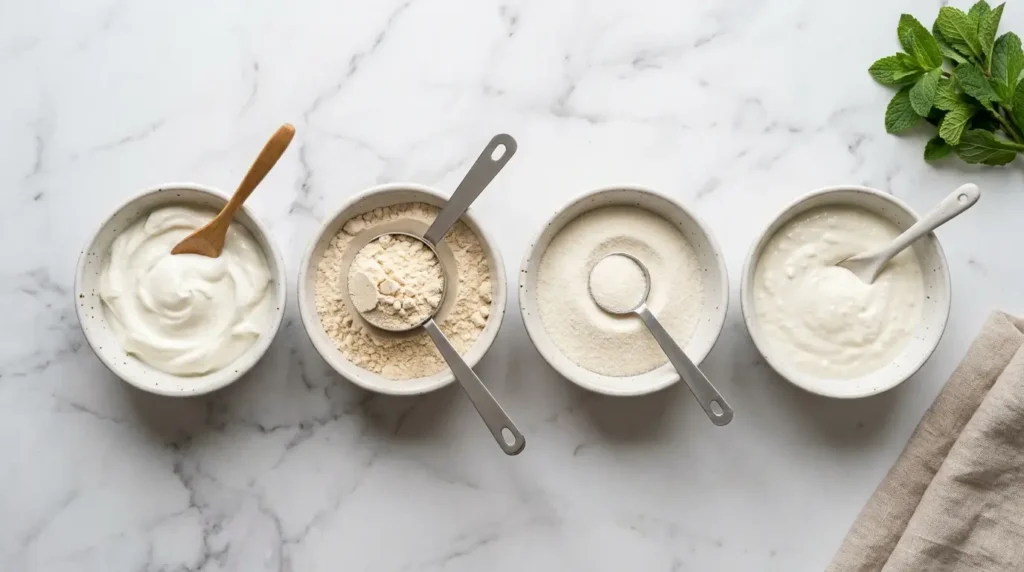
This is the part almost no recipe gives you — a straight comparison of how each protein add-in changes your macros and texture, so you can build the version that fits your goal instead of copying one and hoping.
| Protein Method | Approx. protein per serving | Texture | Best for |
|---|---|---|---|
| Greek yogurt (1 cup) | 18–22 g | Creamy, fluffy, mousse-like | The classic “fluffy jello” look and feel |
| Whey or clear protein powder | +20–25 g | Firmer, clean finish | Maximum protein, macro tracking |
| Collagen peptides | +9–10 g | Unchanged — dissolves clear | Adding protein without changing the texture |
| Blended cottage cheese (1 cup) | 14–18 g | Rich, cheesecake-like | A cheesecake-flavored version |
One key point on collagen: it’s the only add-in that doesn’t affect the set at all, because the gelatin does the gelling while the collagen simply dissolves in. If you like that approach, our article on beef gelatin benefits explains how collagen-based protein behaves in recipes.
The Base Recipe (From Scratch, Not a Packet)
This is your foundation. It sets reliably every time because the gelatin ratio is dialed in — then you choose a protein method from the table above.
Ingredients
- 1 tablespoon (7g) unflavored gelatin powder (Knox, or beef gelatin for a pork-free version)
- ¼ cup cold water (for blooming)
- ¾ cup fruit juice or flavored liquid of choice (no fresh pineapple, kiwi, mango, or papaya — see why below)
- Your protein add-in from the table above
- Optional: a sweetener of choice, a pinch of salt, fresh fruit
Instructions
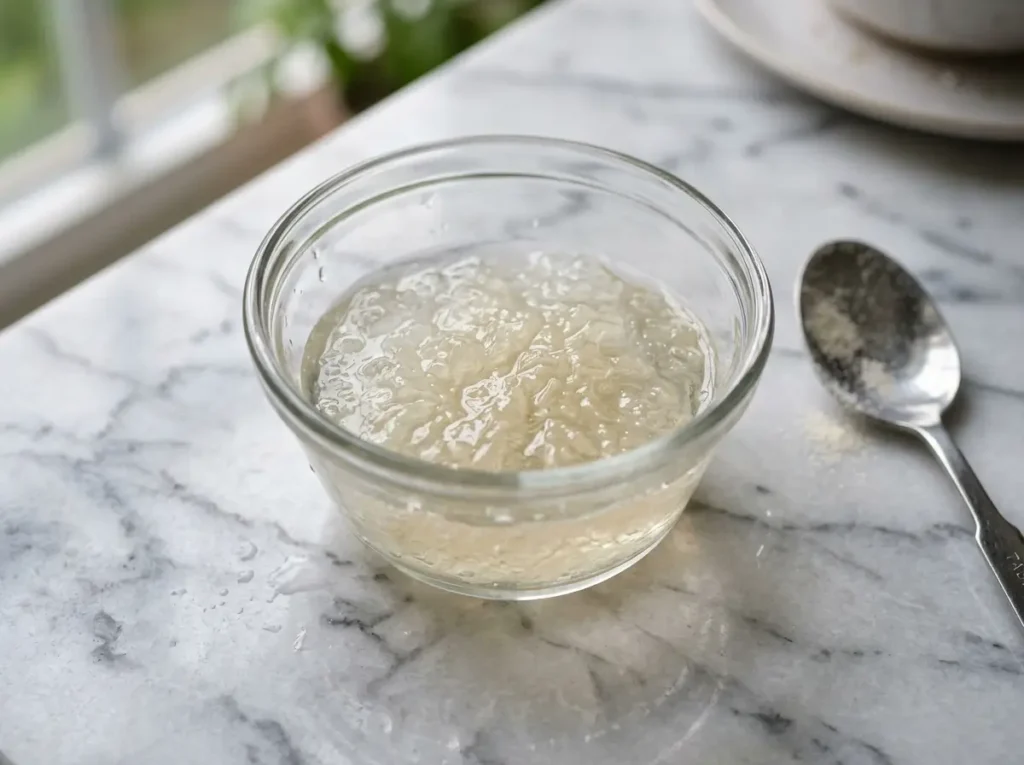
- Bloom the gelatin. Sprinkle the gelatin evenly over the ¼ cup of cold water. Don’t dump it in a pile — spread it across the surface. Let it sit 5 minutes until it looks like wrinkled gel.
- Warm the liquid. Heat the ¾ cup of juice until hot but not boiling. Pour it over the bloomed gelatin and whisk 30–60 seconds until completely dissolved and clear.
- Cool it down — this is the critical step. Let the mixture sit at room temperature until it’s lukewarm to the touch, not hot. This usually takes 10–15 minutes. (Skipping this is the number one reason protein jello curdles — more on that next.)
- Whisk in your protein. Add your room-temperature yogurt, protein powder, collagen, or blended cottage cheese and whisk until smooth.
- Pour and chill. Divide into cups or a dish. Refrigerate at least 4 hours, or overnight for the firmest set.
Why Most Protein Jello Recipes Curdle or Won’t Set
Here’s what the viral versions rarely explain — and the reason so many people give up after one clumpy batch.
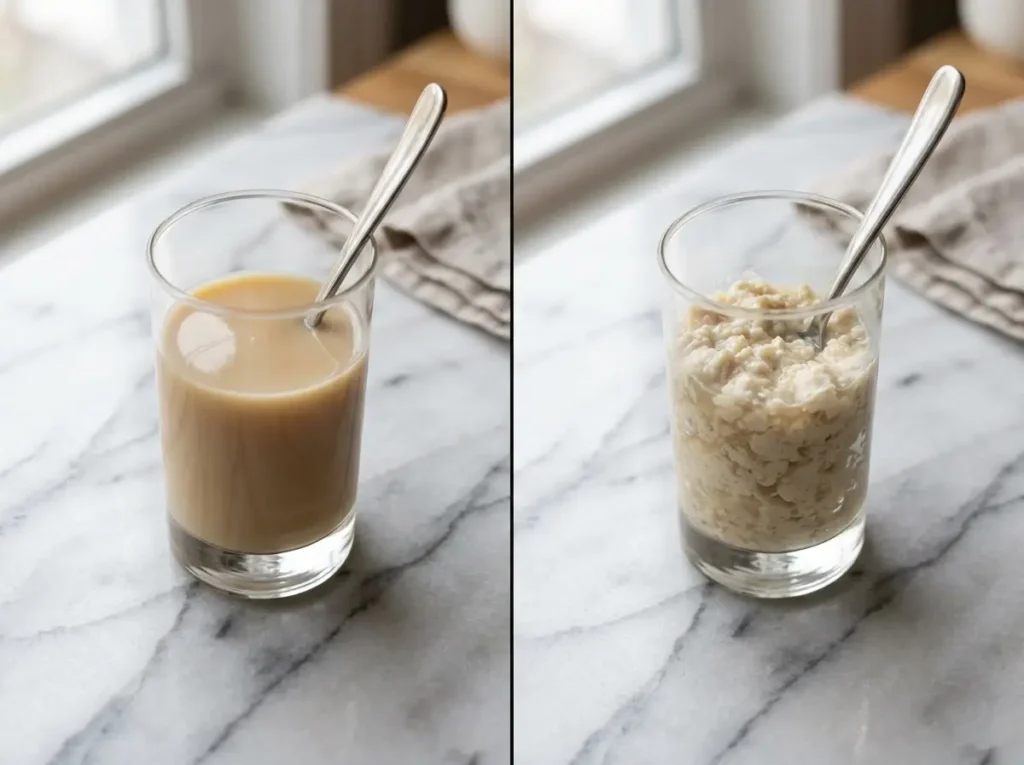
The curdling problem is a temperature and acid problem. When you add cold dairy (or any dairy) to a still-hot, slightly acidic jello mixture, the sudden heat plus the acidity causes the milk proteins to seize and clump — the same thing that happens when milk curdles in hot coffee. Nearly every recipe tells you to “add the yogurt when it’s cool,” but few explain the target: the gelatin mixture needs to be lukewarm, and the dairy needs to be at room temperature too. Cold yogurt straight from the fridge into a warm base is a recipe for grains. Take both to room temperature and the problem disappears.
The “won’t set” problem is usually a ratio problem — made worse by protein powder. This is the gap the packet recipes miss entirely: adding a scoop of protein powder adds volume and dilutes your gelatin-to-liquid ratio. If you’re adding protein powder, don’t also increase the liquid, or you’ll weaken the set. Stick to the 1 tablespoon gelatin per 1 cup total liquid ratio, and count the volume your protein add-in contributes. If you want the full science of gelatin ratios across different textures, our chia seed to water ratio guide covers the same gelling principles that apply here.
A few more set-killers to avoid:
- Fresh pineapple, kiwi, mango, papaya, or figs. These contain enzymes (bromelain, papain, ficin) that break down gelatin protein and stop it from setting. Use canned or cooked versions of these fruits instead — heating deactivates the enzymes.
- Too much acid. A big squeeze of lemon or lime can lower the pH enough to weaken the set. A little is fine; a lot isn’t.
- Not enough chill time. Gelatin needs a minimum of 4 hours. Rushing it leaves you with a soft center and blaming the recipe.
- Over-whipping. Whipping too much air into the mixture can give you a foamy top that never fully firms. Whisk until smooth, then stop.
Variations Worth Trying
Fluffy Greek Yogurt Protein Jello. The viral classic — whisk in 1 cup of room-temperature Greek yogurt at step 4 for a creamy, mousse-like set with 18–22g of protein. This is the version most people are searching for, done with a reliable base.
Clear Protein Jello. Whisk in a scoop of clear whey or clear protein powder for the highest protein count and a lighter, more jelly-like texture. Let it sit a minute for the bubbles to settle before pouring.
Collagen Jello. Stir a scoop of collagen peptides into the warm liquid at step 2 — it dissolves invisibly and adds 9–10g of protein without changing the texture or flavor at all. The simplest upgrade of the bunch.
Cheesecake Protein Jello. Blend 1 cup of cottage cheese until completely smooth, then whisk it in at step 4 for a rich, cheesecake-like flavor. Blending is essential — unblended cottage cheese leaves lumps.
Sugar-Free Protein Jello. Use an unsweetened or sugar-free liquid and a zero-calorie sweetener of your choice. Because you’re starting from unflavored gelatin, you control every gram of sugar — an advantage the flavored-packet versions can’t offer.
Make-Ahead & Storage
Protein jello is built for meal prep. Make a batch of individual cups and keep them covered in the fridge for up to 5 days. Cover each cup so it doesn’t pick up other flavors from the fridge.
Do not freeze protein jello. Freezing breaks the gelatin structure, and the dairy separates on thawing — you’ll get a grainy, watery result instead of a smooth set.
If you’re building high-protein snacks for recovery after surgery or a specific eating stage, our bariatric gelatin recipe covers a softer, protein-forward version adapted for those needs.
Print
Protein Jello (The High-Protein Version That Actually Sets)
- Total Time: 4 hours 15 minutes
- Yield: 4 servings 1x
Description
High-protein jello made from scratch with unflavored gelatin — up to 25g protein, no curdling, and it sets every time.
Ingredients
- 1 tablespoon (7g) unflavored gelatin powder
- ¼ cup cold water, for blooming
- ¾ cup fruit juice or flavored liquid of choice
- 1 cup Greek yogurt, at room temperature (or your protein add-in of choice)
- Optional: sweetener of choice, a pinch of salt, fresh fruit
Instructions
- Sprinkle the gelatin evenly over the cold water. Let it bloom for 5 minutes until it looks like wrinkled gel.
- Heat the juice until hot but not boiling. Pour it over the bloomed gelatin and whisk for 30–60 seconds until fully dissolved and clear.
- Let the mixture cool at room temperature until lukewarm to the touch, about 10–15 minutes.
- Whisk in the room-temperature Greek yogurt (or your chosen protein add-in) until smooth.
- Divide into cups or a dish and refrigerate for at least 4 hours, or overnight for the firmest set.
Notes
Avoid fresh pineapple, kiwi, mango, papaya, or figs, as their enzymes prevent gelatin from setting. Use canned or cooked versions instead. If adding protein powder, do not increase the liquid or the gelatin ratio will weaken. Do not freeze, as freezing breaks the gelatin structure and dairy may separate after thawing. Store covered in the refrigerator for up to 5 days.
- Prep Time: 15 minutes
- Category: Dessert
- Method: No-Bake
- Cuisine: American
Nutrition
- Serving Size: 1 cup
- Calories: 90
- Sugar: 8g
- Sodium: 45mg
- Fat: 1g
- Carbohydrates: 10g
- Protein: 20g
Keywords: protein jello, high protein jello, greek yogurt jello, protein dessert
Frequently Asked Questions
Is protein jello a real thing, or just a trend?
It’s real and it’s simple. Gelatin itself is about 85–90% protein by dry weight, so plain jello already has a protein base — around 6–7g per tablespoon of gelatin. Adding Greek yogurt, protein powder, collagen, or blended cottage cheese pushes a serving to 15–25+ grams. It’s one of the few dessert-style foods where the protein claim genuinely holds up.
Can you add protein powder to gelatin?
Yes, and it’s one of the best ways to boost the protein. Whisk it in once the gelatin mixture has cooled to lukewarm, not while it’s hot, to avoid clumping and foaming. Keep in mind that protein powder adds volume — don’t also increase your liquid, or the extra volume will dilute the gelatin ratio and weaken the set. Let the mixture sit for a minute after whisking so the bubbles settle before pouring.
How do you make high-protein jello without it curdling?
Bring both the gelatin mixture and your dairy to the same temperature before combining. Let the dissolved gelatin cool to lukewarm, and let your yogurt or cottage cheese come to room temperature. Curdling happens when cold, acidic dairy hits a hot base — matching the temperatures prevents it.
Is jello good when you’re trying to lose weight?
Protein-boosted jello is low in calories and high in protein, and that combination can support satiety within a balanced eating plan — but no single food drives weight loss on its own. For the fuller picture on gelatin and weight management, see our guide on does gelatin have protein.
Can I make protein jello with milk instead of juice?
Yes. Warm the milk gently (don’t boil it) and dissolve the bloomed gelatin into it for a creamier, panna-cotta-style result. If you want a fully cream-based set rather than a jiggly one, our panna cotta recipe is the richer cousin of this dessert.
Why is my protein jello grainy?
Graininess almost always comes from one of two things: adding dairy while the base was too hot (curdling), or not blending cottage cheese smooth before adding it. Fix the temperature and blend thoroughly, and the texture turns silky.
The Bottom Line
Protein jello absolutely delivers on its promise — but only if you respect the gelatin. Start from unflavored gelatin instead of a packet, cool the base before adding your protein, hold your ratio steady, and give it a proper chill. Do that, and you get a reliable, macro-friendly dessert you can keep in the fridge all week — no curdling, no soupy cups, just the version the viral recipes were trying to make.