
By Hannah Bell | June 6, 2026 | Wellness Lifestyle
Baking soda pH is one of those facts that sounds like a chemistry class flashback — but it actually explains a lot of what happens every time you bake a cake, clean your counter, or reach for a natural remedy. So what is it, exactly?
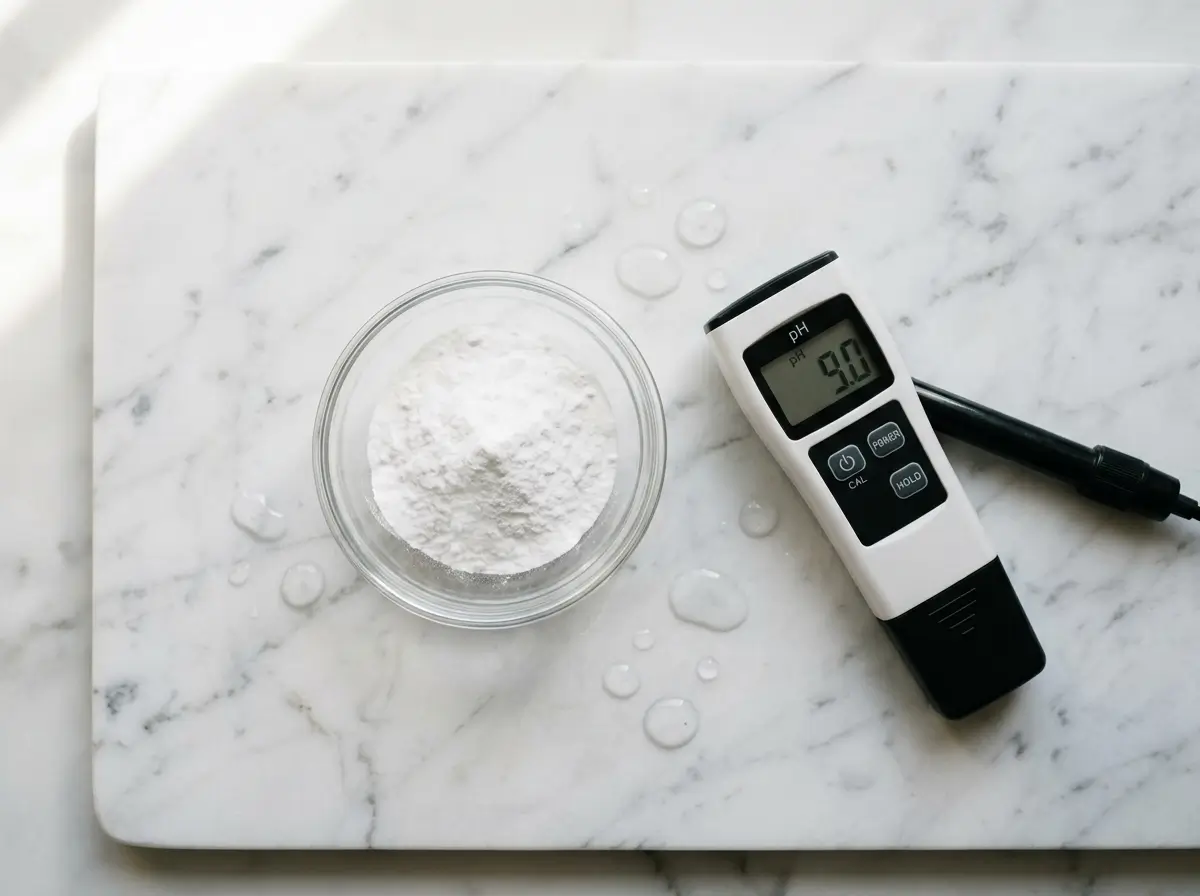
Baking soda — chemically known as sodium bicarbonate (NaHCO₃) — sits at a pH of 9 on the standard scale. That single number is why it makes pancakes fluffy, neutralizes odors, and reacts dramatically with vinegar.
In this guide, you’ll get a plain-English breakdown of what baking soda’s pH means, how it compares to other household staples, and how that chemistry plays out in real-life uses — from your oven to your pantry shelf.
What Does pH Mean? (The Basics in Plain English)
Before you can understand baking soda pH, it helps to know what pH actually measures.
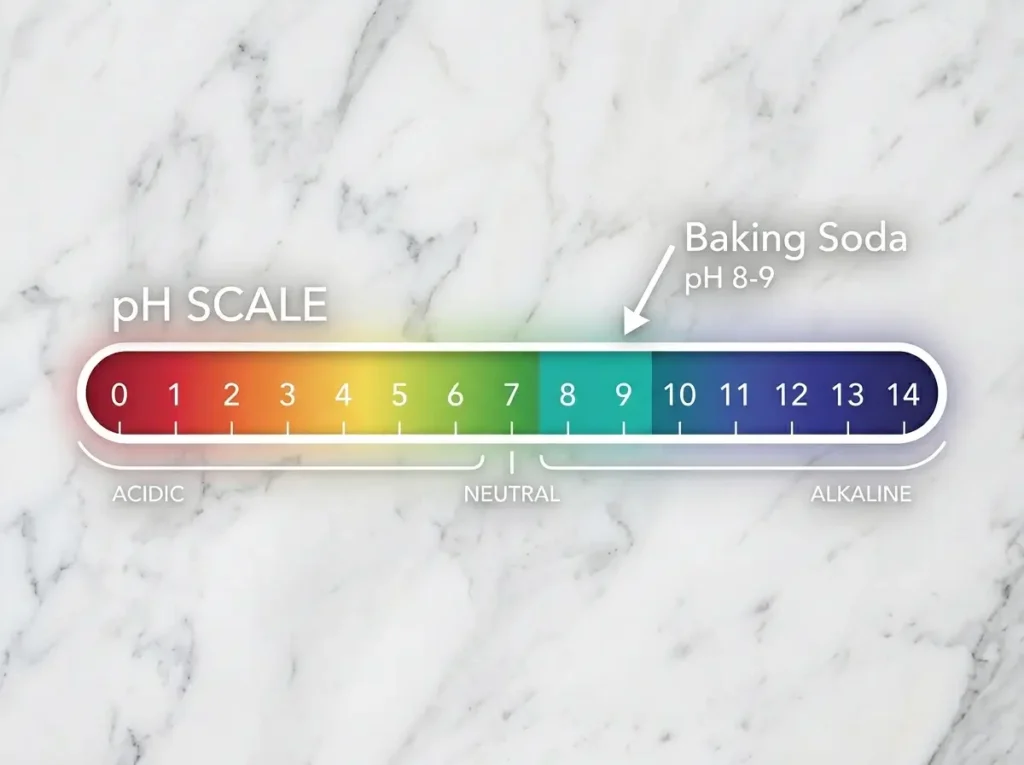
pH stands for ‘potential of hydrogen.’ It’s a scale that tells you how acidic or alkaline (basic) a solution is. The scale runs from 0 to 14:
| pH Range | What It Means | Common Example |
| 0 – 6 | Acidic | Lemon juice (pH 2), vinegar (pH 2.5) |
| 7 | Neutral | Pure water |
| 8 – 14 | Alkaline (basic) | Baking soda (pH 9), bleach (pH 12–13) |
The lower the number, the more acidic. The higher the number, the more alkaline. A pH of 7 is perfectly neutral — right where pure water lands.
pH is measured on a logarithmic scale, which means each step is 10 times more extreme than the one before it. A substance with a pH of 9 is 10 times more alkaline than one at pH 8, and 100 times more alkaline than water.
What Is the pH of Baking Soda?
Baking soda has a pH of approximately 9 when dissolved in water — though this can shift slightly based on concentration. A 0.1 molar solution typically reads around 8.3, while a more concentrated solution can push closer to 9.
That puts it firmly in the mildly alkaline zone — not a harsh base like bleach or lye, but clearly on the opposite end from acidic foods like coffee, tomatoes, or citrus fruits. If you have ever wondered what a pinch does to your morning cup, see baking soda in coffee.
Here’s why: when you dissolve sodium bicarbonate in water, it undergoes a process called hydrolysis. The bicarbonate ion (HCO₃⁻) reacts with water to release hydroxide ions (OH⁻), which are what make a solution alkaline. The result is more hydroxide ions than hydrogen ions in the solution — and that pushes the pH above 7.
| 🔗 Related on jelloandwellness.com → Want to know what happens when you drink it? Drinking Baking Soda Water: Benefits, Risks & What the Science Says → Curious about athletic uses? Baking Soda Pre-Workout: Does the Science Actually Hold Up? |
Baking Soda pH vs. Other Common Household Items
To put that pH 9 in perspective, here’s how baking soda stacks up against everyday items you probably already have at home.
| Substance | Approximate pH | Acidic or Alkaline? |
| Battery acid | 0–1 | Strongly acidic |
| Lemon juice | 2 | Strongly acidic |
| Vinegar | 2.5 | Acidic |
| Coffee | 5 | Mildly acidic |
| Pure water | 7 | Neutral |
| Baking soda solution | 8.3–9 | Mildly alkaline ✅ |
| Milk of magnesia | 10 | Alkaline |
| Household ammonia | 11–12 | Strongly alkaline |
| Bleach | 12–13 | Very strongly alkaline |

The takeaway: baking soda is one of the mildest alkaline substances you’ll encounter at home. That’s part of what makes it so useful — it’s strong enough to neutralize acids, but gentle enough to handle safely without protective gear.
Why Baking Soda’s pH Matters in Baking
The pH of baking soda is the reason it works as a leavening agent — but only when there’s an acid in the recipe to react with.
Here’s the chemistry in simple terms: when alkaline baking soda (pH 9) meets an acidic ingredient like buttermilk, yogurt, lemon juice, or brown sugar, they trigger an acid-base neutralization reaction. This reaction rapidly produces carbon dioxide gas (CO₂). The gas bubbles get trapped in the batter, expand in a hot oven, and push the dough or batter upward — giving you a light, risen texture.
This is why recipes that include baking soda almost always pair it with an acidic ingredient. Without that acid, the baking soda has no partner to react with, and your baked goods come out dense and flat.
What Happens If You Use Too Much?
Too much baking soda shifts the overall pH of your batter too far into alkaline territory. The result is a bitter, soapy aftertaste — a classic sign that the chemistry is out of balance. It can also cause baked goods to brown too quickly on the outside before the inside is cooked through, because high pH speeds up the Maillard browning reaction.
Standard rule of thumb: use about 1/4 teaspoon of baking soda per 1 cup of flour when a recipe includes an acid. If there’s no acid in the recipe, use baking powder instead — it contains its own built-in acid.
| 🔗 On the same topic: → Going deeper into baking chemistry? Baking Soda vs. Baking Powder: What’s the Real Difference? |
Does Baking Soda Raise pH? (Other Applications)
Yes — because baking soda is alkaline, adding it to any solution raises that solution’s pH. This property makes it useful far beyond the kitchen.
Pool Water
Pool owners use baking soda to raise pH and total alkalinity when water becomes too acidic. According to established guidelines, if a pool’s pH drops below 7.2, adding baking soda at the appropriate dosage can bring it back into the recommended range (7.4–7.6) for safe, comfortable swimming.
Soil
Gardeners sometimes use baking soda to amend soil pH in small, targeted applications — useful for plants that prefer a slightly alkaline environment. That said, over-application can make soil too alkaline for most common vegetables.
Cleaning
Its mild alkalinity makes baking soda effective at cutting through grease and neutralizing acidic odors (like those from urine or spoiled food). The same neutralization chemistry at work in the oven shows up in your refrigerator or drain when you use baking soda to deodorize.
Baking Soda pH vs. Baking Powder pH
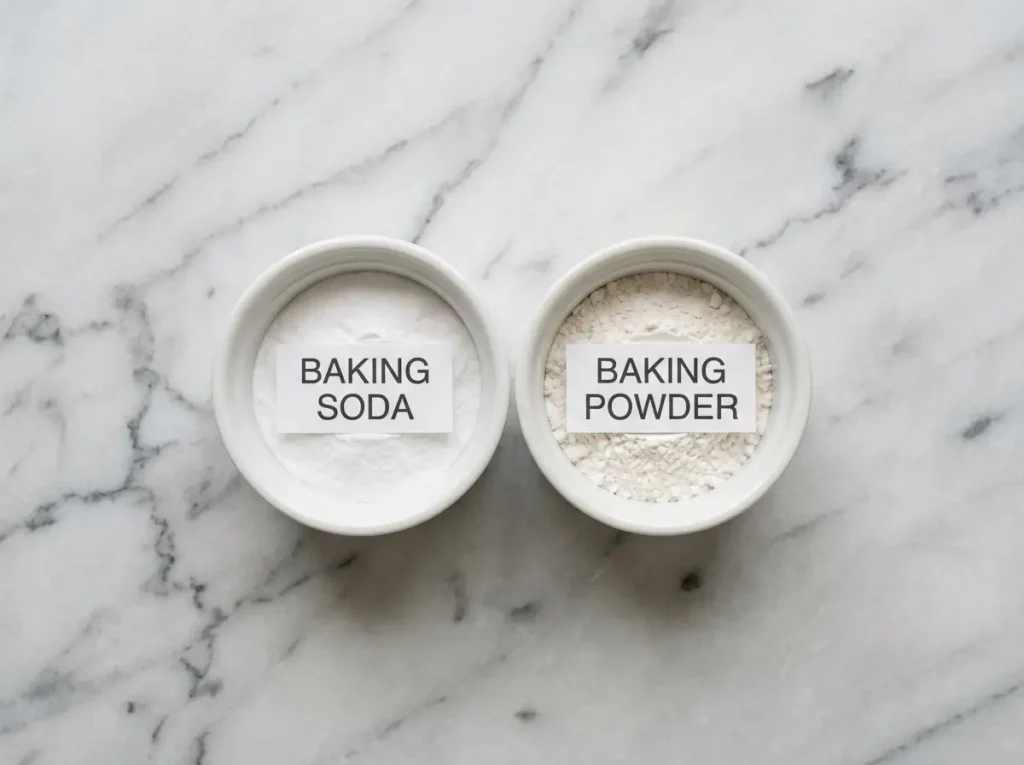
These two white powders are often confused — and they do share some visual similarities — but their pH levels are quite different.
| Baking Soda | Baking Powder | |
| Chemical name | Sodium bicarbonate (NaHCO₃) | Sodium bicarbonate + acid salts |
| pH (dry) | ~8.3–9 | ~6–8 (more neutral) |
| Needs acid to activate? | YES — requires acidic ingredient | NO — acid is built in |
| Leavening strength | About 3–4x stronger | Milder |
| Best for… | Buttermilk, yogurt, citrus recipes | Neutral-ingredient recipes |
| Taste risk | Soapy/bitter if too much | Metallic if too much |
The practical upshot: baking powder is generally the safer choice when a recipe doesn’t specify, because its built-in acid moderates the pH impact. Baking soda is more powerful but needs an acid counterpart to work — and to avoid that off-taste.
Is Baking Soda Amphoteric? (The Chemistry Nerd Detail)
Here’s where it gets genuinely interesting. Baking soda is sometimes described as amphoteric — meaning it can behave as either an acid or a base depending on what it’s reacting with.
In most everyday situations, it acts as a base (alkali). But in the presence of a strong enough base, it can donate a proton and act as a weak acid. This dual nature is rare among common household chemicals and is part of why sodium bicarbonate is so useful as a buffering agent — it resists dramatic swings in pH in either direction.
This buffering capacity is also why baking soda is used in antacids. When stomach acid (pH ~1–2) meets sodium bicarbonate, the base neutralizes the acid, raising the stomach’s pH and reducing discomfort.
| 📚 External Authority Sources 1. National Library of Medicine — Sodium Bicarbonate (NLM / NIH — biochemistry & clinical uses) 2. Healthline — Baking Soda: Health Uses and Benefits (medically reviewed, high DA) 3. Sciencing.com — pH Level of Baking Soda (chemistry reference) |
Quick Reference: Baking Soda pH at a Glance
| ✅ Key facts to remember Baking soda (sodium bicarbonate) has a pH of 8.3–9 in water.A pH above 7 is alkaline. Baking soda is mildly alkaline.It works as a leavening agent by reacting with acidic ingredients to release CO₂.Its alkalinity neutralizes acidic odors — that’s why it deodorizes fridges.Too much baking soda → bitter, soapy taste in baked goods.Baking powder has a more neutral pH because its acid is already built in. |
Frequently Asked Questions
What is the pH of baking soda?
Baking soda has a pH of approximately 8.3 to 9 when dissolved in water, depending on concentration. Pure sodium bicarbonate powder sits around pH 9. This makes it mildly alkaline.
Is baking soda acidic or alkaline?
Baking soda is alkaline (basic). It sits above pH 7 on the scale, which places it firmly in the alkaline category — though it’s a mild alkali, not a harsh one.
Does baking soda raise or lower pH?
Baking soda raises pH. When added to water, soil, or a pool, it makes the solution more alkaline. This is why it’s used to neutralize acids — including stomach acid when taken as an antacid.
What’s the difference in pH between baking soda and baking powder?
Baking soda has a higher pH (8.3–9) than baking powder (approximately 6–8). Baking powder contains an added acid (like cream of tartar or sodium aluminum sulfate) that partially neutralizes the baking soda, bringing the pH closer to neutral.
Can baking soda change the pH of your body?
Your body tightly regulates blood pH in a very narrow range (7.35–7.45) regardless of what you eat or drink. Consuming baking soda can temporarily raise the pH of your stomach and urine, but it does not meaningfully change your blood pH in healthy individuals. Always consult a healthcare provider before using baking soda for any health purpose.
What is the pH of baking soda and vinegar mixed together?
When baking soda (pH 9) and vinegar (pH 2.5) are combined, they react and partially neutralize each other, producing water, salt, and carbon dioxide. The resulting pH depends on the ratio used — with equal parts, the mixture trends toward a slightly acidic pH around 6.
The Bottom Line
Baking soda’s pH of 9 is not just a chemistry trivia fact — it’s the reason this simple white powder does so many different jobs around the house. That mild alkalinity is what makes it react with acids in baking recipes, cut through kitchen grease, neutralize fridge odors, and balance pool water.
Understanding the pH of baking soda doesn’t require a chemistry degree. It just takes knowing that anything above 7 on the scale is alkaline, and that baking soda’s position at 9 puts it in the sweet spot: strong enough to be useful, mild enough to be safe for most everyday applications.
| 🔗 More from the Wellness Lifestyle category: → Curious about another baking soda use? Does Baking Soda in Coffee Actually Work? → Browse All Wellness Lifestyle Articles → |
| About Hannah Bell Hannah Bell is a wellness writer and home cook focused on making food science approachable for everyday kitchens. She covers the intersection of nutrition, ingredient chemistry, and practical cooking at jelloandwellness.com — always with real recipes and real sources. |