
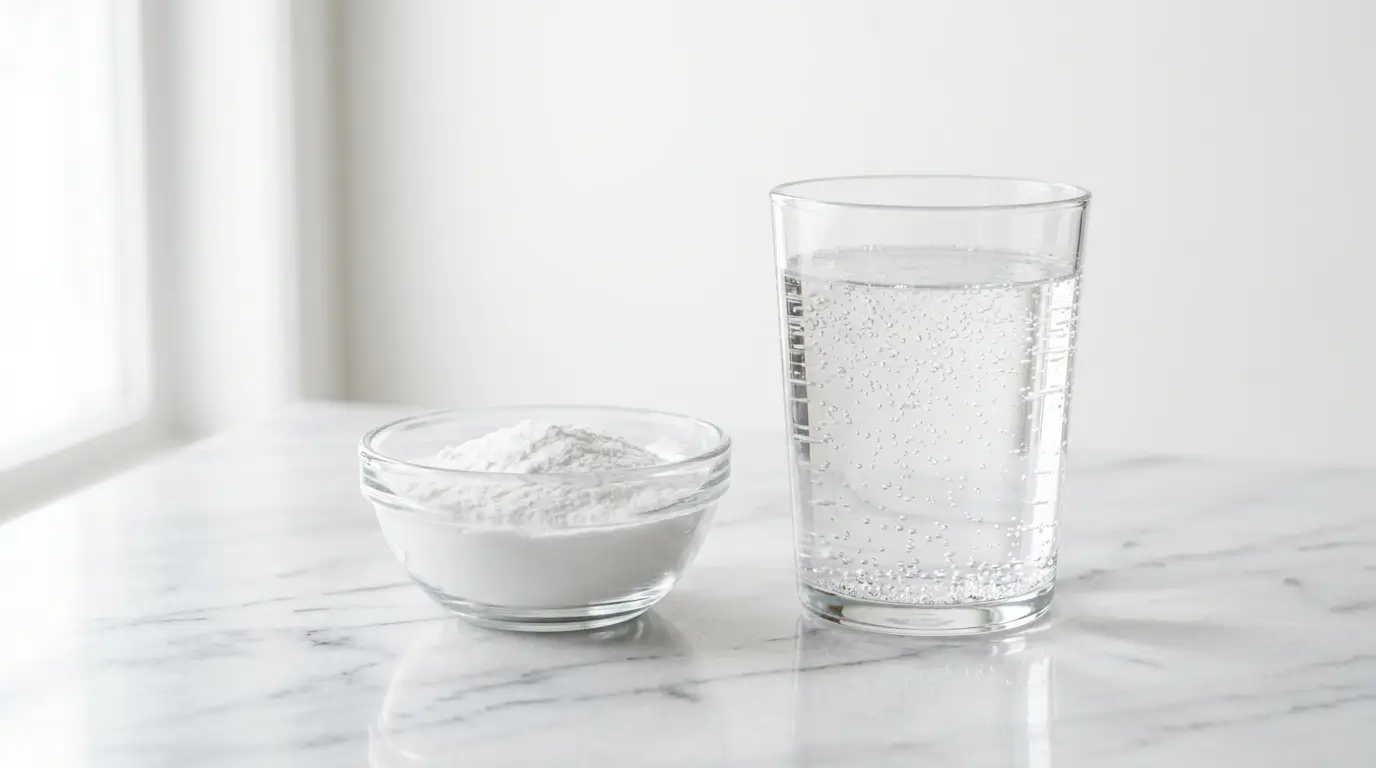
Baking soda pre workout is a topic that keeps showing up in fitness circles — and honestly, it’s not just gym-bro folklore. There’s actual peer-reviewed research behind it.
Sodium bicarbonate (the chemical name for baking soda) is one of the few natural compounds studied extensively for athletic performance. And no, you don’t need to spend $60 on a fancy tub of powder to get the effect.
This article is for informational purposes only and does not constitute medical advice. The recipes and ideas shared here are not designed to treat, prevent, or cure any condition. If you are pregnant, breastfeeding, taking medication, or managing a health condition, speak with a licensed healthcare provider before changing your diet or supplement routine.
If you’ve been curious about the science, the safety, and the practical “how” of this approach — here’s everything you need to know, straight from the research.
Looking for more everyday wellness drink ideas? Check out our Wellness Drinks categoryfor simple, science-backed options.

What Is Baking Soda Pre Workout — And Why Do People Try It?
Baking soda is sodium bicarbonate (NaHCO₃) — a white powder you probably already have in your kitchen. It’s alkaline, meaning it raises the pH of whatever it’s dissolved in.
The theory behind using it before exercise: when you push hard in a workout, your muscles produce lactic acid and hydrogen ions. That acid buildup is a big part of what makes your muscles burn and fatigue. Sodium bicarbonate acts as a buffer — it helps your body neutralize that acid faster, potentially delaying fatigue.
This isn’t new. Sports scientists have been studying this since the 1980s.
What the Research Actually Says

The evidence is stronger than most people expect. Here’s a quick summary of what studies have found:
| Type of Exercise | What the Research Shows |
| High-intensity, short bursts (400–800m running, rowing, cycling sprints) | Most consistent benefits. Multiple studies show improved performance and delayed fatigue. |
| Combat sports (boxing, MMA, judo) | Studies on competitive athletes show improved work output and reduced performance decline in later rounds. |
| Team sports (repeated sprints) | Some benefit in repeated-sprint ability, especially toward end of match. |
| Endurance (marathon, long cycling) | Minimal evidence. Less relevant because lactic acid isn’t the primary limiter. |
| Strength training (1-rep max) | Mixed results. More relevant for high-rep burnout sets than pure strength. |
The 2021 ISSN Position Stand on Sodium Bicarbonate (NIH/PubMed) — co-authored by 15 leading sports scientists — confirmed that supplementation at 0.2–0.5 g/kg improves performance in high-intensity exercise lasting 30 seconds to 12 minutes, in both men and women. The optimal single dose: 0.3 g/kg.
A 2015 PMC study on high-intensity intermittent exercise also found that oral sodium bicarbonate (0.4 g/kg) significantly improved Yo-Yo recovery performance in trained athletes — the kind of repeated-sprint effort seen in soccer, basketball, and team sports.
Curious how baking soda interacts with water’s pH? We break it down in our Baking Soda pH Explainedarticle.
How to Use Baking Soda as a Pre Workout (The Practical Guide)
If you want to try it, here’s the approach most research protocols have used:
| 📋 Standard Research Protocol Dose: 0.3 g per kg of body weight (e.g., ~20g for a 150 lb / 68 kg person) Timing: 60–90 minutes before exercise How: Dissolved in 500–750 ml of water. You can add lemon juice to cut the salty taste. Frequency: For testing purposes, try it on a non-critical training day first. |
Important: Start with a much smaller amount (half a teaspoon or less) on your first attempt. Gastrointestinal discomfort is the most commonly reported side effect, and individual tolerance varies significantly.

Side Effects to Know Before You Try It
The most common side effect is GI distress — nausea, bloating, stomach cramping, or loose stools. This is why the timing and dose matter so much.
Research-backed ways to reduce GI issues:
- Space the dose out over 30–60 minutes instead of drinking it all at once
- Take it with a small carbohydrate-containing meal
- Start with a lower dose to assess your personal tolerance
- Stay well hydrated before and during
According to Healthline’s review of pre-workout side effects, sodium bicarbonate can cause nausea, headache, and increased urination at doses above 0.3 g/kg — which is why gradual dose testing matters before any real workout.
Who should NOT try this: People with kidney disease, high blood pressure, those on low-sodium diets, or anyone taking medications that affect electrolyte balance. Mayo Clinic notes that side effects are more likely in large doses or with kidney disease. Always speak with your healthcare provider first.
If you’re interested in the broader wellness benefits of baking soda water, we cover the evidence in detail in our Drinking Baking Soda Water Benefitsguide.
Baking Soda vs. Commercial Pre-Workouts: An Honest Comparison
Most commercial pre-workouts contain caffeine, beta-alanine, creatine, and/or nitric oxide boosters — all with different mechanisms than sodium bicarbonate.
| Factor | Sodium Bicarbonate vs Commercial Pre-Workout |
| Cost | Baking soda: ~$0.05 per dose. Commercial: $1–3+ per serving. |
| Research base | Sodium bicarbonate: 40+ years of sports science. Pre-workouts: variable quality. |
| Mechanism | Acid buffer (lactic acid). Pre-workouts: stimulant, vasodilator, neuromuscular. |
| Best for | Sustained high-intensity intervals. Pre-workouts: energy, pump, power. |
| GI risk | Higher with sodium bicarb (dose-dependent). Pre-workouts: varies by formula. |
| Can you combine? | Potentially, but start with one at a time to assess tolerance. |
Does Baking Soda Pre Workout Actually Work? The Honest Answer
For most recreational athletes doing high-intensity interval work, sprint-based cardio, or team sports: the research is genuinely promising. The effect size is modest — typically 1–3% improvement in performance — but that’s meaningful at a competitive level.
For casual gym-goers doing moderate cardio or straight strength training: the benefit is less clear, and the GI risk may not be worth it.
It is not a magic drink. It will not replace proper training, sleep, nutrition, or hydration. It is one small, evidence-backed tool — nothing more.
Want a full guide to building a practical wellness routine around your training? Check out our realistic wellness routine guide for how movement fits into the bigger picture.
Frequently Asked Questions
Does baking soda actually improve workout performance?
For high-intensity exercise lasting 1–7 minutes, multiple peer-reviewed studies show a statistically significant improvement. The effect is most consistent in sprinting, rowing, cycling intervals, and combat sports. Benefits for endurance or pure strength training are less established.
How much baking soda should I take before a workout?
Research protocols typically use 0.3 g per kg of body weight, taken 60–90 minutes before exercise in water. For a 150 lb person, that’s roughly 20 g (about 4 teaspoons). Always start with less on your first attempt to test your GI tolerance.
Is baking soda pre workout safe?
For healthy adults, occasional use at the doses used in research appears safe. The primary risk is GI discomfort. People with kidney disease, hypertension, or on certain medications should avoid it and speak with a doctor. It is not suitable for daily long-term use without medical guidance.
When should I take baking soda before a workout?
Most studies use a 60–90 minute pre-exercise window. Taking it too close to your session increases GI risk. Too far ahead and the buffering effect may peak before you hit your hardest effort.
Can I combine baking soda with a commercial pre-workout?
Potentially, but it’s not recommended until you’ve used each one individually and know your tolerance. Combining stimulants with a large sodium load can stress your cardiovascular system. If you want to stack, use lower doses and consult your healthcare provider.
Sources
- ISSN Position Stand (2021): Sodium Bicarbonate and Exercise Performance — NIH/PubMed Central — Grgic J. et al., Journal of the International Society of Sports Nutrition
- PMC Study (2015): Sodium Bicarbonate Improves High-Intensity Intermittent Exercise — NIH/PMC — Yo-Yo IR2 performance in trained athletes
- PMC Review (2024): Sodium Bicarbonate Supplementation and Recovery Framework — NIH/PMC — Gurton W.H. et al., European Journal of Applied Physiology
- Mayo Clinic (Side Effects): Sodium Bicarbonate Side Effects — Oral & IV Route
- Healthline: 5 Side Effects of Pre-Workout Supplements (Including Sodium Bicarbonate)
- Mayo Clinic (Side Effects): Sodium Bicarbonate Side Effects — Oral & IV Route