
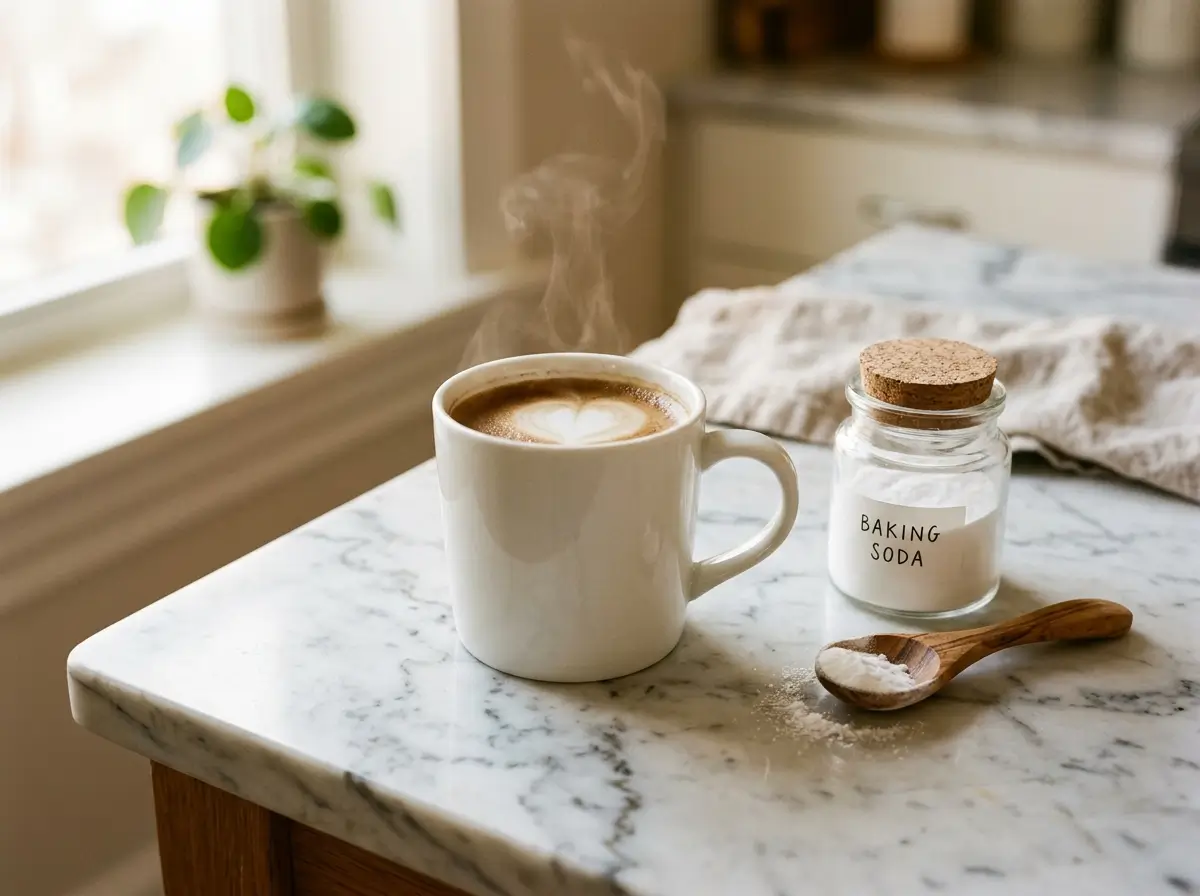
Baking soda in coffee is one of those kitchen tricks that sounds strange until you try it once and never go back to a harsh, bitter cup. A tiny pinch of sodium bicarbonate stirred into your morning brew can soften the acidity, take the edge off bitterness, and make even a cheap or stale roast taste rounder. It’s not a trend dreamed up on social media either; it’s simple chemistry, the same reaction that makes antacids work in your stomach.
This article is for informational purposes only and does not constitute medical advice. The ideas shared here are not designed to treat, prevent or cure any condition. If you are pregnant, breastfeeding, taking medication, or managing a health condition, speak with a licensed healthcare provider before changing your diet.
In this guide, we’ll break down why baking soda affects coffee the way it does, the exact ratio to use, how it compares to low-acid coffee beans, and who should think twice before trying it.
Why Coffee Tastes So Acidic in the First Place
Coffee naturally sits at a pH of around 4.85 to 5, which puts it firmly on the acidic side of the scale. Light and dark roasts both sit in roughly the same pH range, between 4.85 and 5.10. That acidity comes from organic acids like chlorogenic acid, which actually contribute some of the antioxidant compounds people drink coffee for in the first place. Talk About Coffee
For most people, that acidity is just part of the flavor experience — it’s what gives coffee its brightness and tang. But for anyone with a sensitive stomach, the same acids can irritate the stomach lining and esophagus, leading to that uncomfortable burning feeling after your first cup. Cleveland Clinic
How Baking Soda Changes the Equation
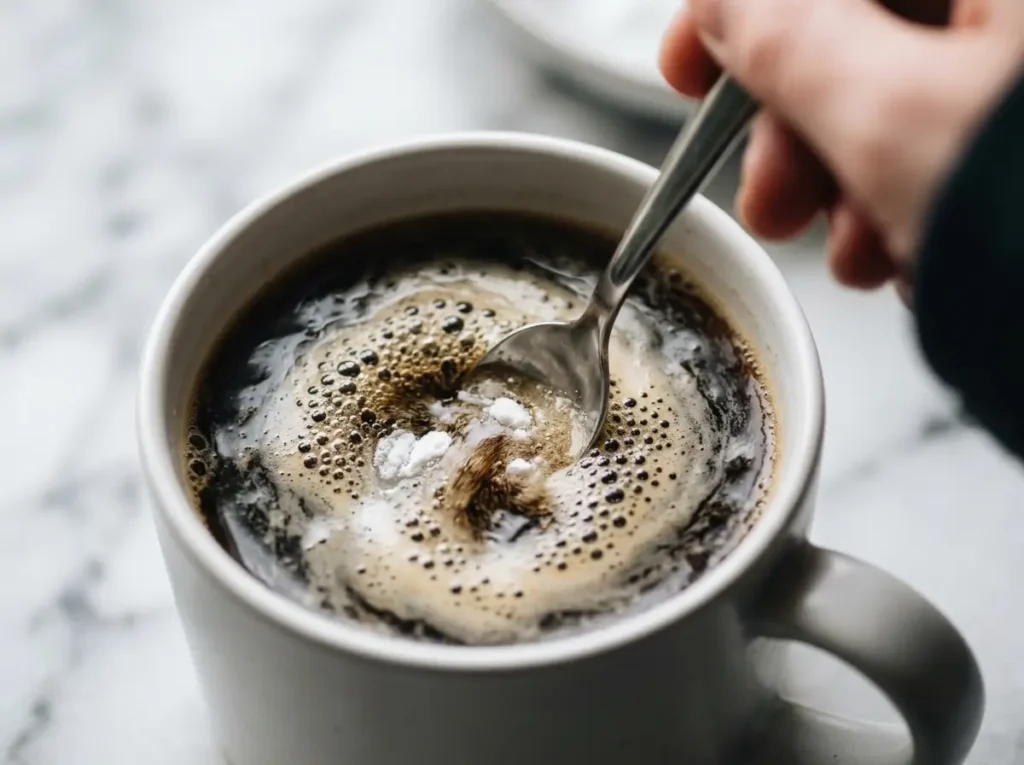
Baking soda, or sodium bicarbonate, is alkaline. When it meets the acids in coffee, it triggers a neutralization reaction that raises the drink’s pH levels, lowering its acidity and mellowing its intensity. You’ll often notice a little fizz or foam when you stir it in — that’s the reaction happening in real time, and it’s completely normal. Chowhound
The result is a cup that tastes smoother and less sharp, without losing its core flavor. As one coffee outlet put it, the addition can enhance flavor and complexity by letting the more delicate characteristics of the beans come through once some of the harsher acids are toned down. The Coffee Guru
The Right Ratio: How Much Baking Soda to Add
This is where most people get it wrong — a little goes a very long way. The general guidance across coffee sources lands in a similar range:
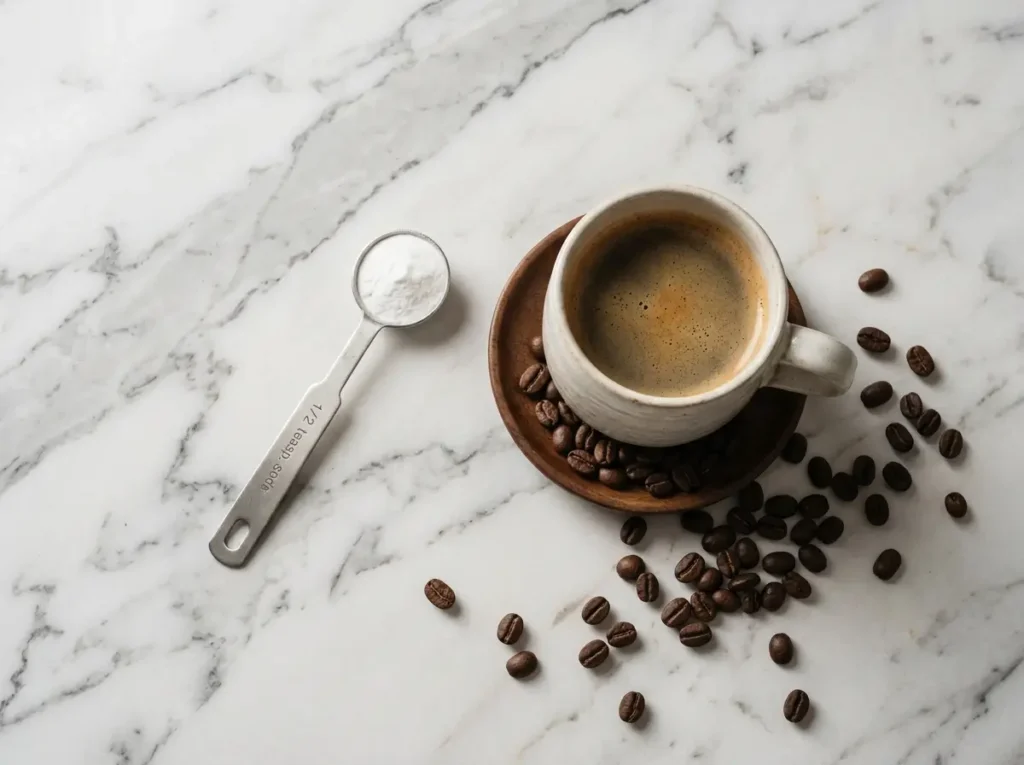
- Standard cup (8 oz): start with about 1/16 to 1/8 teaspoon of baking soda
- Larger cup (12 oz): up to 1/4 teaspoon
- Per 6 oz of brewed coffee: roughly 1/4 teaspoon is considered the upper end, though this can vary by taste and roast The Coffee Guru
Start small. begin with just a pinch, about 1/16th of a teaspoon, and don’t exceed 1/4 teaspoon per cup. Stir until it’s fully dissolved, then taste before adding more — you can always add a touch more, but you can’t take it back out. Coffee Voila
Timing matters too. For drip or pour-over coffee, add the baking soda to the dry grounds before brewing. For French press or AeroPress, stir it into the brewed coffee right after it’s done.
Does Baking Soda in Coffee Help With Acid Reflux?
This is the question most people are actually asking, and the honest answer is: it might offer some temporary relief, but it’s not a fix for a medical condition.
Sodium bicarbonate is a recognized over-the-counter antacid, so neutralizing some of the acid in your cup before it hits your stomach is plausible. Some people report it makes their coffee feel easier on digestion and less likely to trigger that burning sensation associated with heartburn. Greenbrrew
That said, coffee triggers reflux through more than just acidity. caffeine itself can relax the lower esophageal sphincter, the muscle that normally keeps stomach acid where it belongs. Baking soda doesn’t touch that mechanism, so if caffeine is your main trigger, a pinch of baking soda won’t solve the whole problem. Cleveland Clinic
If heartburn after coffee is a regular occurrence for you — more than a couple of times a week — that’s worth bringing up with a healthcare provider rather than relying on a kitchen workaround.
Common Myths to Leave Behind
“It helps you lose weight.” This one shows up constantly online, and it’s not supported by evidence. Adding baking soda to coffee does not cause weight loss, and a controlled study found that drinking sodium-bicarbonate-rich water for four weeks had no effect on body weight, blood glucose, insulin, or lipid levels. If anything, it just makes your coffee taste a little gentler — nothing more. Colipse
“It gives you an energy boost.” Also a myth. baking soda isn’t a weight-loss solution or an energy booster — the real benefit is simply a more digestible, less bitter cup. Coffee Voila
“More is better.” Definitely not. Too much baking soda can leave your coffee tasting soapy or salty, and overdoing it regularly adds unnecessary sodium to your diet.
Baking Soda vs. Low-Acid Coffee Beans
If acidity is a recurring issue for you rather than an occasional annoyance, it’s worth comparing the two approaches:
| Baking soda trick | Low-acid coffee beans | |
|---|---|---|
| Cost | Pennies, pantry staple | Often pricier specialty blends |
| Effort | Stir in seconds | No extra steps |
| Flavor impact | Smoother, slightly less bright | Naturally mellow from the start |
| Best for | Occasional acidic cups | Daily sensitive stomachs |
Many people use baking soda as a quick fix for a particular bag of beans that turned out unexpectedly sharp, while switching to a naturally low-acid roast as their everyday choice.
Who Should Be Cautious
A pinch in an occasional cup is generally considered low-risk for most healthy adults, but a few groups should be more careful:
- People managing high blood pressure, since baking soda adds sodium
- Anyone on medication, as sodium bicarbonate can affect how some drugs are absorbed
- People with kidney conditions, who need to monitor sodium and electrolyte intake closely
- Anyone pregnant or breastfeeding
This is exactly the kind of detail a doctor or dietitian can speak to based on your personal health history — it’s always worth a quick conversation if you’re adding anything new to a daily habit. For a closer look at baking soda on its own, see our guide to drinking baking soda water benefits.
Quick Recipe: Smoother Morning Coffee
- Brew your coffee as usual (8 oz cup)
- Add 1/16 to 1/8 teaspoon of baking soda directly to the hot coffee
- Stir until fully dissolved (it may fizz briefly — that’s normal)
- Taste, and add a touch more only if needed, up to 1/4 teaspoon max
- Add milk, cream, or sweetener as you normally would

Frequently Asked Questions
Does baking soda change the caffeine content of coffee?
No. Baking soda only affects the acid-base balance of the liquid, not the caffeine, which stays exactly the same.
Can I use baking powder instead?
No — baking powder contains additional ingredients (like cornstarch and an acid) that will affect taste differently and aren’t meant for this use.
Will it work with cold brew?
Yes, the same small amount can be stirred into cold brew. Because cold brew is already naturally lower in acid, you may need even less.
Is this the same as drinking baking soda water?
Not quite — this is about a tiny amount mixed into coffee for taste and comfort, not a wellness drink consumed on its own. If you’re curious about that practice specifically, see our guide on drinking baking soda water benefits.