
Medical Disclaimer: This article is for informational purposes only and does not constitute medical advice. The information shared here is not designed to treat, prevent, or cure any condition. If you are pregnant, breastfeeding, taking medication, or managing a health condition, speak with a licensed healthcare provider before changing your diet.
Introduction
Beef gelatin benefits go beyond simply being pork-free — if you’ve been swapping Knox gelatin for a beef-based alternative — whether for halal, kosher, or simple pork-free reasons — you’ve probably wondered whether you’re giving up anything nutritionally in the process. The short answer: no. Beef gelatin delivers essentially the same protein, the same amino acid profile, and the same gelling performance as pork gelatin. The differences that matter are about source and certification, not nutrition.
This guide breaks down what beef gelatin actually contains, how it performs in recipes compared to pork gelatin, and what to look for on the label if halal or kosher compliance matters to you.
What Is Beef Gelatin?
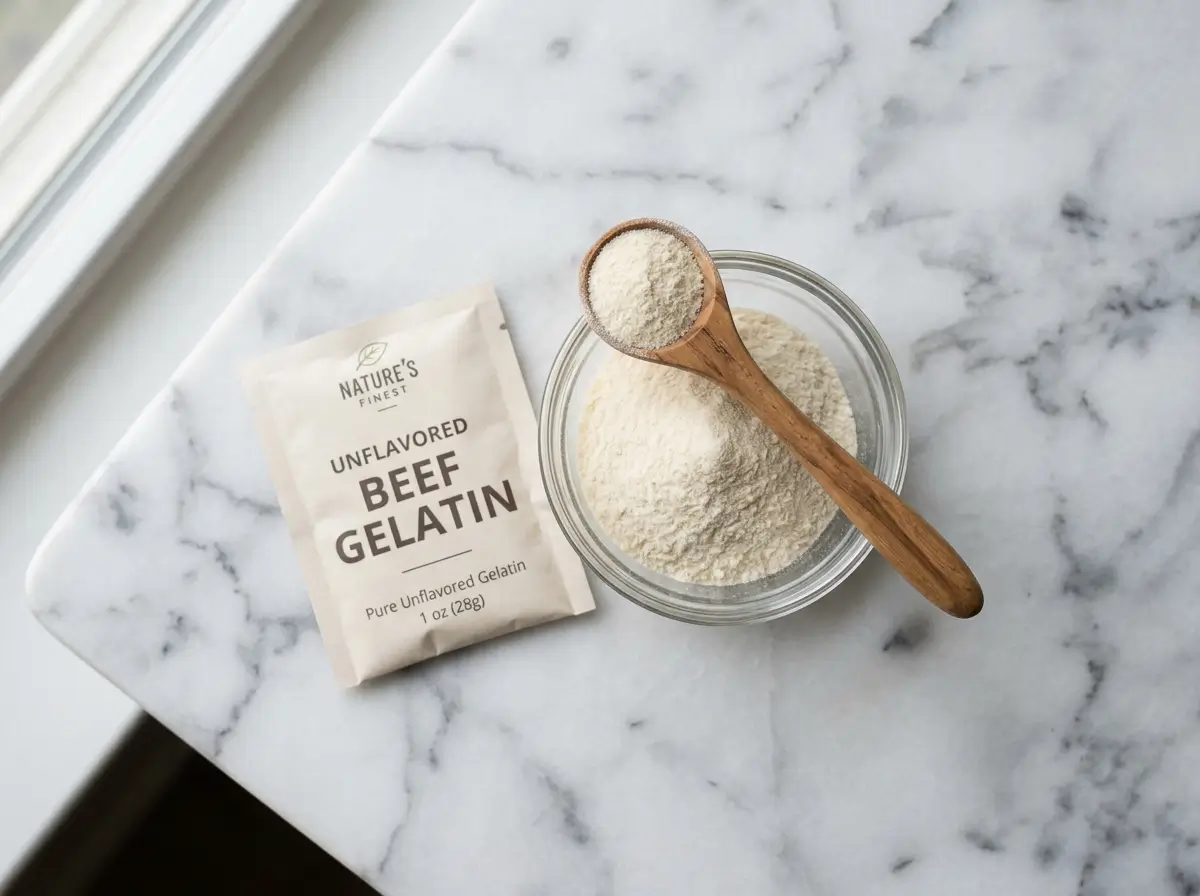
Beef gelatin is made the same way as any other gelatin: collagen from cow hides and bones is processed with heat until it breaks down into the clear, flavorless protein powder used in cooking. The process is identical to pork gelatin production — only the source animal changes.
Because it comes from cattle rather than pigs, beef gelatin is automatically pork-free, which makes it the default swap for halal kitchens, kosher kitchens (when certified), and anyone avoiding pork for personal or dietary reasons. For the full picture on why people look for pork-free gelatin in the first place, see our guide on is gelatin pork.
Beef Gelatin Nutrition: What You’re Actually Getting
Beef gelatin is nearly pure protein — the same profile you’d expect from any collagen-derived gelatin, regardless of source animal.
| Nutrient | Per 1 tbsp (7g) beef gelatin powder |
|---|---|
| Calories | 25–30 kcal |
| Protein | 6–7 g |
| Carbohydrates | 0 g |
| Fat | 0 g |
| Sugar | 0 g |
| Dominant amino acids | Glycine, Proline, Hydroxyproline |
That protein count is essentially identical to pork gelatin, which makes sense — both are collagen-derived, and the amino acid profile of collagen doesn’t vary much by source animal. For a deeper breakdown of what that protein content means and how it compares across brands, see our full guide on does gelatin have protein.
Beef Gelatin vs. Pork Gelatin: Is There a Real Difference?
Nutritionally, no. The gap that actually matters is texture and certification, not protein content.
| Beef Gelatin | Pork Gelatin | |
|---|---|---|
| Protein per tbsp | 6–7 g | 6–7 g |
| Gel strength | Slightly firmer | Slightly softer, very clear |
| Halal-available | Yes, when certified | No |
| Kosher-available | Yes, when certified | No |
| Substitution ratio | 1:1 with pork gelatin | — |

The 1:1 substitution ratio means you can swap beef gelatin into any recipe written for standard (usually pork) gelatin without adjusting quantities — including wellness drinks and smoothies that already call for a pork-free default.
Is Beef Gelatin Halal?
Not automatically — this is the detail most labels don’t make clear. “Beef gelatin” tells you the source animal, but it doesn’t guarantee the animal was slaughtered according to Islamic guidelines. For beef gelatin to be genuinely halal, it needs to carry a certification mark, not just the word “beef” on the package.
For the full explanation of why “pork-free” and “halal” are two different questions, see our guide on is gelatin halal.

Choosing a Beef Gelatin Product
A few things worth checking on the label before you buy:
Certification mark. Look for a halal or kosher symbol if religious compliance matters to you — the word “beef” alone isn’t proof.
Grass-fed vs. conventional. Some brands (like Great Lakes) offer grass-fed beef gelatin, which doesn’t change the protein content but may matter to you for other reasons.
Bloom strength. Higher bloom numbers mean a firmer gel. Most home cooking recipes don’t specify this, but it’s worth knowing if a recipe isn’t setting the way you expect.
Cooking with Beef Gelatin

Beef gelatin behaves exactly like standard gelatin in the kitchen: bloom it in cold water first, dissolve it in warm (not boiling) liquid, and let it set in the fridge. There’s no special technique required — the swap is genuinely 1:1.
If you’re looking for a specific recipe to try it in, our panna cotta recipe works well with a certified beef gelatin swap.
Frequently Asked Questions
Is beef gelatin healthier than pork gelatin?
Not meaningfully — the protein content, calorie count, and amino acid profile are nearly identical between the two. The choice comes down to dietary or religious preference, not nutrition.
Does beef gelatin taste different from pork gelatin?
No. Both are flavorless and odorless when unflavored. Any taste difference you notice in a finished recipe usually comes from other ingredients, not the gelatin itself.
Is all beef gelatin halal?
No. Beef gelatin is only halal if the source animal was slaughtered according to Islamic guidelines and the product carries proper certification. "Beef" alone only tells you it's pork-free, not that it's halal-certified.
Can I substitute beef gelatin for pork gelatin in any recipe?
Yes, at a 1:1 ratio. Beef gelatin performs almost identically to pork gelatin in home cooking, including wellness drinks, jello desserts, and panna cotta.
Where can I buy certified beef gelatin?
Great Lakes Gelatin and Vital Proteins both offer beef-derived gelatin products, and several carry halal or kosher certification. Check the specific product label, since not every SKU from a brand is certified.
Can I take beef gelatin every day?
Yes. Most healthy adults can take gelatin daily. The NIH notes that up to 10 grams per day for up to six months appears safe for most people. If you have a pre-existing health condition or take medication, check with your healthcare provider first.
What are the side effects of beef gelatin powder?
Beef gelatin is generally well tolerated. The most commonly reported issues are mild digestive discomfort or bloating, usually when starting with a large amount rather than building up gradually. People with a known sensitivity to collagen-based products should introduce it slowly and watch how their body responds.
Is beef gelatin good for skin and hair?
Gelatin provides collagen-derived protein, including amino acids like glycine and proline that are involved in skin structure. Some people include gelatin in their routine for this reason, but current research doesn't support it as a guaranteed way to improve skin appearance or hair growth on its own. It's best thought of as a protein source that may support these processes as part of an overall balanced diet, not a stand-alone treatment.
What's the difference between beef gelatin and collagen peptides?
Both come from the same collagen source, but they behave differently. Gelatin gels when chilled, which is what makes jello and panna cotta set. Collagen peptides dissolve in cold liquid and don't gel, which makes them better suited for smoothies and coffee. See our full comparison in our guide on does gelatin have protein.
The Bottom Line
Beef gelatin is nutritionally interchangeable with pork gelatin — same protein, same amino acids, same performance in recipes. The only thing that actually changes is the source animal, which matters if you’re avoiding pork for religious, dietary, or personal reasons. If halal or kosher compliance is the goal, look past the word “beef” on the label and check for an actual certification mark.
Sources: USDA FoodData Central; general gelatin composition research consistent with collagen-derived protein products.