
I used to think a realistic wellness routine meant doing everything perfectly — the 5am wake-up, the green smoothie, the hour of exercise, the eight hours of sleep, no exceptions. After years of yo-yo dieting and burning out on routines that lasted about two weeks each, I’ve landed somewhere much simpler: pick a few things that actually fit your life, do them consistently, and let the rest go. This is what that looks like in practice, built from what I actually do and what the research actually supports — not a 5am miracle morning.
| ⚕️ Medical Disclaimer This article is for informational purposes only and does not constitute medical advice. It reflects general wellness practices, not a treatment plan. If you are managing a health condition or taking medication, speak with a licensed healthcare provider before changing your routine, diet, or supplement use. |
Why “Realistic” Matters More Than “Optimal”
Most wellness content is written for someone with unlimited time, a stocked kitchen, and no bad days. A realistic wellness routine is built for the opposite: busy mornings, inconsistent sleep, and a life that doesn’t pause for self-care. The goal isn’t to hit every pillar of wellness perfectly every day — it’s to have a small set of habits solid enough that they survive a bad week.
Wellness routines are usually broken into a handful of pillars: sleep, nutrition and digestion, movement, and stress management. Here’s how I actually approach each one, with the specific things I rely on.
Sleep: The Pillar Everything Else Depends On
According to the CDC, most adults need at least 7 hours of sleep per night, and consistent sleep timing matters as much as total hours. A wind-down routine is the one habit I’d protect above almost everything else — not because any single ingredient is magic, but because the ritual itself signals to your body that the day is ending.
My actual evening routine rotates between two things depending on the night: ashwagandha tea when I want something with more research behind it for stress and sleep specifically, or reishi mushroom tea when I want something gentler and more ritual than remedy. Neither is a sleep aid in the pharmaceutical sense — they’re part of a wind-down cue, not a guarantee.
Digestion: The Pillar Nobody Talks About Honestly
Gut health became a wellness buzzword fast, and a lot of the advice around it oversimplifies. What’s actually helped me is understanding the difference between prebiotics and probiotics rather than just buying whatever has the trendiest label — I broke that down in my prebiotic vs probiotic guide.
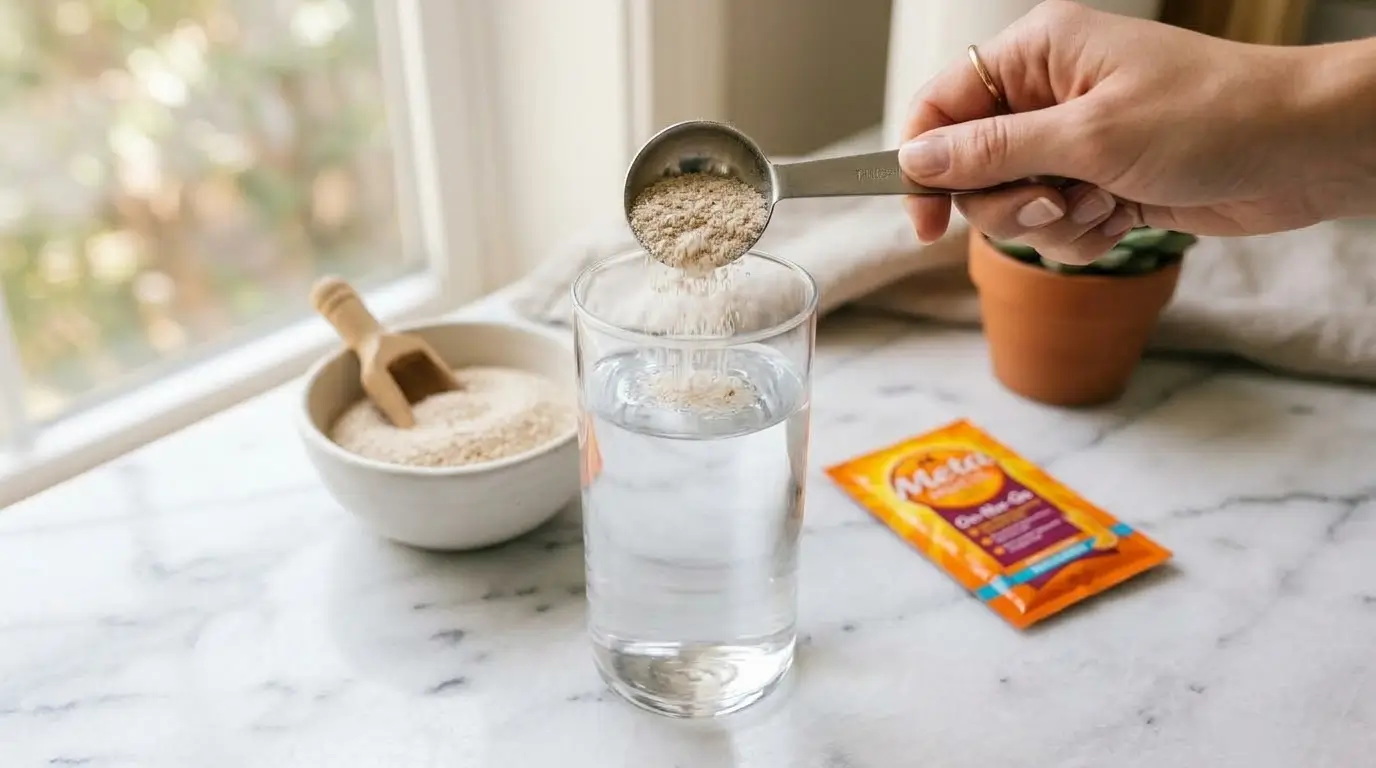
Fiber is the other half of this, and it’s the part most routines skip entirely. If you’re comparing fiber options, my glucomannan vs psyllium husk comparison and psyllium husk vs Metamucil breakdown cover what’s actually worth your money versus what’s mostly marketing.
Supplements: With Discernment, Not Blind Faith
I use a handful of supplements consistently, and I’m honest about what they do and don’t do. Collagen peptides are a good example — I use them daily in coffee, and the research on skin and joint benefits is real but modest, not the dramatic transformation the marketing implies. I break down exactly what the evidence supports in my collagen peptides guide.

The rule I use for any new supplement: if I can’t explain what it actually does and what the realistic expectation is, I don’t add it just because it’s trending.
Movement: Small and Sustainable Beats Ambitious and Abandoned
I’m not a marathon runner, and my movement routine reflects that — mostly walking, some strength work, and the occasional harder session where I actually use pre-workout strategies grounded in research rather than gym folklore. My baking soda pre-workout guide covers one of the few evidence-backed, low-cost options I’ve actually tested myself.
The general research consensus from Harvard Health is straightforward: consistency in moderate activity matters more than intensity for most health outcomes. That’s freeing, honestly — it means the walk counts.
Stress: The Pillar That Undoes the Other Three
You can nail sleep, nutrition, and movement and still feel terrible if stress is unmanaged — it’s the pillar that quietly sabotages the rest. The American Psychological Association points to social connection and manageable daily structure, not elaborate rituals, as some of the most effective stress buffers. For me, that’s meant protecting the evening tea ritual above as much for the five minutes of doing nothing else as for what’s in the cup.
What a Realistic Week Actually Looks Like
- Most nights: ashwagandha or reishi tea, no screens for the last 20 minutes.
- Most mornings: collagen peptides in coffee, nothing elaborate.
- Daily: a fiber source, usually whichever is already open in the pantry.
- 3-4 times a week: a walk or a workout, occasionally with a pre-workout strategy if it’s a harder session.
- Every week, not every day: something purely for stress — usually just unstructured time with people I like.
Notice what’s missing: no strict schedule, no perfect streaks, no single habit doing all the work. That’s the actual point.
Frequently Asked Questions
What is a realistic wellness routine?
A realistic wellness routine is a small, sustainable set of habits across sleep, nutrition, movement, and stress management that you can maintain consistently — not an elaborate, all-or-nothing regimen that falls apart after a bad week.
How many habits should a wellness routine include?
There’s no fixed number, but starting with one or two habits per pillar (sleep, digestion, movement, stress) and building consistency before adding more tends to work better than overhauling everything at once.
Do I need supplements to have a good wellness routine?
No. Supplements like collagen peptides or fiber can support specific goals, but the foundation of any wellness routine is sleep, movement, nutrition, and stress management — supplements are additions, not substitutes.
How long does it take to build a wellness routine?
Habit research generally points to weeks rather than days for a new habit to feel automatic, and timelines vary a lot by person and habit. Consistency matters more than speed.
Sources
American Psychological Association — Manage Stress Through Social Support
Harvard Health Publishing — Exercise and Fitness
Bottom Line
A realistic wellness routine isn’t the one with the most habits — it’s the one that survives a busy week without falling apart. Sleep, digestion, thoughtful supplement use, movement, and stress management cover the real foundation; everything else is optional decoration. Start with one pillar, get it consistent, and build from there.