
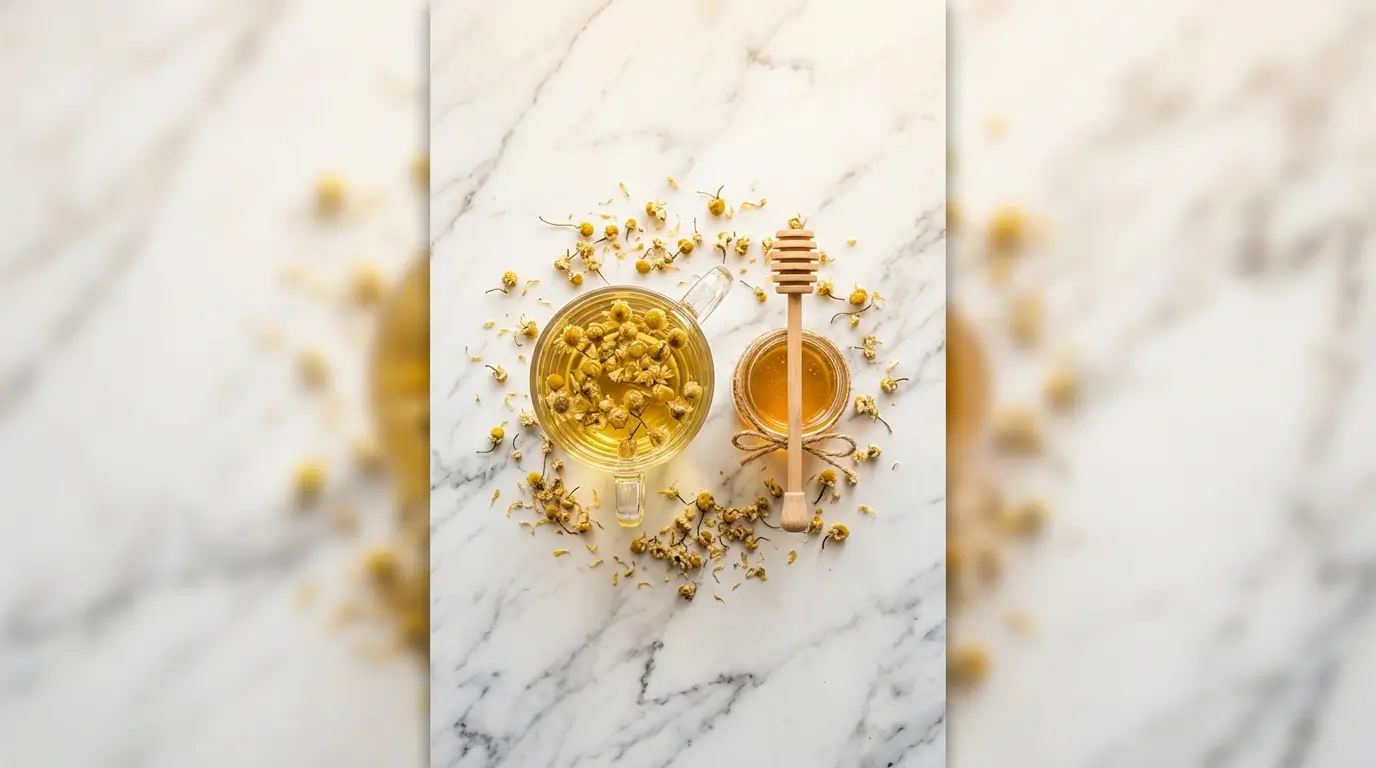
There’s a little ritual I’ve kept for years: kettle on, favorite mug out, a spoonful of dried chamomile flowers dropped into the strainer. By the time the water hits the flowers and the kitchen smells like warm apples and honey, my shoulders have already come down an inch. It’s the easiest drink I make, and honestly one of my most-loved.
But here’s the thing I learned the hard way: chamomile tea can taste amazing or like wet hay, and the difference is almost always the ratio and the steep time. So today I’m walking you through exactly how to make chamomile tea three ways (dried flowers, tea bags, and fresh flowers from the garden), plus the little details that make each cup taste golden and sweet instead of flat.
Disclaimer:
| This article is for informational purposes only and does not constitute medical advice. The recipes and ideas shared here are not designed to treat, prevent or cure any condition. If you are pregnant, breastfeeding, taking medication, or managing a health condition, speak with a licensed healthcare provider before changing your diet. |
What You’ll Need
- Chamomile: dried flowers, a tea bag, or fresh flower heads (ratios below)
- Water: filtered if your tap water tastes strong, since chamomile is delicate
- A kettle or small saucepan
- A mug with a lid or a small saucer to cover the cup while it steeps
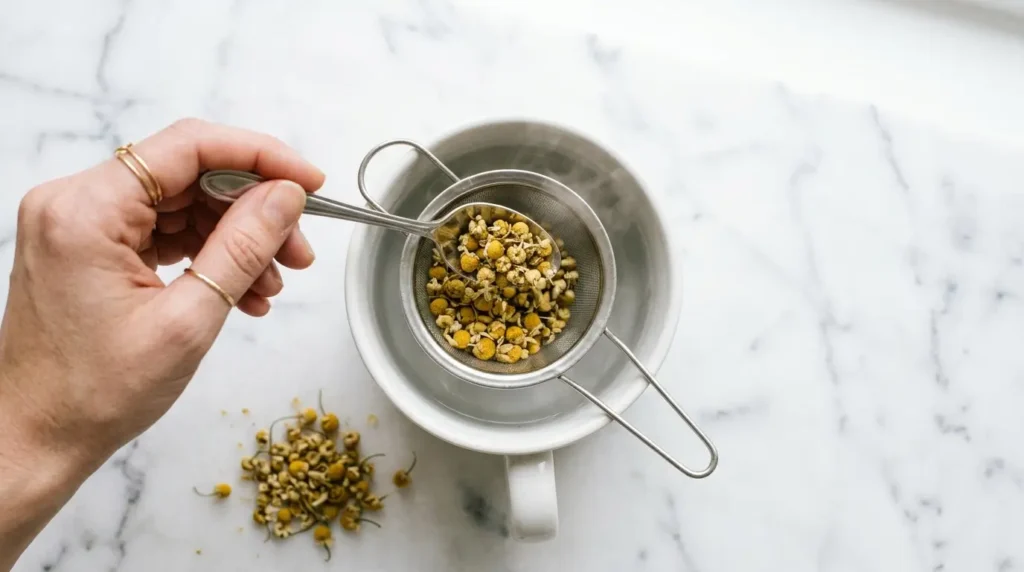
- A fine-mesh strainer or tea infuser for loose flowers
- Optional add-ins: honey, a slice of lemon, a cinnamon stick, or a few fresh mint leaves
How to Make Chamomile Tea from Dried Flowers
This is my everyday method, and it gives the fullest flavor. Loose dried chamomile usually contains whole flower heads, which hold on to more of their aroma than the finely crushed flowers inside most tea bags.
- Heat the water. Bring 1 cup (8 oz) of water to a boil, then let it sit for about 30 seconds so it’s just off the boil.
- Measure the flowers. Add 1 to 2 teaspoons of dried chamomile flowers to your infuser. Start with 1 teaspoon for a light, floral cup and go up to 2 for a rich, honeyed one.
- Pour and cover. Pour the water over the flowers and cover your mug with a lid or saucer. This keeps the fragrant steam (where so much of the flavor lives) in your cup instead of in your kitchen.
- Steep for 5 minutes. Taste, and give it a couple more minutes if you want it stronger.
- Strain and sweeten. Remove the infuser, stir in a little honey if you like, and sip while it’s warm.
How to Make Chamomile Tea with Tea Bags
Tea bags are what I keep in my desk drawer and my travel bag. They’re convenient, and a good brand makes a lovely cup.
- Place 1 tea bag in your mug.
- Pour 8 oz of just-boiled water over it.
- Cover and steep for 5 minutes. Tea bags hold finely cut flowers, so they release flavor quickly. I don’t find that going much past 7 minutes adds anything.
- Gently press the bag against the side of the mug with a spoon, remove it, and enjoy.
My tip: if your tea-bag chamomile tastes weak, use two bags in a slightly bigger mug rather than steeping one bag for 15 minutes. Longer steeping pulls out more of the grassy notes, not more sweetness.
How to Make Chamomile Tea Without Tea Bags
No infuser and no tea bags? No problem. You have two easy options:
- The saucepan method: Add 1 to 2 teaspoons of dried flowers to 8 oz of water in a small saucepan, bring it just to a simmer, turn off the heat, cover, and let it steep for 5 minutes. Pour through any fine strainer (a coffee filter set in a funnel works too).
- The French press method: Add the flowers to a French press, pour in the hot water, steep 5 minutes, and press. This is my favorite way to make 3 or 4 cups at once when friends come over.
How to Make Chamomile Tea from Fresh Flowers
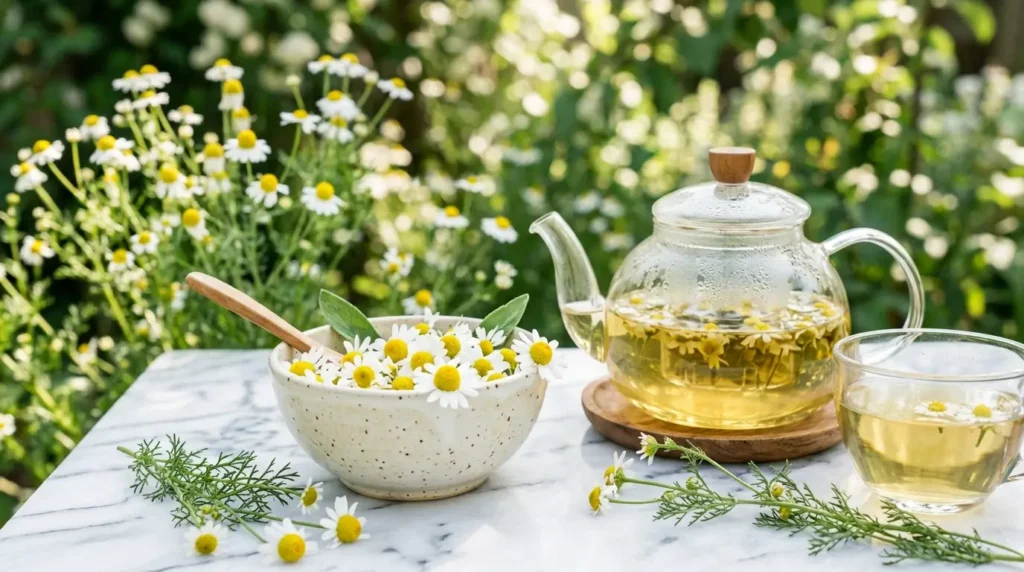
If you grow chamomile (it’s one of the easiest herbs I’ve ever planted), fresh-flower tea is a summer treat. It tastes brighter and more apple-like than dried.
- Pick the flowers when they’re fully open, ideally mid-morning once the dew has dried. Snip just the flower heads.
- Rinse gently in cool water to remove any dust or tiny garden visitors, and pat dry.
- Measure 3 to 4 tablespoons of fresh flower heads per 8 oz cup. Fresh flowers are full of water, so you need roughly three times the volume you’d use with dried.
- Steep in just-boiled water, covered, for 5 minutes, then strain.
How Many Chamomile Flowers Make a Cup of Tea?
For fresh flowers, a generous small handful (those 3 to 4 tablespoons) makes one mug. For dried, it’s far less: 1 to 2 teaspoons, because drying shrinks the flowers and concentrates their flavor.
Can You Make Chamomile Tea from Leaves?
This one comes up a lot, so let’s clear it up: chamomile tea is made from the flowers, not the leaves. The flower heads are where that sweet, apple-and-honey flavor comes from. The feathery leaves taste much greener and more grassy, which is why the dried chamomile and tea bags you buy are made from the blossoms. If your garden chamomile has more leaves than flowers, wait a few days for more blooms to open.
How Long to Steep Chamomile Tea
Here’s the cheat sheet I wish I’d had when I started:
| Type of chamomile | Amount per 8 oz | Steep time | What you’ll taste |
|---|---|---|---|
| Dried flowers (loose) | 1–2 tsp | 5–7 minutes | Full, honeyed, floral |
| Tea bag | 1 bag | 5 minutes | Light and mellow |
| Fresh flowers | 3–4 tbsp | 5 minutes | Bright, apple-like |
| Extra-strong cup | 2 tsp dried | 8–10 minutes | Deep, slightly earthy |
Unlike black or green tea, chamomile doesn’t turn harsh quickly, but past 10 minutes it starts to taste more earthy and less sweet. Covering the mug matters more than steeping longer.
What Does Chamomile Tea Taste Like?
Good chamomile tastes gently sweet with notes of apple, honey, and a soft floral finish. It’s mellow, never bitter when brewed right, and it pairs beautifully with a squeeze of lemon or a drizzle of honey. If yours tastes like hay, try fresher flowers (dried chamomile loses aroma after about a year in the pantry) and a covered mug.
Does Chamomile Tea Have Caffeine?
No. Pure chamomile tea is naturally caffeine-free. Chamomile is an herb, not a “true” tea from the Camellia sinensis plant (the one that gives us black, green, and white tea), so there’s no caffeine in the flowers.
One thing to watch: some boxed blends mix chamomile with green tea or other ingredients. If caffeine matters to you, check that the label lists chamomile only.
Chamomile Tea with Milk
Yes, chamomile and milk are a lovely pair, especially with a little honey and cinnamon. For a quick version, steep a slightly stronger cup (2 teaspoons of dried flowers in 6 oz of water) and top it with 2 oz of warm milk. For the full frothy, café-style version with oat, coconut, and dairy milk options, try my chamomile tea latte.
A Cozy Chamomile Cup for Your Evening Wind-Down
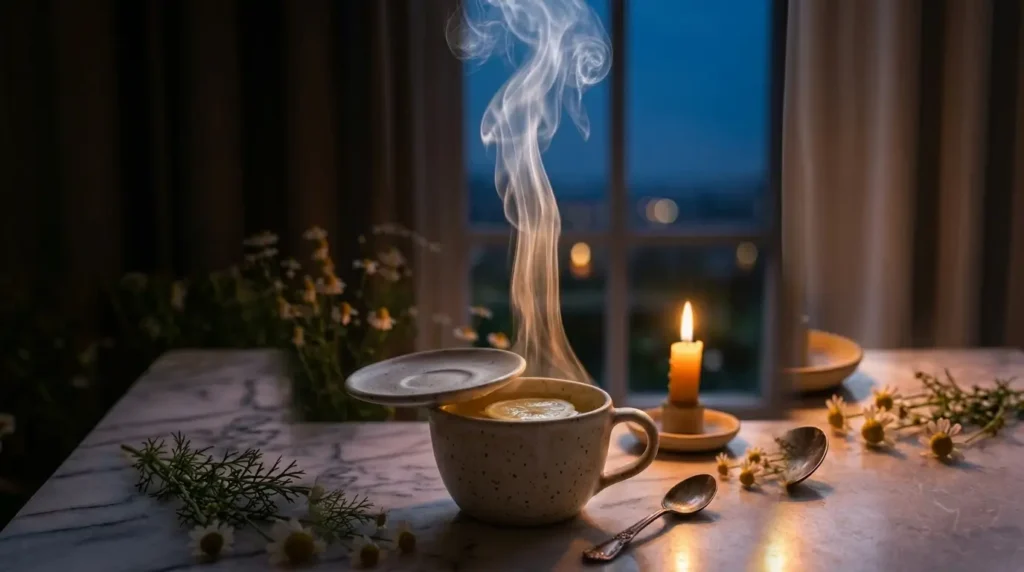
Chamomile is my go-to drink in the evening, mostly because it’s warm, caffeine-free, and it tells my brain the day is done. My favorite evening cup is simple: 2 teaspoons of dried flowers, a thin slice of lemon, and a small spoonful of honey. I’m putting together a separate guide on chamomile tea before bed, covering timing and my full wind-down routine.
When I want something cold and bright earlier in the day instead, I reach for my chia seed lemon water. And if you’re curious about how timing shapes other wellness drinks, I broke it down in my guide to the best time to drink chia seed water.
What the Research Says About Chamomile
I love chamomile, but I also want to be honest with you about what we actually know. According to the National Center for Complementary and Integrative Health (NCCIH), studies on chamomile for specific conditions haven’t produced enough reliable evidence to rate how well it works. Some preliminary research looks promising for anxiety, but the evidence on sleep is limited and mixed.
So I think of chamomile as a comforting, caffeine-free ritual rather than a remedy. And that’s more than enough reason to keep a jar in my pantry.
What to Avoid When Drinking Chamomile Tea
Chamomile is considered likely safe in the amounts found in teas, per the NCCIH. Still, a few people should be careful:
- If you’re allergic to ragweed or daisy-family plants. Chamomile belongs to the same family, and Memorial Sloan Kettering Cancer Center advises people with these allergies to avoid it.
- If you take blood thinners such as warfarin. Memorial Sloan Kettering notes chamomile may increase the risk of bruising or bleeding, so talk to your healthcare provider first.
- If you take other medications. Chamomile may interact with some drugs, including sedatives, as listed by Mount Sinai’s health library. When in doubt, ask your pharmacist.
- If you’re pregnant or breastfeeding. The NCCIH notes that little is known about chamomile’s safety during pregnancy or breastfeeding, so check with your healthcare provider before making it a habit.
Herbal teas also count toward your daily fluids, something I leaned on in my guide to staying hydrated during wildfire smoke. For more warm and cold sippers, browse all my wellness drinks.
My Best Tips for the Perfect Cup
- Always cover your mug. It’s the single biggest flavor upgrade.
- Buy whole flower heads when you can. They smell sweeter than dusty, crushed chamomile.
- Store dried flowers in an airtight jar away from light and use them within about a year.
- Add honey once the tea has cooled slightly so you can taste its flavor, not just its sweetness.
- Try it iced: brew it double-strength, let it cool, and pour it over ice with a lemon wheel.
Can I drink chamomile tea every day?
For most healthy adults, a cup of chamomile tea is considered likely safe in the amounts found in teas, according to the NCCIH. If you take medication, are pregnant or breastfeeding, or have a ragweed allergy, check with your healthcare provider first.
Should you cover chamomile tea while it steeps?
Yes. Covering the mug keeps the aromatic steam in your cup, which gives you a sweeter, more fragrant tea.
Can you reuse a chamomile tea bag?
You can, but the second cup will be much lighter. If you do, use it within a few hours and steep it a little longer.
Can you make chamomile tea in the microwave?
You can heat the water in the microwave, but add the chamomile after, then cover and steep for 5 minutes. Heating the flowers directly in the microwave can give uneven, flat-tasting results.
Is chamomile tea high in caffeine?
No. Pure chamomile tea contains no caffeine at all. Just check the label on blends, since some include green or black tea.
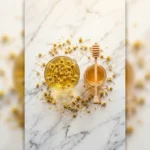
How to Make Chamomile Tea (Dried Flowers, Tea Bags, or Fresh)
- Total Time: 7 minutes
- Yield: 1 cup 1x
Description
A simple, caffeine-free chamomile tea made with dried flowers (or a tea bag), steeped covered for the sweetest, most fragrant cup.
Ingredients
- 1 cup (8 oz) water
- 1–2 teaspoons dried chamomile flowers (or 1 chamomile tea bag, or 3–4 tablespoons fresh flower heads)
- 1 teaspoon honey (optional)
- 1 thin slice lemon (optional)
Instructions
- Bring the water to a boil, then let it rest for 30 seconds.
- Place the chamomile in a tea infuser or mug.
- Pour the hot water over the chamomile and cover the mug with a lid or saucer.
- Steep for 5 minutes (up to 7 for a stronger cup).
- Strain or remove the tea bag, stir in honey and lemon if using, and serve warm.
Notes
For fresh flowers, use 3–4 tablespoons of flower heads per cup. Store dried chamomile in an airtight jar and use within about a year for the best flavor.
- Prep Time: 2 minutes
- Cook Time: 5 minutes
- Category: Drinks
- Method: Steeping
- Cuisine: American
Nutrition
- Serving Size: 1 cup
Keywords: how to make chamomile tea, chamomile tea recipe, chamomile tea from dried flowers, caffeine-free tea