
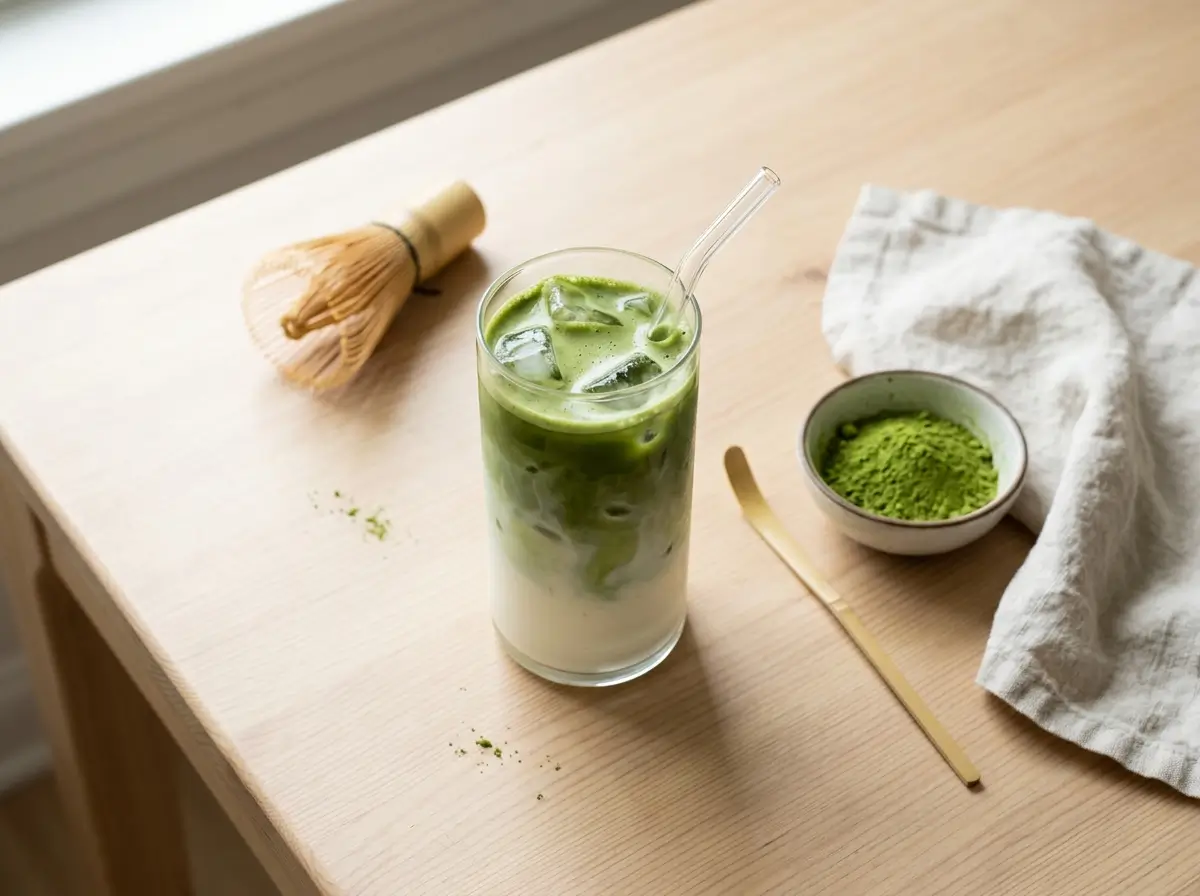
An iced matcha latte takes about five minutes, one glass, and one detail most quick recipes skip: making a smooth paste first so the powder never turns into green clumps. This guide gives you the exact amounts, the order that keeps it creamy, which milk to pick, and how much caffeine ends up in your glass.
| ⚕️ Medical Disclaimer This article is for informational purposes only and does not constitute medical advice. The information shared here is not designed to treat, prevent, or cure any condition. If you are pregnant, breastfeeding, taking medication, sensitive to caffeine, or managing a health condition, speak with a licensed healthcare provider before making matcha a daily habit. |
What You Need for an Iced Matcha Latte
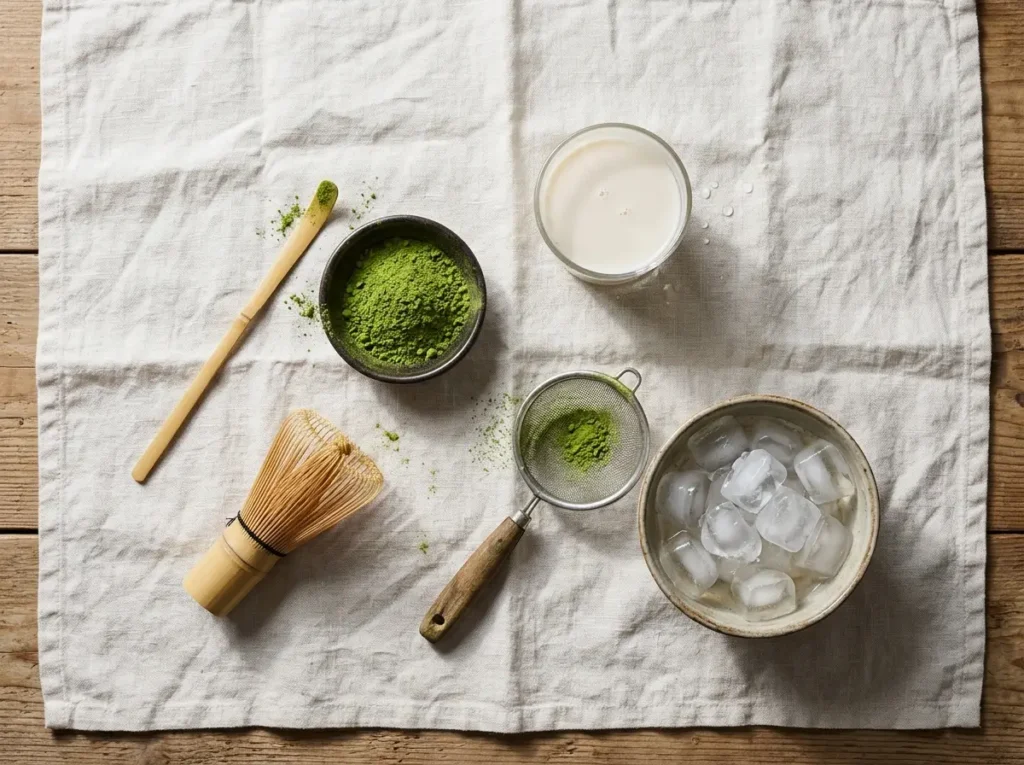
This makes one tall glass, about 12 ounces. If you are new to matcha, our guide on how to make matcha tea from powder explains the grades and the traditional bowl method in more detail.
- 1 teaspoon (about 2 g) of matcha powder
- 2 tablespoons (30 ml) of hot water, about 185°F (85°C)
- ¾ cup (180 ml) of cold milk of your choice
- About 1 cup of ice
- Optional: 1 teaspoon of honey or maple syrup
- A small fine-mesh sieve, plus a bamboo whisk (chasen) or a handheld milk frother
For the water, let freshly boiled water sit in a separate cup for about a minute. Hot but not boiling is the target.
How to Make an Iced Matcha Latte Step by Step
- Sift the matcha through the sieve into a small bowl or a wide cup.
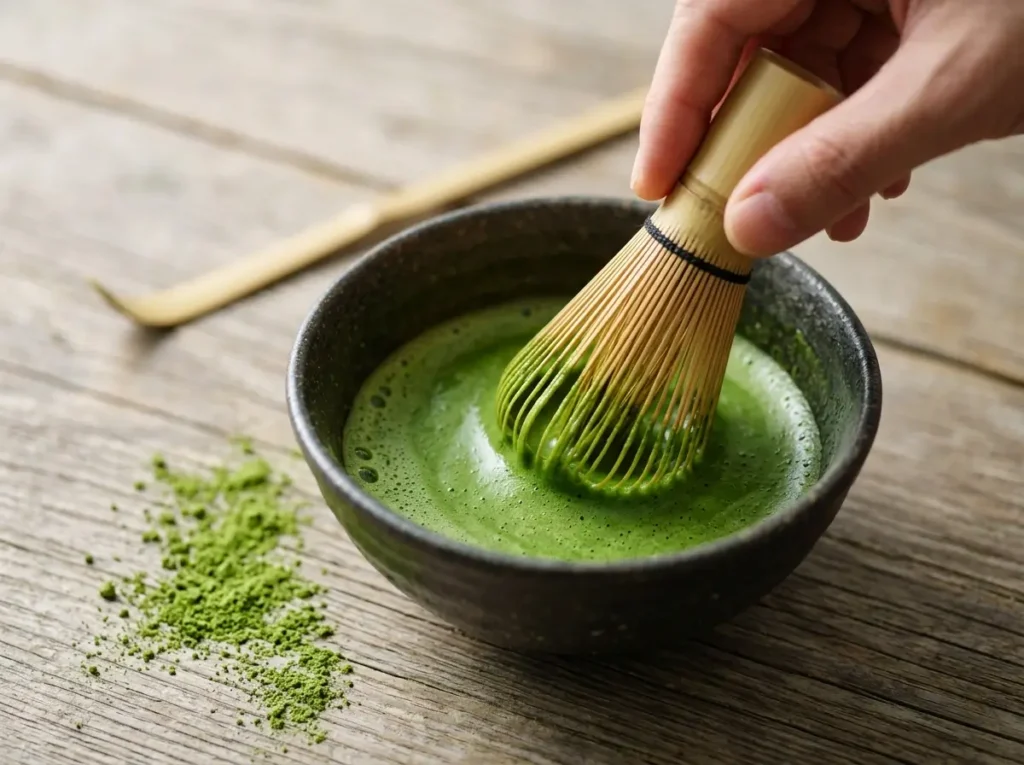
- Add the 2 tablespoons of hot water and whisk until you have a smooth, slightly frothy paste with no dry spots. A back-and-forth “W” motion works better than circles.
- Stir the sweetener into the warm matcha if you are using any, so it dissolves fully.
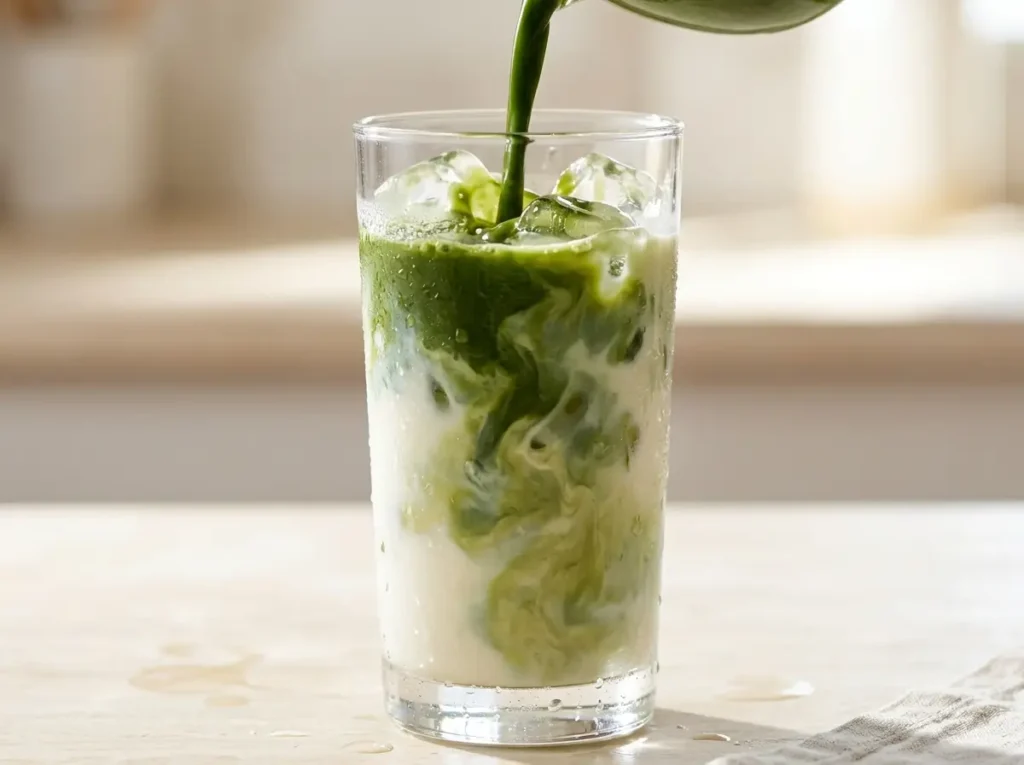
- Fill a tall glass with ice and pour in the cold milk until it is about three-quarters full.
- Pour the matcha over the milk and stir, or leave it layered for the classic green-and-white look.
How to Avoid Clumps
Clumps almost always come from skipping the sieve or from adding all the liquid at once. Keep the first splash of water small so the powder dissolves into a paste before it meets the milk. Both a bamboo whisk and a small handheld frother work, according to A Cozy Kitchen, so use whichever you already own. Matcha also settles as it sits, so give the glass a quick stir before you drink it.
Which Milk Works Best?
Any milk works, so this comes down to taste and what you want from the drink. Cleveland Clinic recommends plant-based milks such as almond, cashew, oat, rice, or soy for matcha lattes, and notes that dairy milk may reduce some of matcha’s antioxidant activity.
| Milk | What to expect |
|---|---|
| Oat | Creamy texture, mild flavor that lets the matcha stand out |
| Almond | Lighter body with a slightly nutty note |
| Soy | Smooth and neutral |
| Dairy | Familiar and rich; Cleveland Clinic notes it may lower some antioxidant activity |
The taste notes are my own kitchen impressions, not lab results, so try one or two and keep the one you like best.
How Much Caffeine Is in an Iced Matcha Latte?
Harvard Health lists 38 to 89 mg of caffeine per 8-ounce cup of matcha, compared with 100 to 120 mg for coffee. A latte made with one teaspoon of powder, the same amount as a thin bowl of matcha, is likely to land in that range, because the milk and ice do not add or remove caffeine. Using two teaspoons for a stronger flavor means more caffeine too.
The FDA cites 400 mg a day as an amount not generally associated with negative effects for most healthy adults, but people vary widely in how sensitive they are. Cleveland Clinic suggests drinking matcha earlier in the day. For a warm evening drink without caffeine, try our honey chamomile tea latte instead.
Making It Lower in Sugar
Cleveland Clinic describes store-bought matcha drinks as high-sugar and says homemade versions can be healthier. At home you decide: skip the sweetener entirely, or stir in a small amount of honey or maple syrup, which is the suggestion Cleveland Clinic gives. A teaspoon is usually enough when the matcha is good quality, and a smoother grade needs less sweetening.
Who Should Be Careful With Matcha?
Caffeine-sensitive people, anyone who is pregnant or breastfeeding, and anyone taking prescription medication should check with a healthcare provider first. The full list, with sources, is in our matcha guide. For how a daily drink fits into a bigger routine, see our realistic wellness routine.
Iced Matcha Latte FAQ
Can I make an iced matcha latte without a bamboo whisk?
Yes. A small handheld milk frother works as well as a bamboo whisk. A tightly closed jar shaken hard is a decent backup. Sift the powder first either way to prevent clumps.
Should I use hot or cold water for iced matcha?
Make the paste with a small amount of hot, not boiling, water at about 185°F (85°C), because matcha blends more smoothly that way. Then add cold milk and ice.
Can I use culinary grade matcha for a latte?
Yes. Cleveland Clinic describes culinary matcha as slightly more robust and suited to smoothies, baking, and cooking, and the milk in a latte softens that edge. Ceremonial grade tastes smoother if you want a more delicate drink.
How much caffeine is in an iced matcha latte?
Harvard Health lists 38 to 89 mg per 8-ounce cup of matcha. A latte made with one teaspoon of powder is likely in that range, since milk and ice do not add caffeine.
Why is my iced matcha latte clumpy or bitter?
Clumps usually come from skipping the sieve or the paste step. Bitterness often points to too much powder or water that is too hot, so use less powder and let boiled water cool for about a minute.
Sources
- Cleveland Clinic: How To Make Matcha: Teas, Lattes, Smoothies and More
- Harvard Health: Matcha: A look at possible health benefits
- FDA: Spilling the Beans: How Much Caffeine Is Too Much?
- A Cozy Kitchen: Iced Matcha Latte (whisk and frother tips)
Bottom Line
A good iced matcha latte comes down to three habits: sift the powder, whisk it into a smooth paste with a little hot water, then pour it over cold milk and ice. Pick the milk you enjoy, keep the sweetener small, and count the caffeine like you would for a cup of coffee. Made at home in five minutes, it is an easy daily drink you fully control.
PrintIced Matcha Latte Recipe: Smooth, Clump-Free, 5 Minutes
- Total Time: 5 minutes
- Yield: 1 glass 1x
Description
A smooth, clump-free iced matcha latte made in 5 minutes with a simple matcha paste, cold milk, and ice.
Ingredients
- 1 teaspoon (about 2 g) matcha powder, sifted
- 2 tablespoons (30 ml) hot water, about 185°F (85°C)
- ¾ cup (180 ml) cold milk of your choice
- About 1 cup ice
- 1 teaspoon honey or maple syrup (optional)
Instructions
- Sift the matcha through a small fine sieve into a small bowl or wide cup.
- Add the hot water, not boiling, and whisk with a bamboo whisk or handheld frother until you have a smooth, slightly frothy paste with no dry spots.
- Stir in the honey or maple syrup, if using, while the paste is still warm.
- Fill a tall glass with ice and pour in the cold milk until it is about three-quarters full.
- Pour the matcha paste over the milk and stir, or leave it layered. Drink right away.
Notes
Make it fresh and stir before drinking, because matcha settles as it sits. Use two teaspoons of powder for a stronger flavor, but note that this also adds caffeine. Culinary-grade matcha works in lattes; ceremonial grade tastes smoother.
- Prep Time: 5 minutes
- Category: Drinks
- Method: Whisked
- Cuisine: Japanese
Keywords: iced matcha latte, matcha latte