

Can you drink chia seeds at night? For most healthy adults, yes, as long as the seeds are soaked first and you keep the amount modest. This guide explains the one safety rule that matters most, how to prepare chia water for the evening, what the fiber can do to your stomach, and who should check with a healthcare provider before making it a bedtime habit.
| ⚕️ Medical Disclaimer This article is for informational purposes only and does not constitute medical advice. The information shared here is not designed to treat, prevent, or cure any condition. If you have trouble swallowing, take medication for blood sugar or blood pressure, have a digestive condition, or have a seed allergy, speak with a licensed healthcare provider before adding chia seeds to your routine. |
The Short Answer: Yes, If They Are Soaked
Nothing about the time of day makes chia seeds unsafe. Healthline notes that most people do not experience side effects from up to about 1 ounce (28 grams) of chia seeds a day, and that eating 2 tablespoons daily is generally considered safe for most people. What matters at night is the same as in the morning: how you prepare them and how much fiber your stomach can handle.
If you are still deciding when to drink it, our guide to the best time to drink chia seed water compares morning, afternoon, and evening. This article focuses on the nighttime questions people ask most.
Never Eat Chia Seeds Dry, Especially Before Bed
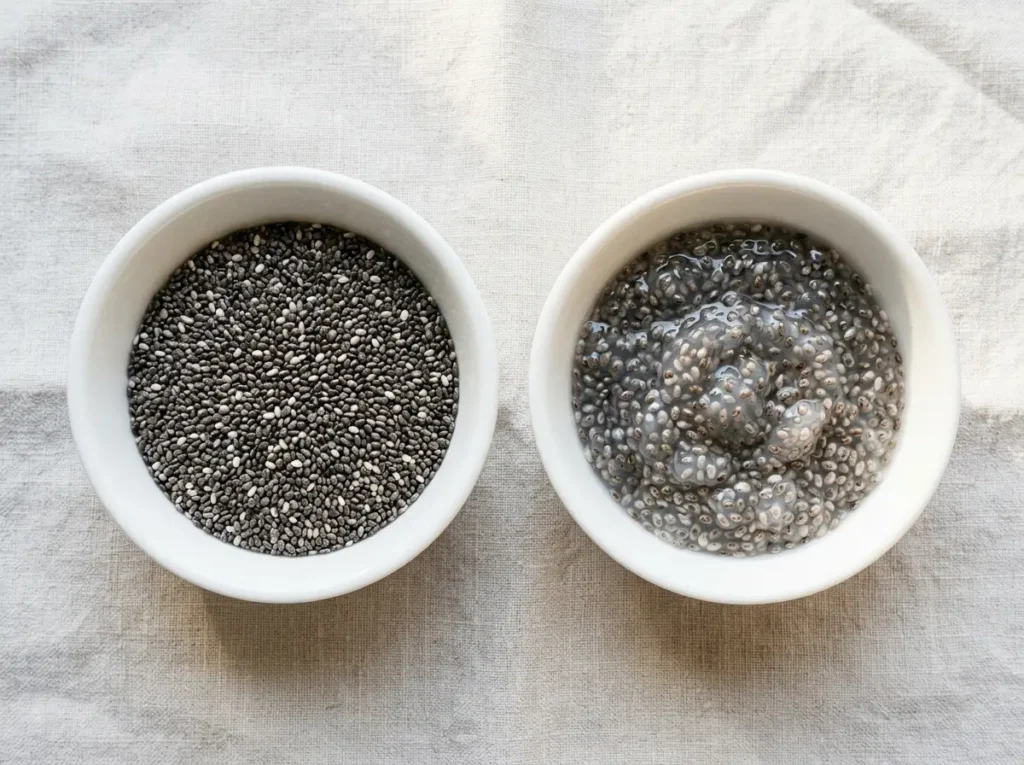
This is the most important rule. Dry chia seeds can absorb around 12 times their weight in liquid, according to Healthline. WBUR reported a 2014 case of a 39-year-old man who ate about a tablespoon of dry chia seeds and then drank a glass of water. The seeds expanded into a gel and blocked his esophagus, and doctors needed an endoscopy to clear it. He recovered fully.
Healthline’s advice is to let chia seeds soak in water for 5 to 10 minutes before eating them. In the same WBUR report, a physician said nobody should be eating these seeds dry, and that anyone with recurring swallowing problems should see a doctor. A chia drink you stir and wait on is the safe way to take them, at night or any other time.
How to Make Chia Water for the Evening
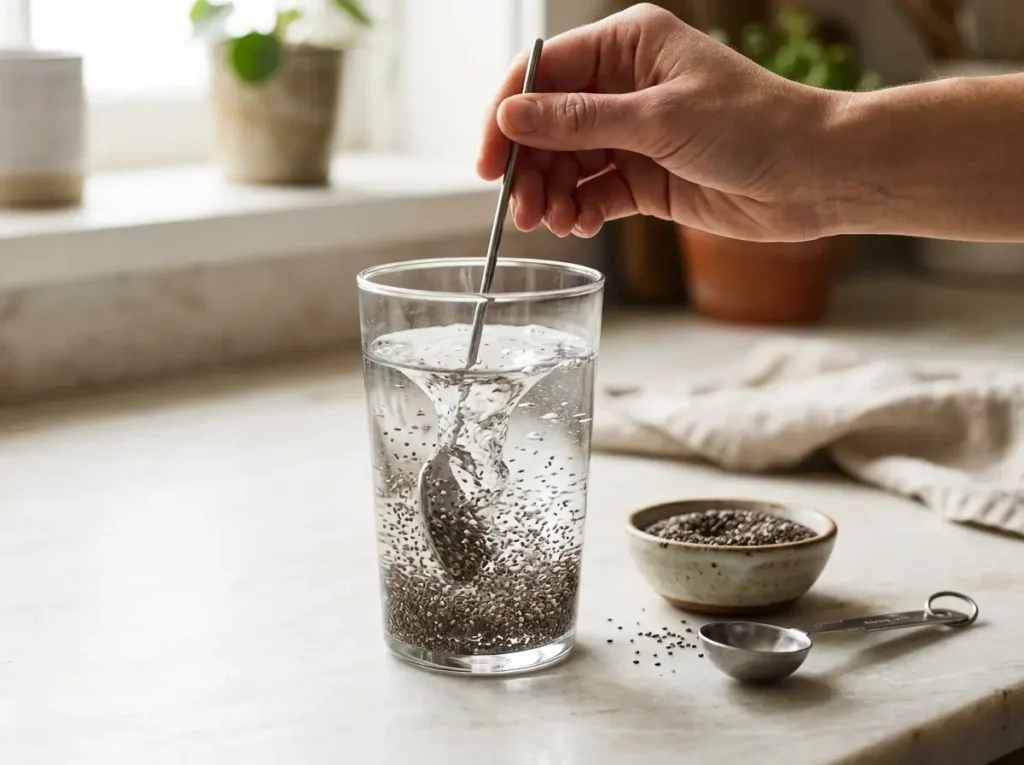
This is a simple version I would use for a first try. It makes one glass.
- Add 1 tablespoon of chia seeds to 1 cup (240 ml) of cool or room-temperature water.
- Stir well right away so the seeds do not clump at the bottom.
- Wait 10 minutes, then stir again. The seeds should look plump and gel-coated.
- Sip it slowly, and finish your glass well before you lie down.
For other amounts, see our chia seed to water ratio chart, or follow the full how to make chia seed water method. The timing tip about finishing your glass early is my own habit, not a medical rule.
Do Chia Seeds Help You Sleep?

I did not find reliable research showing that chia seeds improve sleep, so I would treat any claim that they do as unproven. The reasonable case for a chia drink at night is practical, not magical: it is a light, warm-weather-friendly drink you can have in place of a sugary one. If you want a drink to settle into the evening, a caffeine-free option like chamomile tea before bed has a gentler track record for that routine.
Side Effects of Chia Seeds at Night: Will They Upset Your Stomach?
They can, because chia is very high in fiber. Healthline reports over 9 grams of fiber in a 1-ounce (28 g) serving, and says about 85% to 93% of it is insoluble. Eating too much fiber can cause abdominal pain, bloating, gas, constipation, or diarrhea in some people, and water is essential to help the fiber move through your digestive system.
Here are the possible side effects of drinking chia seeds at night, based on the Healthline sources below:
- Bloating, gas, and abdominal pain: from the fiber, mostly if you go straight to a large amount.
- Constipation or diarrhea: both are possible with too much fiber, and drinking enough water helps the fiber move through.
- A blocked throat: this is a risk with dry seeds only, which is why you soak them first.
- Effects on blood sugar and blood pressure medication: too many seeds might lower blood sugar and may increase the effect of blood pressure medications.
- Rare allergic reactions: mostly in people allergic to sesame, hazelnuts, or peanuts.
If you are new to chia, start with a small amount and build up slowly, as Healthline suggests, and drink enough water through the day. Our article on whether chia seed water makes you poop explains how that fiber affects digestion.
Chia Seed Water: Morning or Night?
I did not find research showing that chia seeds work better at one time of day, so the best time is the one you will actually stick to. In the morning, chia water fits an empty-stomach routine. At night, it is easiest to keep gentle with a small amount, finished well before you lie down. If a late glass leaves you feeling bloated, try moving it earlier in the day. That tip is my own habit, not a medical rule.
For a side-by-side look at morning, pre-meal, and evening timing, see our guide to the best time to drink chia seed water. To check how much is reasonable per day, read how many chia seeds per day.
Who Should Check With a Doctor First?
- Anyone who has trouble swallowing: the risk of seeds expanding in the throat is the main safety concern.
- People taking diabetes or blood pressure medication: Healthline notes that too many chia seeds might lower blood sugar and may increase the effect of blood pressure medications, which could call for a dose adjustment.
- People with ulcerative colitis or Crohn’s disease: Healthline advises limiting chia during flare-ups.
- People with seed or peanut allergies: Healthline mentions rare allergic reactions in people allergic to sesame, hazelnuts, or peanuts.
Chia Seeds at Night FAQ
Can I drink chia seeds at night?
For most healthy adults, yes. Soak the seeds first, since dry seeds can swell and cause a blockage in the esophagus, and keep the amount modest. Healthline says most people have no side effects from up to about 1 ounce (28 g) a day.
How much chia should I take before bed?
Start small, such as 1 tablespoon in a cup of water, and build up gradually. Healthline says 2 tablespoons a day is generally considered safe for most people.
Should I soak chia seeds overnight?
Healthline says 5 to 10 minutes of soaking in water is enough before eating them. Many people soak them longer for chia pudding, which is also fine as long as the seeds are fully gelled before you eat them.
Can chia seeds make me bloated at night?
They can. Chia is high in fiber, and Healthline lists bloating, gas, abdominal pain, constipation, and diarrhea as possible effects of eating too much fiber. Start with a small amount and drink enough water.
Is it safe to take chia seeds at night with medication?
Ask your healthcare provider first if you take medication for blood sugar or blood pressure. Healthline notes that chia may lower blood sugar and may increase the effect of blood pressure medications.
Is it better to eat chia seeds in the morning or at night?
I did not find research showing that one time of day is better. Pick the time you will stick to, keep the amount modest, and finish your glass well before lying down if you take it at night.
What are the side effects of drinking chia seeds at night?
The most common ones are bloating, gas, abdominal pain, constipation, or diarrhea, because chia is very high in fiber. Start with a small amount, soak the seeds first, and drink enough water through the day.
Sources
- Healthline: Chia Seeds Side Effects (medically reviewed, updated September 2025)
- WBUR CommonHealth: Chia Seed Alert: Superfood, Yes, But They Landed One Man In The ER
For how chia fits into a broader plan, see our guide to the benefits of chia seeds and our realistic wellness routine.
Bottom Line
You can drink chia seeds at night if you soak them first, start with a small amount, and finish the glass before lying down. The soaking step is the safety rule that matters, and the fiber is the thing to watch if your stomach is sensitive. Treat any promise that chia will help you sleep as unproven, and check with a healthcare provider if you take medication, have a digestive condition, or have trouble swallowing.