
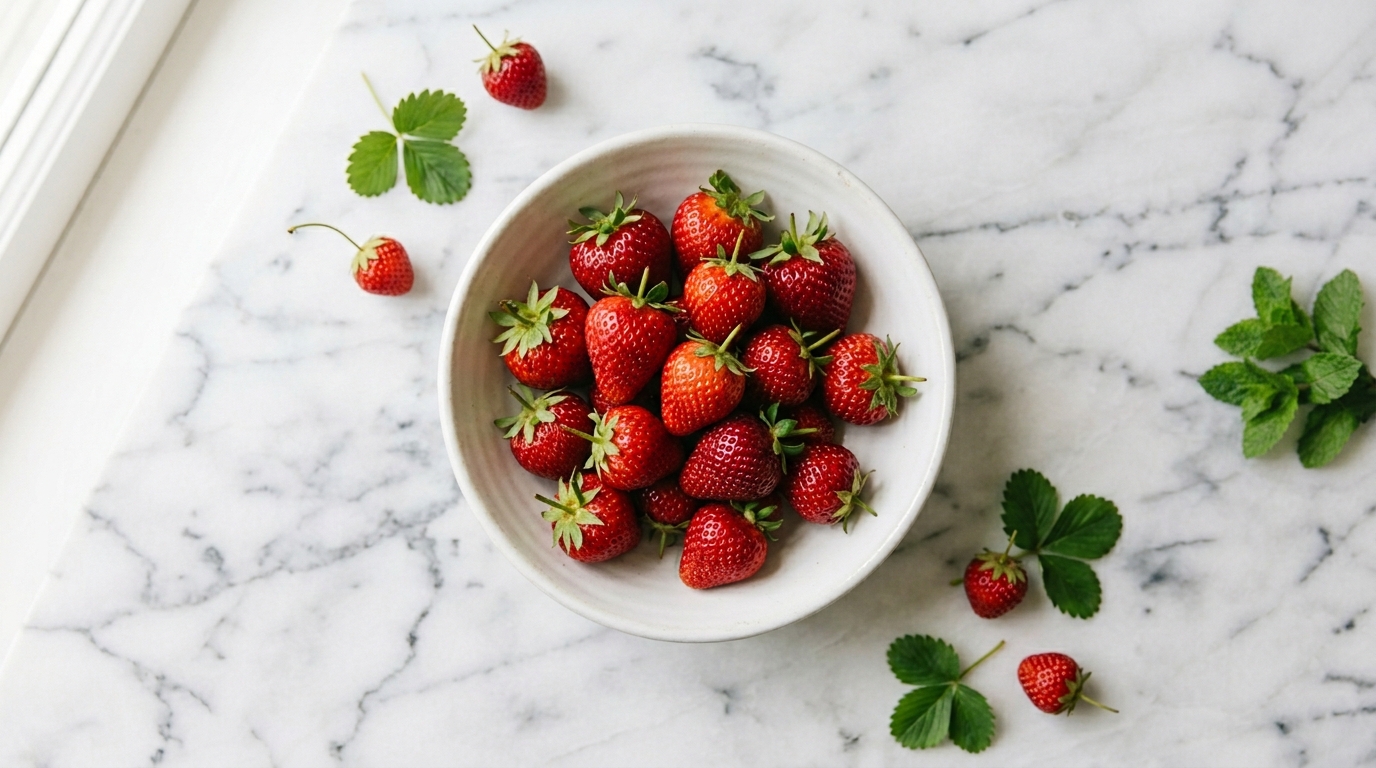
If you’ve ever pulled a carton of strawberries out of the fridge only to find a fuzzy surprise two days later, you already know that rinsing under the tap for five seconds isn’t enough. I learned how to clean strawberries properly after one too many moldy berries went straight in the trash, and honestly, it changed everything about how long my produce lasts.
Strawberries are soft, porous, and grow close to the ground, which means they tend to hold onto dirt, pesticide residue, and surface bacteria more than other fruits. The good news? Cleaning them the right way takes less than ten minutes and uses ingredients you probably already have in your pantry.
In this guide, I’m walking you through three tested methods — water and baking soda, water and vinegar, and a simple salt soak — so you can pick whichever fits what’s in your kitchen. I’ll also share how to dry and store your berries afterward, because that step matters just as much as the wash itself.
| A Quick Note Before You Start This article is for informational purposes only and does not constitute medical advice. The tips shared here are general food safety practices and are not designed to treat, prevent, or cure any condition. If you have specific food allergy or health concerns, check with a trusted source or licensed professional before changing how you wash or prepare produce. |
Why You Should Always Wash Strawberries Before Eating Them
Strawberries are repeatedly sprayed during their growing cycle, and their thin skin and bumpy surface make it easy for residue, dirt, and tiny bugs to cling on. According to food safety guidance from the FDA, produce should be rinsed even when it looks clean, since handling and growing conditions can introduce bacteria you can’t see. Even strawberries from your own garden or a farmers market can carry bacteria from handling, so a proper wash is worth the extra few minutes regardless of where they came from.
A good cleaning routine does three things: it loosens surface dirt, helps reduce pesticide residue, and lowers the bacteria load on the fruit. Research from the University of Illinois Urbana-Champaign food science program confirms that a water soak combined with a little baking soda or vinegar is genuinely effective, though none of the methods below will make strawberries completely sterile.
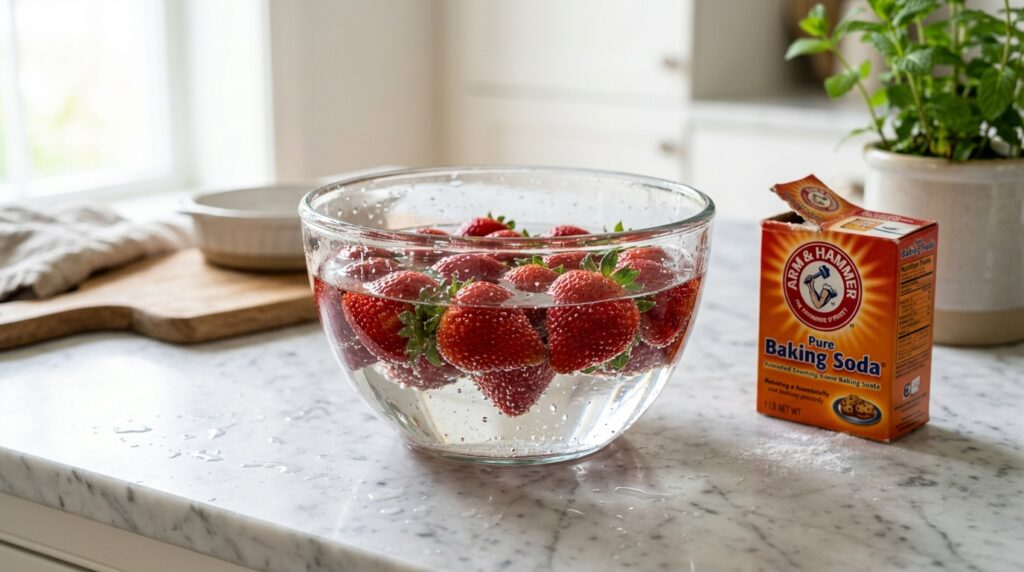
Method 1: How to Clean Strawberries With Baking Soda
This is my go-to method when I want something gentle that won’t leave any aftertaste. Baking soda is mildly alkaline, which helps loosen dirt and neutralize some surface residue without affecting the flavor of the berries.
What You’ll Need
- 1 tablespoon of baking soda
- 4 cups of cold water
- A large bowl
- A colander
Steps
- Fill a large bowl with 4 cups of cold water and stir in 1 tablespoon of baking soda until dissolved.
- Add the strawberries and gently swirl them around so the solution reaches every berry.
- Let them soak for 5 to 10 minutes — no longer, since strawberries can start absorbing water and turning mushy.
- Transfer the berries to a colander and rinse thoroughly under cold running water for about a minute.
- Spread them on a clean towel or paper towel to air dry completely before storing.
A quick tip: if you notice any soapy or chalky taste after rinsing, it usually means the berries weren’t rinsed long enough. A second quick rinse under running water solves that.
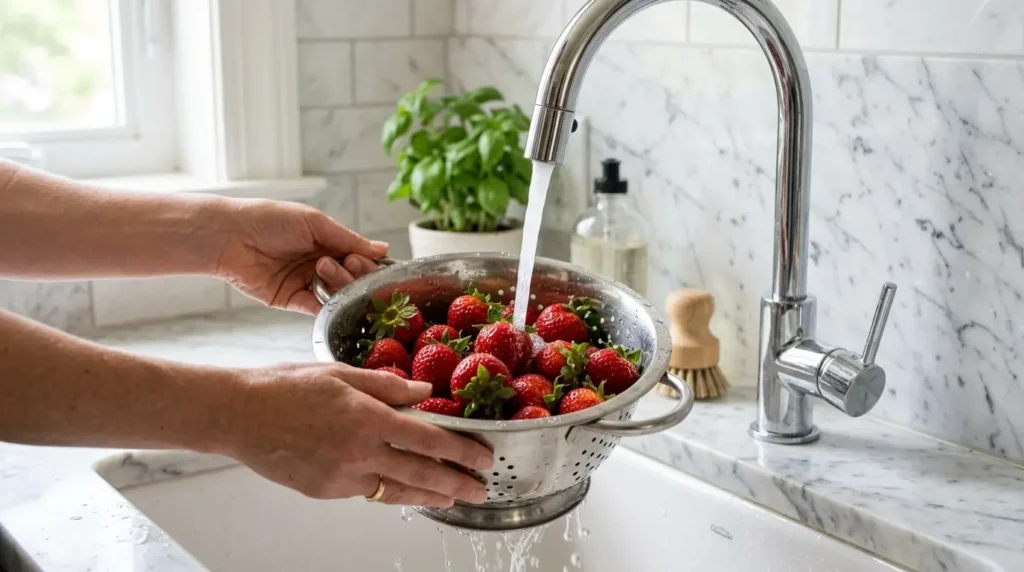
Method 2: How to Clean Strawberries With Vinegar
Vinegar is slightly more acidic, which makes it especially effective against mold spores — that’s why I reach for this method when I’m trying to make a big batch of strawberries last through the week. If you’re curious how it stacks up against the baking soda method above, this baking soda vs. baking powder pH comparison is a useful companion read for understanding how these two pantry staples behave differently.
What You’ll Need
- 1 cup of white vinegar
- 4 cups of cold water
- A large bowl or clean sink
Steps
- Combine 1 cup of white vinegar with 4 cups of cold water in a large bowl.
- Add the strawberries and let them soak for about 5 minutes.
- Drain and rinse the berries under cold running water until you can no longer smell vinegar.
- Pat dry or use a salad spinner, then let them finish air-drying on a towel.
Don’t worry about a lingering vinegar taste — once the berries are rinsed properly, you won’t notice it at all. This method is also great for blueberries, raspberries, and other delicate berries that bruise easily.
Method 3: The Simple Salt Water Soak
If you don’t have baking soda or vinegar on hand, a salt soak is an easy backup. It’s particularly handy for berries that look mostly clean but might have tiny pests hiding in the crevices.
What You’ll Need
- 1 teaspoon of salt
- 1 cup of warm water (use more for larger batches, keeping the same ratio)
Steps
- Dissolve the salt in warm water in a bowl large enough to hold your strawberries.
- Add the berries and let them sit for about 5 minutes.
- Rinse thoroughly under cold water and dry completely before serving or storing.
One Important Rule: Never Mix Baking Soda and Vinegar
It might seem logical to combine both for extra cleaning power, but baking soda and vinegar neutralize each other the moment they mix, creating a fizzy reaction that leaves you with plain salt water — and none of the cleaning benefits of either ingredient. Pick one method per batch, not both at once.
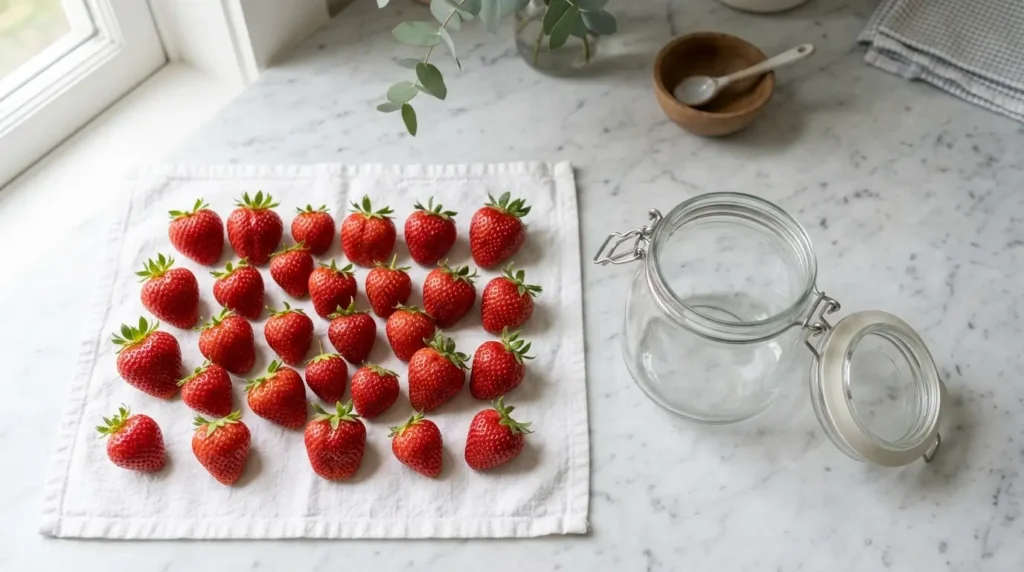
How to Store Strawberries After Washing
Drying matters just as much as washing. Any leftover moisture on the surface speeds up mold growth, so take the extra minute to pat the berries dry or run them through a salad spinner before storing. The same logic applies to other pantry staples — for example, knowing more about baking soda helps you avoid the same kind of guesswork with your cleaning ingredients.
- Line a container or colander with a paper towel to absorb extra moisture.
- Store whole, unwashed-looking berries in the fridge in a single layer if possible.
- Only wash what you plan to eat within a few days — washing the entire carton at once can shorten shelf life if it isn’t dried thoroughly.
- Keep cut strawberries in an airtight container and use them within 1 to 2 days.
Frequently Asked Questions
Does washing strawberries with baking soda affect the taste?
Not if you rinse them well afterward. A thorough rinse under cold water removes any residue, leaving the natural strawberry flavor intact.
How long should I soak strawberries?
Five to ten minutes is plenty for any of these methods. Soaking longer can cause the berries to absorb water and become soft.
Can I wash strawberries ahead of time and store them?
You can, but make sure they’re completely dry before storing, since trapped moisture is the main reason washed strawberries go bad faster than unwashed ones.
Is baking soda safe to use on fruit?
Yes, baking soda is food-safe and commonly used for cleaning produce. Just be sure to rinse thoroughly so no residue remains on the surface.
The Bottom Line
Cleaning strawberries doesn’t need to be complicated. Whether you reach for baking soda, vinegar, or a simple salt soak, the real keys are a short soak, a thorough rinse, and making sure your berries are completely dry before they go back in the fridge. For more pantry-staple wellness tips like this one, check out our guide on baking soda before a workout — another simple way everyday kitchen ingredients can support your routine. Try one of these methods next time you bring home a carton, and you might be surprised how much longer your strawberries stay fresh and ready to eat.