
By Hannah Bell | jelloandwellness.com | Updated October 2026
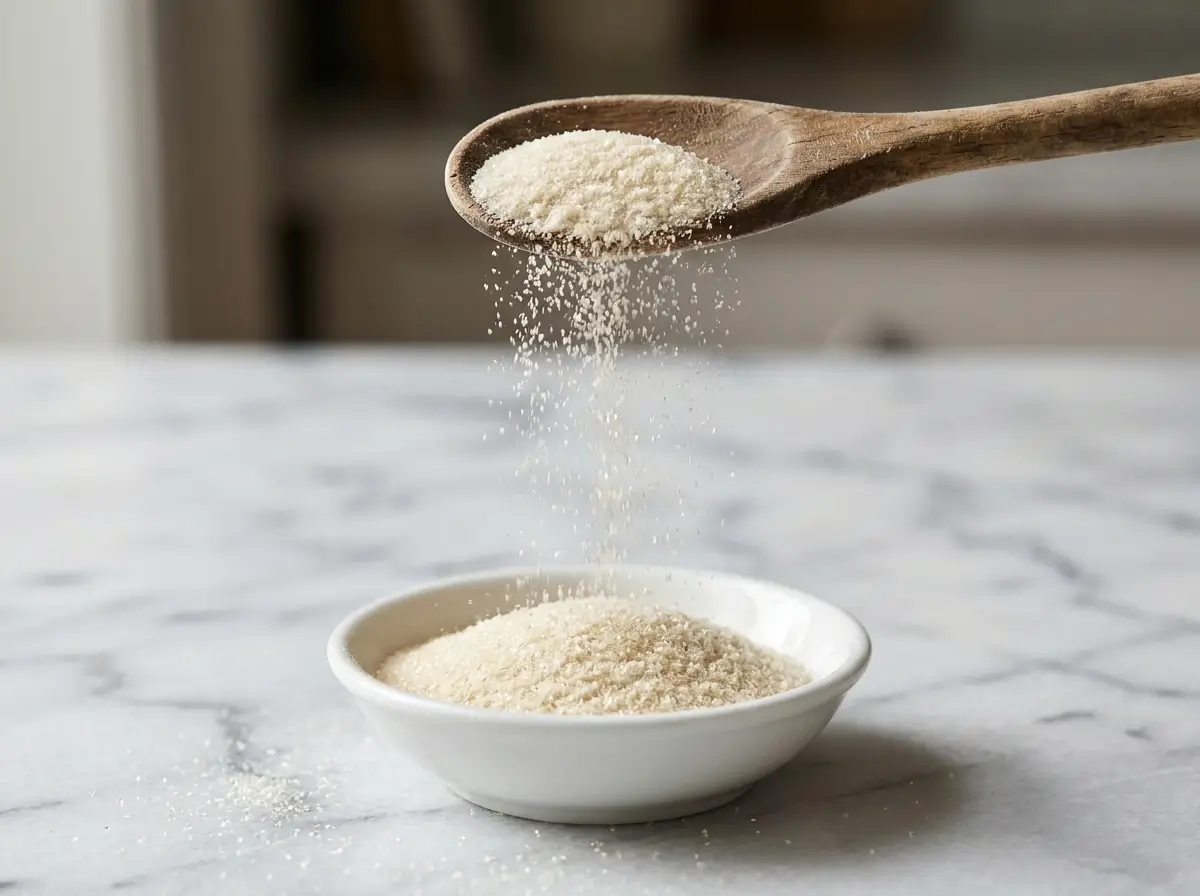
What is gelatin? Gelatin is a colorless, flavorless protein made by partially breaking down collagen, the structural protein in animal skin, bones, and connective tissue. It is what makes Jell-O set, gummy candy chewy, and panna cotta wobble.
This guide covers what gelatin is made from, how it is made, the forms you can buy, what it does in recipes, its nutrition, and which diets it fits. Where a topic has its own article, you will find a link to the details.
| Medical Disclaimer This article is for informational purposes only and does not constitute medical advice. If you are pregnant, breastfeeding, taking medication, or managing a health condition, speak with a licensed healthcare provider before changing your diet. |
What Is Gelatin, Exactly?
Gelatin is a partially hydrolyzed collagen: the long collagen chains are broken into smaller pieces that dissolve in hot water and form a gel as they cool. A finished gel can hold up to 90% water. Three facts explain most of what gelatin does in the kitchen:
- It dissolves in hot liquid and sets as it cools, so it turns juices, drinks, and creams into soft gels.
- A gelatin gel melts below body temperature, which is why jello and panna cotta melt in your mouth.
- It has no taste or color of its own, so it takes on the flavor of whatever you set.
What Is Gelatin Made From?
Gelatin comes from animals. Most of it is derived from pork skins, pork and cattle bones, or split cattle hides, and chicken and fish are also used as sources. The ingredient list almost never says which animal: it only says “gelatin.”
That matters if you follow a halal, kosher, or pescatarian diet. We cover each case in detail: is gelatin made from pork, beef gelatin, and fish gelatin.
How Is Gelatin Made? The Short Version
Collagen is extracted from these animal parts in a boiling-type process and turned into the colorless, flavorless substance sold as powder or sheets. The treatment depends on the source. Acid suits less cross-linked material such as pig skin and typically takes 10 to 48 hours, producing Type A gelatin. Alkali suits tougher bovine hides and typically takes several weeks, producing Type B gelatin.
For the full process from raw material to finished powder, see how is gelatin made.
Gelatin Forms: Powder, Granules, and Sheets
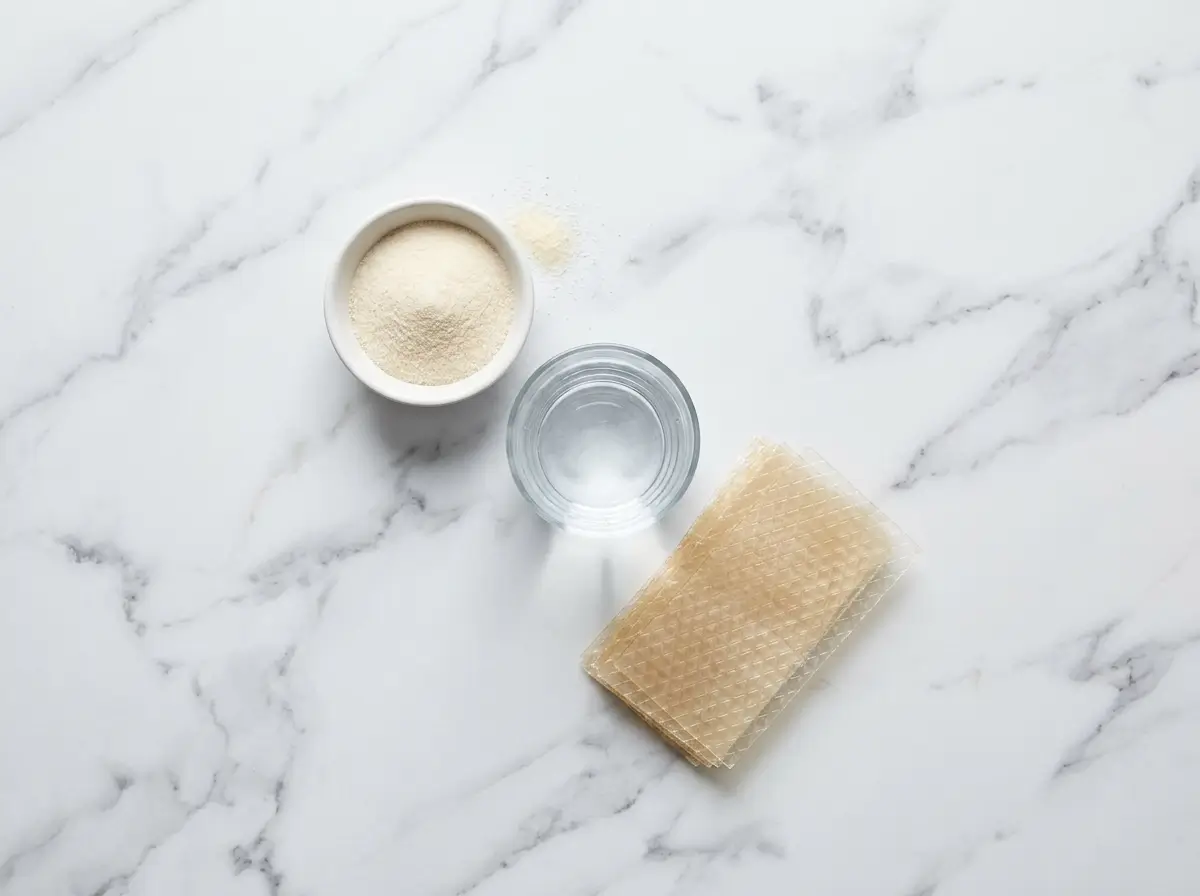
You can buy gelatin as a powder (also sold as granules) or as thin sheets, also called leaf gelatin. Both are used the same way: soak in cold liquid first, then dissolve in a hot one.
Commercial gelatin is graded by Bloom strength, a standard test of gel firmness. Most commercial gelatin falls between about 90 and 300 Bloom, and a higher number means a firmer gel. To convert a recipe from one form to the other, see gelatin sheets vs powder.

What Does Gelatin Do in Food?
- Sets desserts and savory dishes: jelly desserts, panna cotta, mousses, and aspics.
- Stabilizes and thickens: yogurt, cream cheese, and margarine.
- Gives chew: marshmallows and gummy candy. See does marshmallow have gelatin.
- Clarifies: it is used to fine apple juice and vinegar.
- Outside the kitchen: capsule shells for supplements and medicines.
Gelatin also hides in packaged foods you might not expect. Our list of foods that contain gelatin shows where.
How Gelatin Behaves in the Kitchen
- Bloom it first. Sprinkle the powder over cold liquid and let it soak, then dissolve it in hot liquid. This prevents lumps.
- Do not overheat it. Gel strength declines above 100 °C (212 °F) or when the mixture is held near that temperature for a long time.
- Watch the fruit. Fresh pineapple, kiwi, and papaya contain enzymes (bromelain, actinidin, and papain) that break down protein, including gelatin, so the gel will not set. Canned fruit is fine because heating during canning destroys these enzymes.
- Fish gelatin sets softer. It has lower melting and gelation points than beef or pork gelatin.
Gelatin Nutrition
Plain gelatin is almost all protein. This is what USDA data lists for dry, unsweetened gelatin powder, with a per-tablespoon figure calculated from it:
| Nutrient | Per 100 g dry powder | Per 1 tbsp (7 g), calculated |
| Calories | 335 kcal | about 23 kcal |
| Protein | 85.6 g | about 6 g |
| Fat | 0.1 g | under 0.1 g |
| Carbohydrate | 0 g | 0 g |
| Sodium | 196 mg | about 14 mg |
| Water | 13 g | about 1 g |
Gelatin is not a complete protein. It lacks tryptophan, so it adds to the protein in your meals rather than replacing it. For a side-by-side with flavored Jell-O, see does gelatin have protein.
Is Gelatin Vegetarian, Vegan, Halal, or Kosher?
Gelatin is made from animal collagen, so it is not vegetarian or vegan. Whether a gelatin is halal or kosher depends on the source animal and on certification, not on the word “gelatin” alone. Our guides cover halal gelatin, kosher gelatin, and pork gelatin.
For plant-based swaps such as agar-agar (made from red algae) and pectin, see our guide to gelatin substitutes.
Gelatin vs. Collagen Peptides
Both come from collagen. Gelatin gels when it cools. Collagen peptides are broken down further, dissolve in cold liquid, and do not gel. Gelatin suits jello, gummies, and panna cotta; peptides suit smoothies and coffee. The details are in our guide to collagen peptides.
Gelatin Recipes to Start With
- Knox gelatin recipes: sweet, easy, and vintage-inspired ideas
- Panna cotta: a silky, five-ingredient dessert
- Jello salad: the no-weep method
- Gelatin gummies: three ingredients
- Pink gelatin drink: hibiscus and pomegranate
Frequently Asked Questions
What is gelatin in simple terms?
Gelatin is a flavorless protein made from animal collagen. It dissolves in hot liquid and sets into a soft gel as it cools.
Is gelatin the same as Jell-O?
No. Gelatin is an ingredient. Jell-O is a brand of dessert mix that contains gelatin plus sugar or sweetener and flavor. A serving of Jell-O Strawberry (a quarter of the box) lists 90 calories, 2 g of protein, and 19 g of sugar on its label.
Is gelatin made from bones?
Partly. Gelatin is made from animal skin, bones, and hides, depending on the maker. The label usually says only gelatin and does not name the animal.
Does gelatin have a taste?
No. Gelatin is flavorless and colorless, so it takes on the flavor of the liquid you set.
Why will my gelatin not set with fresh pineapple?
Fresh pineapple, kiwi, and papaya contain enzymes that break down protein, including gelatin. Use canned fruit instead, because heating during canning destroys these enzymes.
Is gelatin vegan?
No. Gelatin is made from animal collagen. Agar-agar and pectin are plant-based alternatives that gel differently.
Sources
- Wikipedia: Gelatin (composition, raw materials, Type A and Type B processes, Bloom strength, melting behavior, uses)
- USDA FoodData Central, entry “Gelatins, dry powder, unsweetened” (SR Legacy): 335 kcal and 85.6 g protein per 100 g
- Food Network: What Is Gelatin Made Of? (July 2024)
- McGill Office for Science and Society: Why can’t I use fresh pineapple to make Jell-O?
- Jell-O Strawberry label as listed by Stop & Shop
About Hannah Bell
Hannah Bell is the founder of JelloAndWellness.com, a recipe and wellness site focused on gelatin, jello desserts, and everyday wellness drinks. She tests every recipe in her home kitchen and cites sources when discussing nutrition.