
Learning how to make herbal tea blends at home comes down to one simple formula: a base herb, a supporting herb, and a small accent for flavor. Once you know the ratio, you can mix almost any combination of dried herbs you have on hand and get a balanced cup every time — no guesswork required.
New to herbal tea in general? Our guide to types of herbal tea covers 15 common options and what each one is good for, which pairs well with the formula below.
| ⚕️ Medical Disclaimer This article is for informational purposes only and does not constitute medical advice. The information shared here is not designed to treat, prevent or cure any condition. If you are pregnant, breastfeeding, taking medication, or managing a health condition, speak with a licensed healthcare provider before changing your diet. |
The Simple 3-Part Formula
Every good herbal tea blend breaks down into three roles. You don’t need exact grams — think in parts, so you can scale the recipe up or down.
| Role | Proportion | Examples |
| Base | 3 parts | Chamomile, peppermint, lemon balm, rooibos |
| Support | 1-2 parts | Lavender, rose petals, hibiscus, nettle |
| Accent | ¼-½ part | Fresh ginger, dried citrus peel, cinnamon |
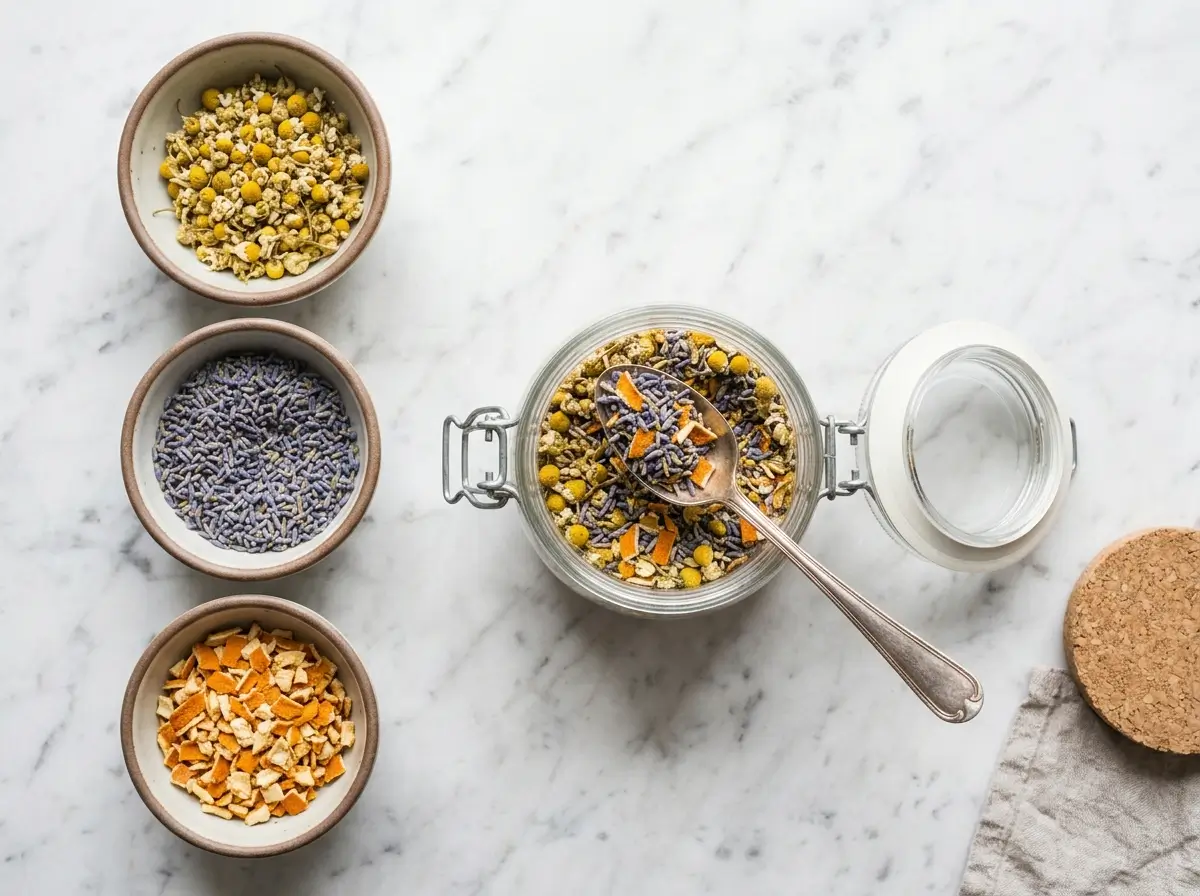
For example: 3 parts chamomile (base) + 1 part lavender (support) + ¼ part dried orange peel (accent) makes an easy, well-rounded evening blend. See our chamomile tea guide for the base brewing method this formula builds on.
How to Mix and Store Your Blend
- Measure your dried herbs using the 3-1-¼ ratio above, adjusting to taste.
- Combine everything in a bowl and mix gently with your hands or a spoon — this distributes the smaller accent pieces evenly.
- Brew a single test cup before making a full batch, to check the balance is right for your taste.
- Store the finished blend in a sealed glass jar, away from direct light and heat. It stays fresh for 6-12 months.
How to Brew Your Blend
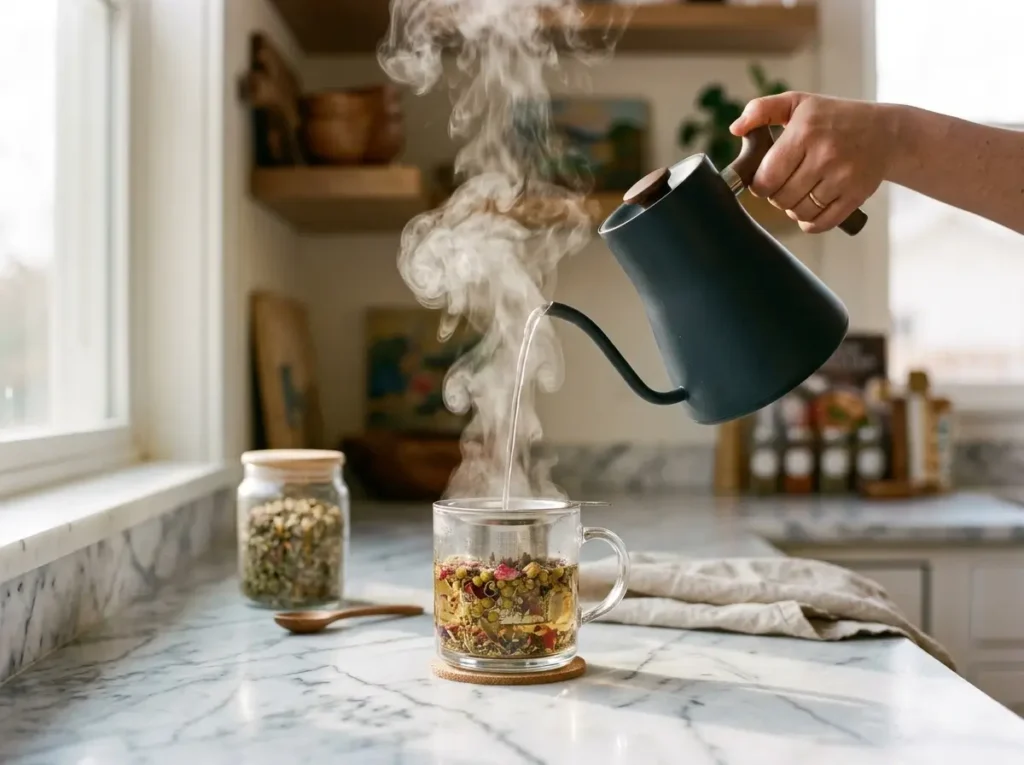
Use 1-2 teaspoons of your blend per 8 oz of hot water. Cover the cup and steep for 5-10 minutes — flower and leaf-heavy blends need less time, root and bark-heavy blends need more. Strain out the loose herbs before drinking.
3 Starter Blends to Try
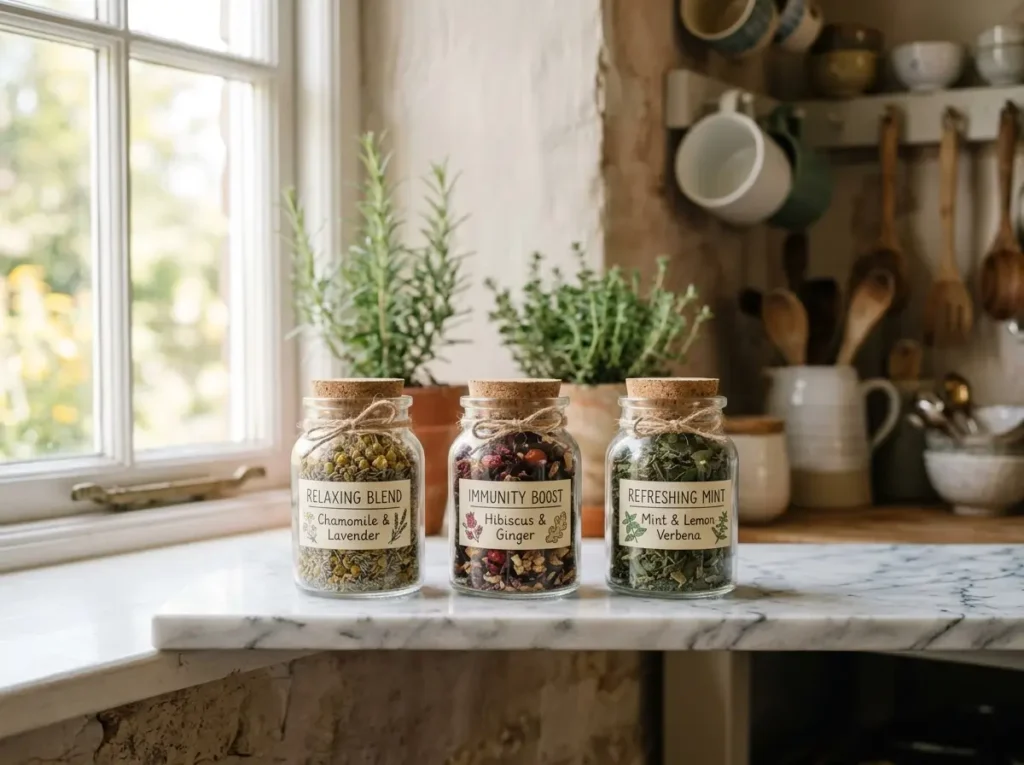
- Wind-down blend: 3 parts chamomile, 1 part lavender, ¼ part dried orange peel.
- After-meal blend: 3 parts peppermint, 1 part fennel, ¼ part fresh ginger. For a citrusy twist, swap the fennel for dried lemongrass (see our lemongrass tea guide).
- Everyday flavor blend: 3 parts rooibos, 2 parts hibiscus, ¼ part cinnamon.
Herbs to Be Careful Mixing
Most culinary herbs are safe to combine freely, but a few call for extra care: licorice root can raise blood pressure in large amounts, and several herbs (including chamomile) may interact with blood thinners. If you’re on medication or managing a health condition, check with your provider before making a new herb a daily habit.
Frequently Asked Questions
What is the formula for making herbal tea blends?
A simple starting ratio is 3 parts base herb, 1-2 parts supporting herb, and ¼-½ part accent (spice, peel, or root) for flavor. Adjust the ratio to taste once you’ve brewed a test cup.
What herbs should I not mix together?
Most common culinary herbs mix safely. Be more cautious with licorice root (can affect blood pressure) and with herbs that have a sedative or blood-thinning effect, especially if combined with medication that does the same.
How long does a homemade herbal tea blend last?
Stored in a sealed glass jar away from light and heat, a dried herbal tea blend typically stays fresh for 6 to 12 months.
Can I use fresh herbs instead of dried?
Yes, though you’ll need roughly 3 times the amount of fresh herbs compared to dried, since fresh herbs are more diluted with water content.