
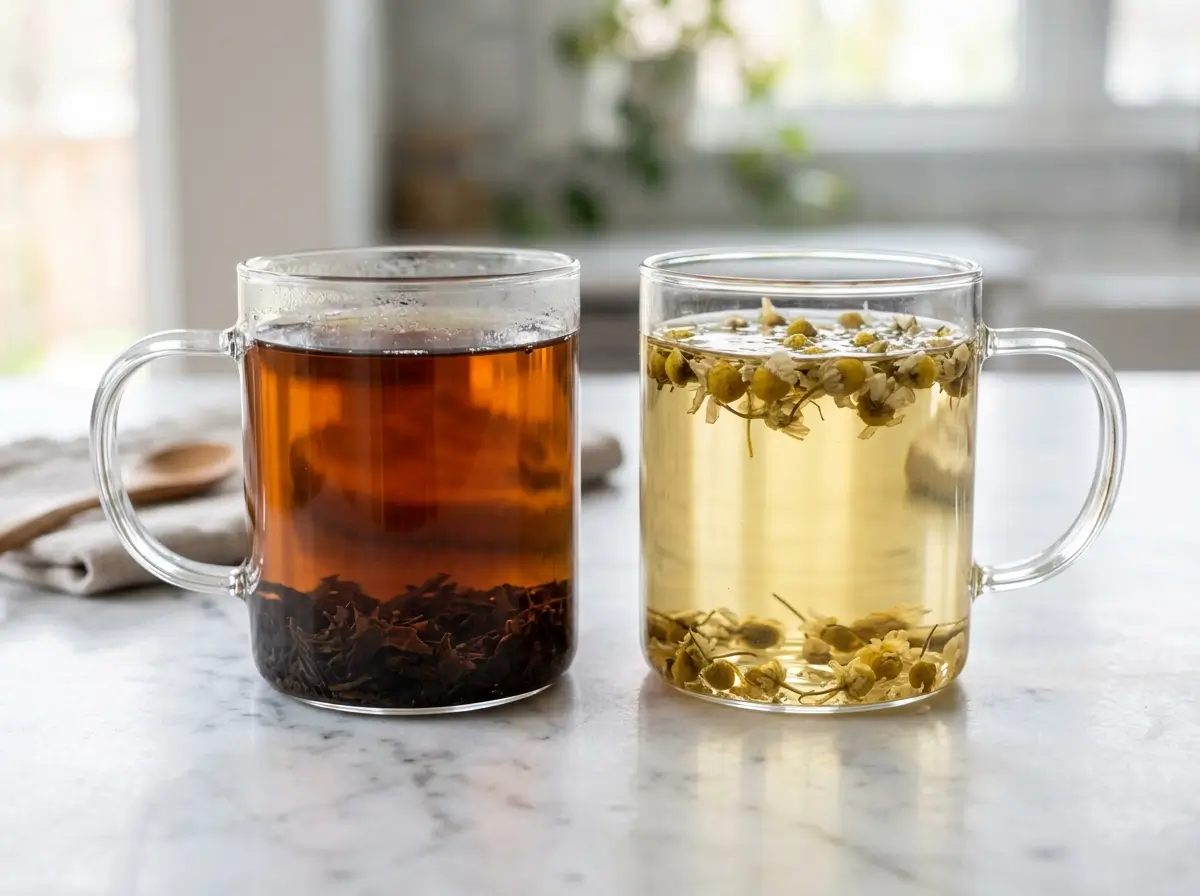
The herbal tea vs tea question comes up a lot, and the answer is simpler than it seems: only one of them is technically tea. “True” tea — green, black, white, and oolong — all comes from a single plant, Camellia sinensis. Herbal tea is made from everything else: dried flowers, roots, fruit, and other herbs.
| ⚕️ Medical Disclaimer This article is for informational purposes only and does not constitute medical advice. The information shared here is not designed to treat, prevent or cure any condition. If you are pregnant, breastfeeding, taking medication, or managing a health condition, speak with a licensed healthcare provider before changing your diet. |
The Core Difference: What Plant It Comes From
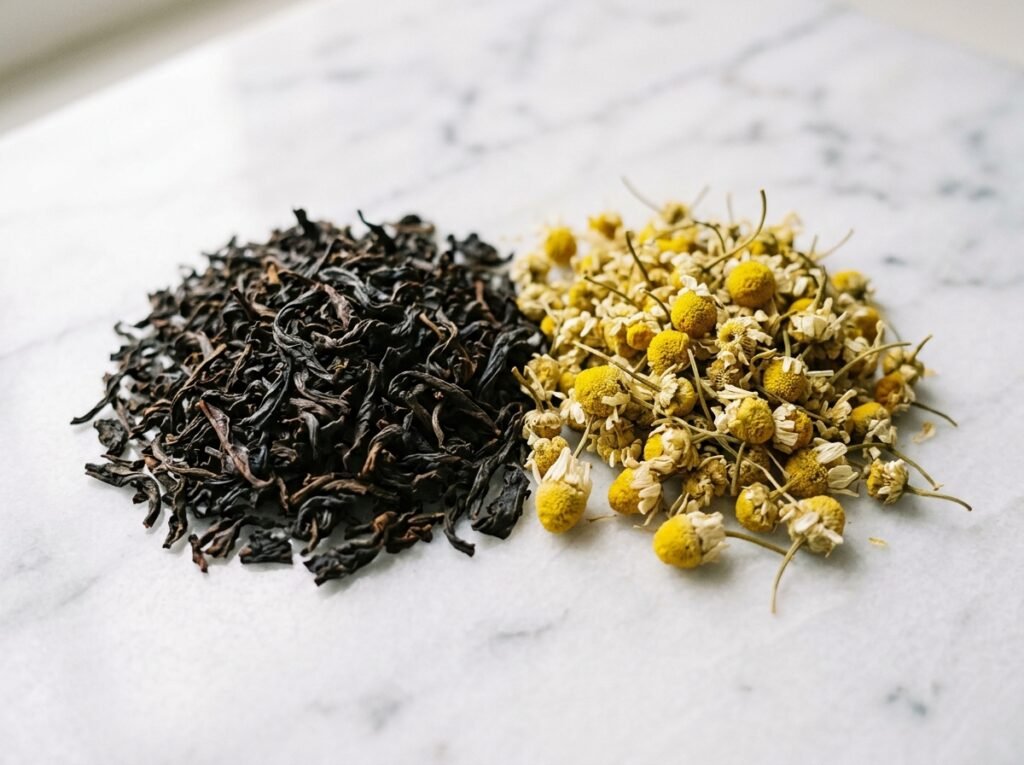
True tea leaves are processed differently (oxidized, rolled, or left raw) to create green, black, white, and oolong tea — but they’re all the same base plant. Herbal tea, technically called a tisane, is brewed from anything else: chamomile flowers, peppermint leaves, hibiscus petals, ginger root, and dozens of other plants. See our full list of herbal tea types for 15 common examples.
Caffeine: The Biggest Practical Difference
| Type | Caffeine (8 oz) |
| Black tea | ~40-70 mg |
| Green tea | ~20-45 mg |
| White tea | ~15-30 mg |
| Herbal tea (chamomile, peppermint, rooibos, etc.) | 0 mg |
This is the main reason people reach for herbal tea specifically — it’s the only category that’s naturally caffeine-free across the board, which matters if you’re drinking it in the evening. Our guide on chamomile tea before bed goes deeper on timing if that’s your goal.
Taste Differences
True teas share a common base flavor (grassy, brisk, or malty depending on the type) because they come from the same plant. Herbal teas vary far more widely — chamomile tastes mild and slightly like apple, hibiscus is tart and fruity, peppermint is sharp and cooling. There’s no single “herbal tea taste,” which is part of why blending them works so well.
Is Herbal Tea Actually “Better” for You?
Not universally — it depends on what you’re looking for. True tea contains antioxidants called catechins, along with a modest amount of caffeine that some people want for the energy boost. Herbal tea won’t give you that caffeine lift, but it’s the better choice for hydration late in the day, for anyone avoiding caffeine altogether, or for a specific effect like chamomile’s calming reputation. Neither one is objectively healthier — they serve different purposes.
Is Lipton Tea Considered Herbal?
Regular Lipton black tea is not herbal — it’s made from Camellia sinensis leaves and contains caffeine. Lipton does sell a separate herbal tea line (chamomile, mint, and other caffeine-free blends), so the answer depends on which specific product you’re looking at, not the brand as a whole.
Frequently Asked Questions
Is herbal tea better for you than regular tea?
Neither is universally better — they serve different purposes. True tea offers catechin antioxidants and some caffeine; herbal tea is caffeine-free and offers a wider range of flavors and traditional uses, like chamomile for relaxation.
Is Lipton tea considered herbal?
Regular Lipton black tea is not herbal, since it’s made from the tea plant and contains caffeine. Lipton also sells a separate line of herbal (caffeine-free) blends, so it depends on the specific product.
Is there any downside to drinking herbal tea?
For most healthy adults, no. A few herbs call for caution during pregnancy, with certain medications, or with specific allergies (like ragweed with chamomile) — check with your provider if any of those apply to you.
What is the healthiest herbal tea you can drink?
There’s no single “healthiest” one — it depends on your goal. Chamomile is well-studied for relaxation, peppermint for digestion, and hibiscus is rich in antioxidants. See our guide to types of herbal tea for more options.