
By Hannah Bell | jelloandwellness.com | Updated October 2026
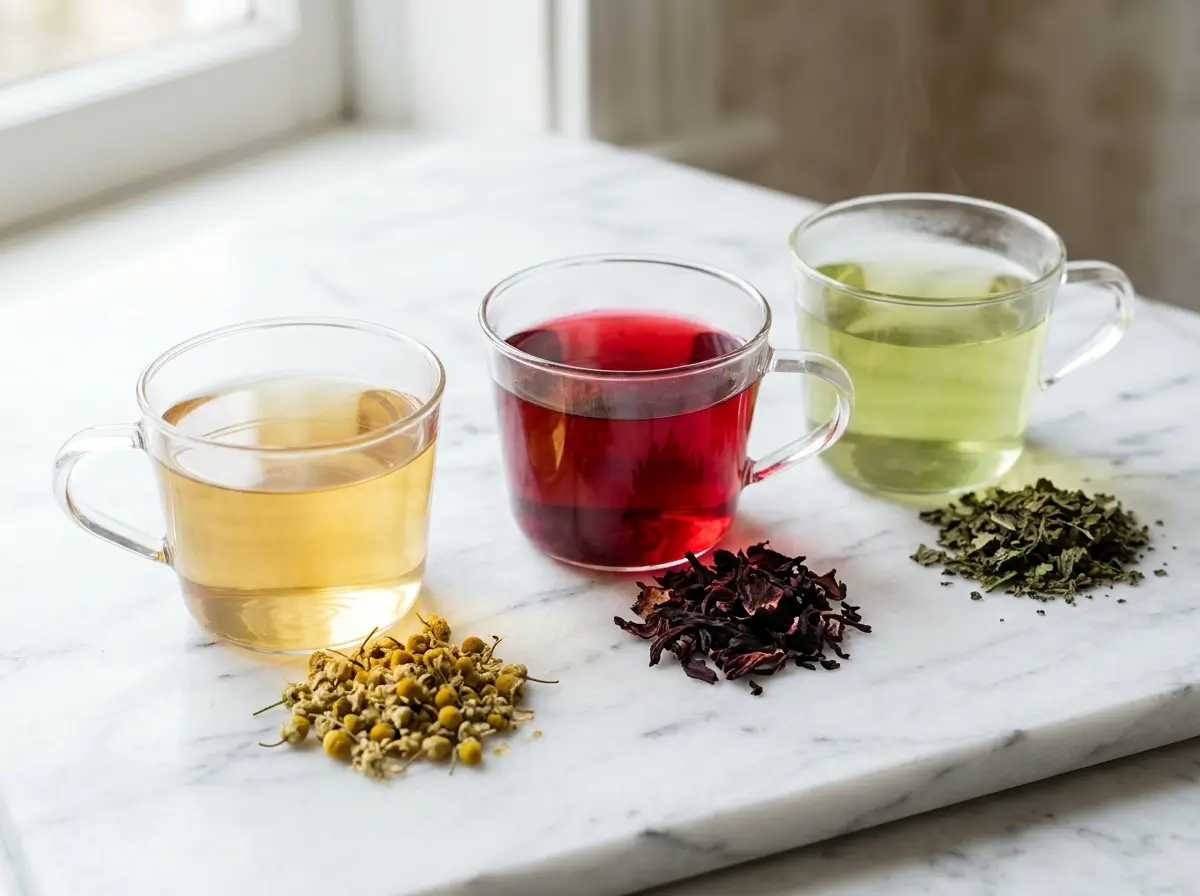
Most herbal teas do not have caffeine. Herbal teas are made from herbs, flowers, fruit, or spices, not from the tea plant, so chamomile, peppermint, hibiscus, and rooibos are naturally caffeine-free. The exceptions are yerba mate and guayusa, plus any blend that adds green tea, black tea, or one of those two. The ingredient list tells you which kind you have.
This guide shows how much caffeine is in common drinks, which herbal teas to watch, why green tea is not an herbal tea, and what a “decaf” label really means. If you like caffeine-free drinks, there are links below to a few simple ones to make at home.
| Medical Disclaimer This article is for informational purposes only and does not constitute medical advice. If you are pregnant, breastfeeding, taking medication, or have been told to limit caffeine, speak with a licensed healthcare provider about what is right for you. |
Herbal Tea vs. True Tea: Why It Matters for Caffeine
Michigan State University describes herbal tea (also called an herbal infusion or tisane) as a drink made by steeping dried herbs, flowers, fruits, or spices in hot water. True tea means green or black tea, made from the leaves of the Camellia sinensis plant. MSU states that herbal teas do not contain traditional tea plant leaves.
That difference explains the caffeine. Caffeine comes naturally with the tea plant. A drink that is only chamomile flowers or peppermint leaves has no tea leaves in it, so it has no caffeine to begin with. MSU says most herbal teas are naturally caffeine-free. For a broader comparison, see our guide to herbal tea vs tea.
How Much Caffeine Is in Herbal Tea, Tea, and Coffee?
Here is a side-by-side look. The coffee and tea numbers are per 8 oz (237 mL) cup from the Mayo Clinic. Real amounts vary with the plant, the brand, and how long you steep.
| Drink (8 oz) | Caffeine | Source |
| Brewed coffee | 96 mg | Mayo Clinic |
| Brewed black tea | 48 mg | Mayo Clinic |
| Brewed green tea | 29 mg | Mayo Clinic |
| Yerba mate tea | About 40 mg (one brand, 3 g bag steeped 5 to 10 minutes) | CaffeineInformer |
| Brewed decaf black tea | 2 mg | Mayo Clinic |
| Brewed decaf coffee | 1 mg | Mayo Clinic |
| Chamomile or peppermint tea | 0 mg (traces possible from shared factories) | CaffeineInformer |
| Rooibos | None, the plant has no caffeine | Republic of Tea |
The Mayo Clinic notes that up to 400 mg of caffeine a day may be safe for most adults. A cup of herbal tea made from chamomile, peppermint, hibiscus, or rooibos adds nothing to that total.
Herbal Teas That Have No Caffeine
These common herbal teas come from plants outside the tea family, so they are caffeine-free on their own. For more varieties, see our list of types of herbal tea.
- Chamomile: dried flowers. See our guide on how to make chamomile tea.
- Peppermint: dried leaves. Stash and Safeway peppermint tea tested at 0 mg in a 2005 study listed by CaffeineInformer.
- Hibiscus: dried flower petals. Try it as a cold brew hibiscus tea.
- Rooibos: from the South African Aspalathus linearis plant, a herbal infusion and not a true tea.
- Ginger and lemongrass: roots and stalks, not tea leaves. See fresh ginger tea and lemongrass ginger tea.
Herbal Teas and Blends That Do Have Caffeine
MSU names two caffeinated plants sold as herbal tea: yerba mate and guayusa. Makers also add them to some herbal blends. One brand of yerba mate tea lists about 40 mg per 8 oz cup, and CaffeineInformer notes that this changes with the brewing time and the product.
The other case is a blend that mixes herbs with real tea. A fruity or spiced “herbal” blend that includes green or black tea will carry that tea’s caffeine. This is why reading the ingredients matters more than the name on the box.
Is Green Tea an Herbal Tea?
No. Green tea is a true tea, made from Camellia sinensis leaves like black tea, so it is not an herbal tea. That is why it has caffeine: the Mayo Clinic lists about 29 mg in an 8 oz cup of brewed green tea, less than black tea (48 mg) and coffee (96 mg).
Is Decaf Tea Caffeine-Free?
Not exactly. The Mayo Clinic lists brewed decaf black tea at 2 mg per 8 oz cup, and decaf coffee at 1 mg. A source on caffeine-free teas (fightcancer.org) says a “decaffeinated” label in the U.S. means at least 97 percent of the original caffeine was removed, so a small amount can remain. If you want none, a naturally caffeine-free herbal tea is the more reliable choice.
How to Check an Herbal Tea Label for Caffeine
- Read the ingredient list, not just the front of the box.
- Look for yerba mate, guayusa, green tea, black tea, or matcha. If any is listed, the tea has caffeine.
- Look for a “caffeine-free” or “naturally caffeine-free” statement from the maker if you need to avoid it completely, since traces can come from shared factories.
- When you make your own mix, stick to herbs, flowers, and fruit. Our guide on how to make herbal tea blends at home shows how.
Caffeine-Free Drinks to Try at Home
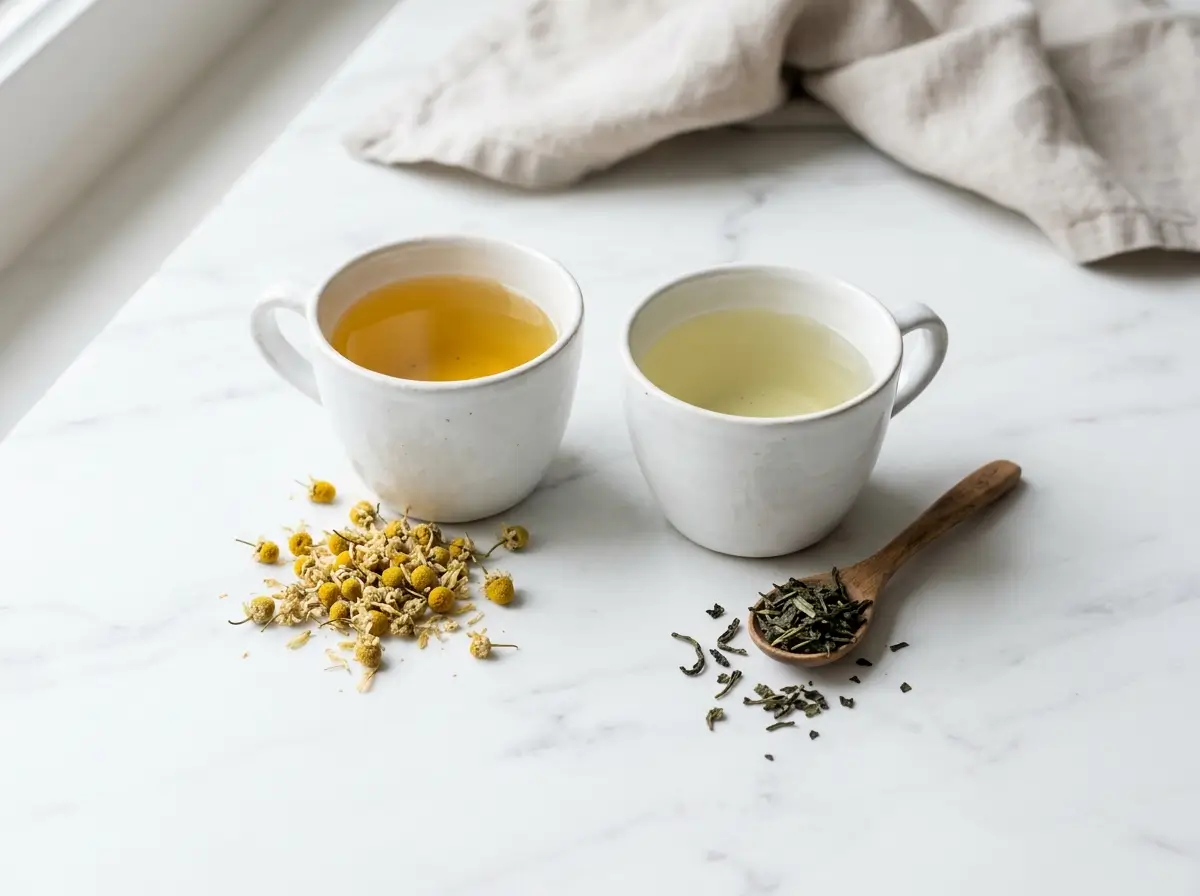
- Honey chamomile tea latte, made with oat, coconut, or dairy milk.
- Cold brew hibiscus tea for a tart, iced drink.
- Fresh ginger tea for a warm, spicy cup.
- Chamomile tea before bed if you want a caffeine-free evening drink.
- Wondering about hydration? Read does herbal tea count as water.
Frequently Asked Questions
Does herbal tea have caffeine?
Most herbal teas do not. They are made from herbs, flowers, fruit, or spices rather than tea leaves. The exceptions are yerba mate, guayusa, and blends that include green or black tea.
Is herbal tea caffeine-free?
Most are, but not all. Check the ingredient list for yerba mate, guayusa, green tea, black tea, or matcha. Traces can also come from shared factories, so look for a caffeine-free statement if you need to avoid caffeine entirely.
Does chamomile or peppermint tea have caffeine?
No. Both are made from plants outside the tea family. Tested chamomile and peppermint teas listed by CaffeineInformer measured 0 mg of caffeine.
Do rooibos and hibiscus tea have caffeine?
No. Rooibos comes from a South African plant that has no caffeine, and hibiscus is made from flower petals, not tea leaves.
Is green tea an herbal tea?
No. Green tea is a true tea made from Camellia sinensis leaves. It has about 29 mg of caffeine per 8 oz cup, according to the Mayo Clinic.
Does decaf tea have caffeine?
A small amount, yes. The Mayo Clinic lists brewed decaf black tea at 2 mg per 8 oz cup. A naturally caffeine-free herbal tea has none from the plant.
Sources
- Michigan State University: Herbal tea (definition, caffeinated herbs)
- Mayo Clinic: Caffeine content for coffee, tea, soda and more (per 8 oz amounts, 400 mg guidance)
- CaffeineInformer: Herbal tea (chamomile and peppermint, possible traces)
- CaffeineInformer: Yerba mate tea (about 40 mg per 8 oz, one brand)
- Republic of Tea: Does rooibos tea have caffeine?
- fightcancer.org: What tea has no caffeine (decaf label and 97 percent removal)
About Hannah Bell
Hannah Bell is the founder of JelloAndWellness.com, a recipe and wellness site focused on gelatin, jello desserts, and everyday wellness drinks. She cites sources when discussing food and nutrition.