
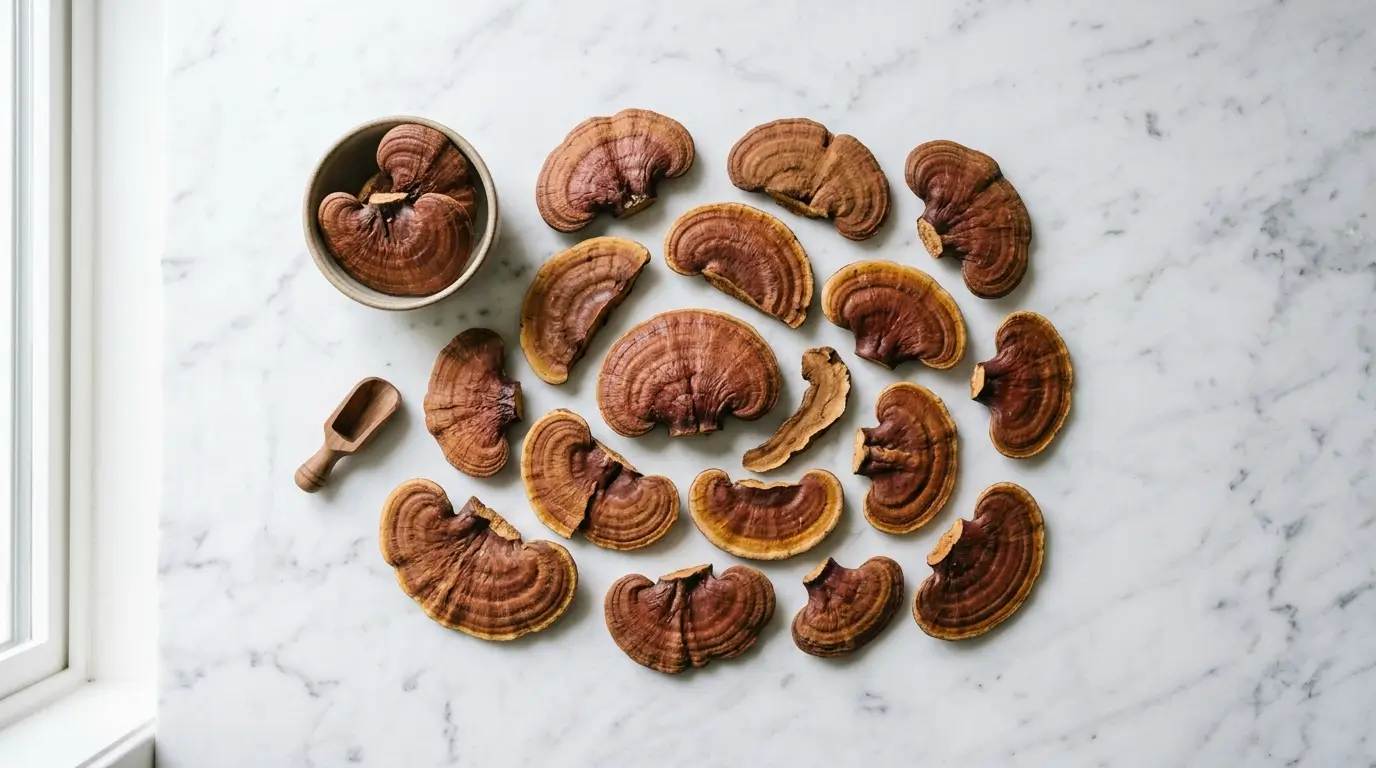
This reishi mushroom tea recipe has become a staple of the adaptogen and “functional mushroom” trend, often marketed for stress relief and immune support as part of a broader wellness routine. Reishi (Ganoderma lucidum) has a long history in Traditional Chinese Medicine, but a mug of tea is a much milder preparation than the concentrated extracts used in most studies. This guide covers what’s actually known, how to brew it, and who should be cautious with it.
| ⚕️ Medical Disclaimer This article is for informational purposes only and does not constitute medical advice. The information shared here is not designed to treat, prevent, or cure any condition. If you are pregnant, breastfeeding, taking medication (especially blood thinners or immunosuppressants), or managing a health condition, speak with a licensed healthcare provider before adding reishi to your routine. |
What Is Reishi Mushroom?
Reishi fits into the same broader wellness category as gut-focused staples — see how prebiotics compare to probiotics if digestive health is more your focus. Reishi (Ganoderma lucidum), also known as lingzhi, is a reddish-brown, fan-shaped mushroom that grows at the base of trees. It’s been used in Chinese, Japanese, and Korean traditional medicine for centuries, often described as a general health tonic. Unlike culinary mushrooms, reishi is woody and bitter, which is why it’s almost always dried and brewed into a strong tea (technically a decoction) rather than eaten.
What Does Reishi Mushroom Tea Do For You?
Reishi contains beta-glucans and triterpenes, compounds that have been studied for their potential immune-modulating and antioxidant effects. According to WebMD, research suggests reishi may help support immune cell activity, though most of this evidence comes from lab and small clinical studies rather than large-scale human trials. It’s often taken as a general wellness tonic rather than for one specific effect, and research on tea specifically (versus concentrated extracts) is limited. If you’re building a wind-down routine, reishi pairs well alongside other evening options like ashwagandha tea. For a caffeinated morning alternative, see how to make matcha tea from powder.
Is Reishi Good for Cortisol?
Reishi is frequently marketed as an adaptogen — a category of herbs believed to help the body handle stress. In practice, evidence directly linking reishi to lower cortisol levels in humans is preliminary and limited. It may be reasonable to try as part of a broader stress-management routine, but it shouldn’t be relied on as a proven cortisol-lowering solution.
Safety: What Not to Mix Reishi With
Reishi’s effects on blood clotting and the immune system are the main reasons it isn’t risk-free to combine with everything:
- Blood thinners: Reishi may increase bleeding risk when combined with anticoagulant or antiplatelet medications (including daily aspirin). Stop use before any planned surgery and tell your surgeon you take it.
- Immunosuppressant medications: Because reishi may stimulate immune activity, it could theoretically work against medications meant to suppress the immune system — relevant for anyone with an autoimmune condition or a transplant.
- Blood pressure or blood sugar medications: Reishi has been studied for mild effects on both, so combining it with existing medication could compound the effect.
Can You Drink Reishi Tea Every Day?
According to the NIH’s LiverTox database, reishi is generally well tolerated, but there are rare documented reports of acute liver injury — including a serious case linked to powdered reishi specifically. A brewed tea from dried slices is a different, more diluted preparation than concentrated powder, but the same caution about long-term daily use applies: many people cycle on and off rather than drinking it indefinitely, and it’s worth mentioning to a healthcare provider if you use it regularly.
How to Make Reishi Mushroom Tea
This reishi mushroom tea recipe uses a simple decoction method — the same technique traditionally used to extract reishi’s compounds through a long, slow simmer.
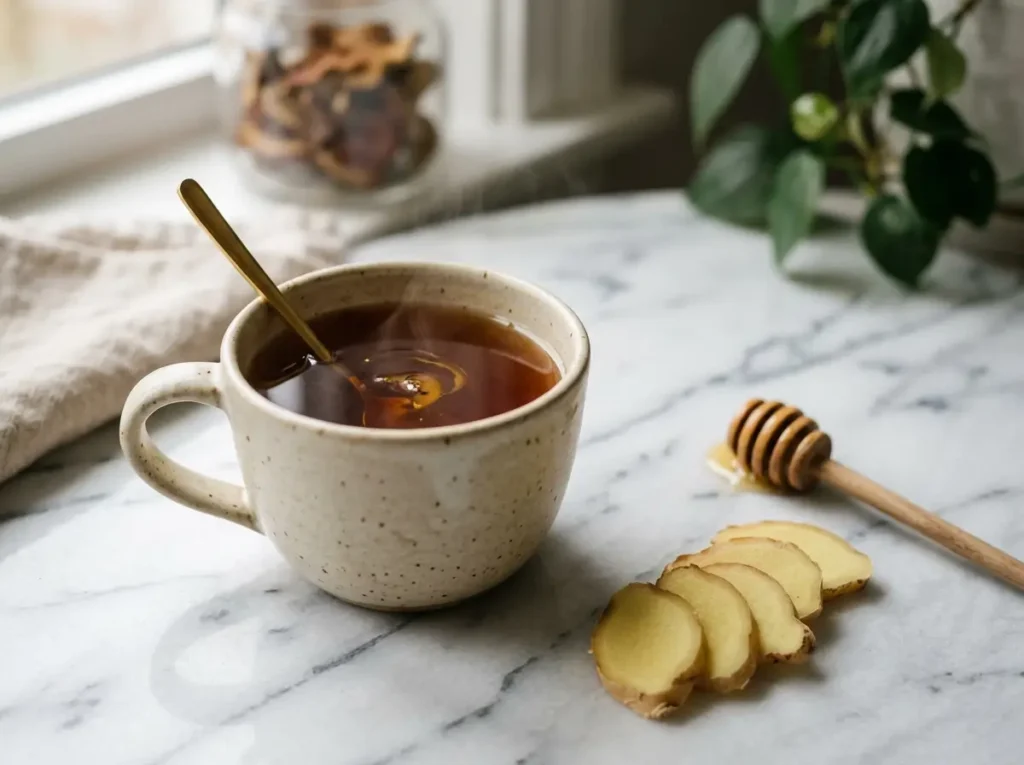
Reishi Mushroom Tea: Benefits, How to Make It, and What to Know
- Total Time: 35 minutes
- Yield: 4 cups 1x
Description
A simple decoction-style reishi mushroom tea, simmered low and slow for a soothing wellness tonic.
Ingredients
- 1/4 oz (about 7g) dried reishi mushroom slices
- 8 cups filtered water
- Fresh ginger slices, optional
- Honey, optional
Instructions
- Break the dried reishi into smaller pieces if needed and add to a stainless steel pot with the water.
- Add ginger slices if using. Bring to a boil, then reduce heat to low.
- Simmer gently for at least 30 minutes, up to 2 hours for a stronger brew.
- Strain out the reishi pieces and let cool slightly before drinking.
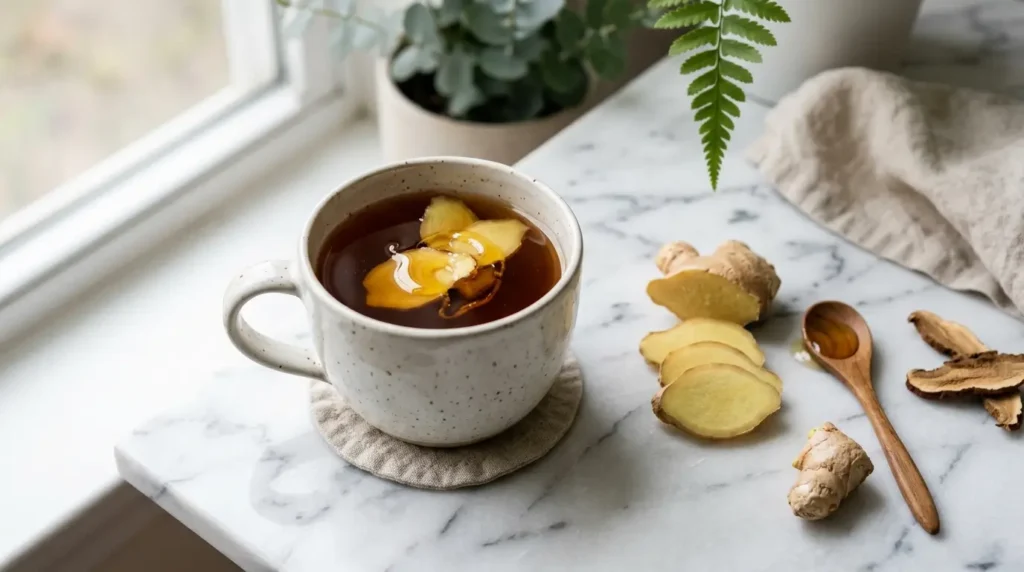
- Stir in honey to taste — reishi has a naturally bitter flavor.
Notes
Not recommended if pregnant, on blood thinners or immunosuppressants, or scheduled for surgery — see the disclaimer above.
- Prep Time: 5 minutes
- Cook Time: 30 minutes
- Category: Tea
- Method: Simmering
Nutrition
- Serving Size: 1 cup
Keywords: reishi mushroom tea, reishi tea, mushroom tea, herbal tea, wellness tonic
Who Should Be Careful With Reishi
- Pregnant or breastfeeding: avoid it — safety hasn’t been established.
- Taking blood thinners or with a bleeding disorder: talk to a provider first.
- Autoimmune condition or organ transplant: avoid unless cleared by your care team, due to immune-stimulating effects.
- Scheduled for surgery: stop at least two weeks before, and disclose use to your surgical team.
- Liver condition: given rare but serious reports of liver injury, especially with powder, check with a provider first.
Frequently Asked Questions
Can you drink reishi tea every day?
It’s generally well tolerated, but the NIH’s LiverTox database notes rare reports of liver injury, particularly with powdered forms. Many people cycle on and off rather than drinking it daily long-term, and it’s worth mentioning to a healthcare provider.
What not to mix reishi with?
Avoid combining reishi with blood-thinning medications (increased bleeding risk) and immunosuppressant medications (reishi may counteract them). Stop use before any planned surgery.
Is reishi good for cortisol?
Reishi is marketed as an adaptogen for stress, but direct evidence on lowering cortisol in humans is limited and preliminary — not a proven effect.
What does reishi mushroom tea do for you?
It’s traditionally used as a general wellness tonic. Some research points to immune-modulating and antioxidant effects, mainly from concentrated extracts rather than tea specifically, and more human research is needed.
What does reishi tea taste like?
Bitter and earthy, often compared to a strong, woody green tea. Honey, ginger, or a splash of milk are common ways to soften the flavor.
Sources
NIH LiverTox — Lingzhi, Reishi (National Institute of Diabetes and Digestive and Kidney Diseases)
WebMD — Health Benefits of Reishi Mushrooms
Bottom Line
Reishi mushroom tea is a traditional wellness drink with some preliminary research behind it, mainly around immune support — but it’s not a proven cortisol-lowering or cure-all remedy, and it carries real interaction risks with blood thinners and immunosuppressants. Treat it as a complementary tonic, not a treatment, and check with a healthcare provider if you take medication or manage a health condition.