
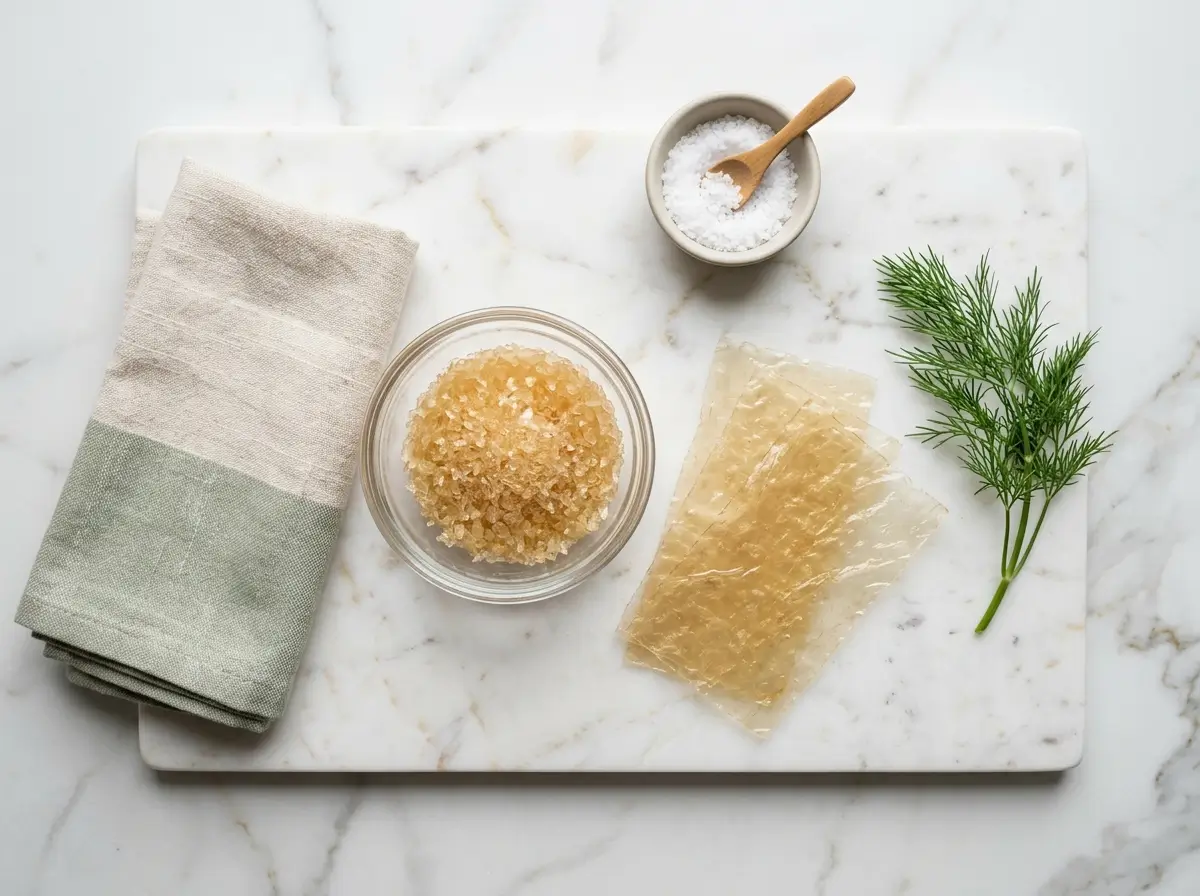
Fish gelatin showed up on more ingredient labels than I expected the moment I started digging into halal-certified gummies, marshmallows, and supplement capsules. If you’ve ever flipped over a package and wondered whether fish gelatin is the same thing as the gelatin in your favorite jello mix, whether it’s halal or kosher, or whether it even fits a pescatarian lifestyle, I went through the research so you don’t have to.
What Is Fish Gelatin, Exactly?
Fish gelatin is a protein made by breaking down the collagen found in the skin, bones, and connective tissue of fish — most commonly cold-water species like cod, pollock, and tilapia. That collagen is extracted through a hot water process, then filtered, concentrated, and dried into the powder or sheets you’d find on a store shelf.
It’s essentially the same transformation that turns beef hide or pork skin into the gelatin most of us grew up with. I walked through that entire process step by step in how is gelatin made, which is a useful read if you want the full picture before deciding which type to buy.

Fish Gelatin vs. Beef Gelatin vs. Pork Gelatin
The source matters more than most people realize, especially if you’re shopping with dietary restrictions in mind. Here’s how the three most common types stack up:
| Source | Typical Set | Halal Status | Kosher Status | Common Uses |
| Fish (cod, tilapia, pollock skins/bones) | Softer, lower melting point | Generally accepted as halal | Often considered pareve / kosher | Capsules, halal gummies, marshmallows |
| Beef (cattle hide/bones) | Medium, firm set | Halal if zabiha-certified | Kosher if certified | Jello, baking, desserts |
| Pork (pig skin/bones) | Firmest set | Not halal | Not kosher | Conventional jello, gummy candy |
If you’re trying to figure out where your everyday gelatin actually comes from, I covered the other two sources in detail in beef gelatin benefits and in is gelatin pork, which is one of the questions I get asked the most.

Is Fish Gelatin Halal? Is It Kosher?
This is the question that brings most people to this page, so let’s be direct about it. Under most interpretations of Islamic dietary law, fish (specifically fish with scales) doesn’t require the same ritual slaughter as land animals, which is why fish-derived gelatin is generally accepted as halal across the major schools of thought — without the certification debates that follow beef and pork gelatin.
The kosher picture is similar. Fish with fins and scales are typically classified as pareve, meaning they’re treated as neither meat nor dairy, which makes fish gelatin one of the easier gelatin sources to certify kosher.
That said, “generally accepted” isn’t the same as “automatically certified.” Always check the actual product packaging for a halal or kosher symbol rather than assuming based on the source ingredient alone — manufacturing lines, additives, and processing aids can affect the final certification. For a deeper look at how certification standards are defined, Healthline’s overview of gelatin types is a solid starting point.
Can Pescatarians Eat Fish Gelatin? What About Vegetarians?
If you follow a pescatarian diet — meaning you eat fish but no other meat — fish gelatin fits right in, since it’s simply a processed fish byproduct.
Vegetarians and vegans, on the other hand, should still steer clear. Fish gelatin is an animal product, full stop. If you’re looking for a plant-based way to get that same gel-like texture, I put together a broader roundup of swaps like agar-agar and pectin in our gelatin substitute guide.…my guide to gelatin substitutes covers several that work well.
What’s Actually in Fish Gelatin? (Nutrition Basics)
Once it’s processed, fish gelatin is almost entirely protein — mainly the amino acids glycine and proline, the same building blocks found in any collagen-derived gelatin. There’s essentially no fat, no carbohydrates, and properly processed fish gelatin doesn’t carry a fishy smell or taste.
Because collagen and gelatin show up so often in conversations about joints, skin, and gut health, Cleveland Clinic’s explainer on collagen is worth a look if you want the science behind those claims. And if you’re specifically interested in how gelatin fits into a weight loss approach, my gelatin for weight loss guide breaks that down without the hype.
How Fish Gelatin Behaves in the Kitchen
Compared to beef or pork gelatin, fish gelatin tends to have a lower melting point and a softer set. That makes it a great fit for chilled desserts that need to stay light and delicate, but it’s less ideal for anything that has to hold its shape at room temperature for long stretches — think a layered jello cup sitting out at a summer picnic.
Because the bloom strength (the gel firmness) can differ from one brand to another, it’s worth doing a small test batch before committing fish gelatin to a recipe you care about.
Where to Find Fish Gelatin and How to Use It
Fish gelatin shows up most often in halal and kosher specialty aisles, international grocery stores, and online from brands that specifically label their source. Look for a clear halal or kosher symbol on the packaging rather than relying on the ingredient name alone.
Once you have it, you can generally swap it 1:1 into most cold-set recipes. My gelatin water recipe and the pink gelatin drink recipe are both good places to start experimenting — just expect a slightly softer, lighter set than you’d get with beef gelatin.

Frequently Asked Questions
Does fish gelatin taste like fish?
No. When it’s properly processed and refined, fish gelatin is essentially flavorless and odorless, just like beef or pork gelatin.
Is fish gelatin the same as marine collagen supplements?
They’re related but not identical. Gelatin is cooked collagen that’s ready to gel in food, while marine collagen supplements are usually further broken down (hydrolyzed) so the body absorbs them more easily — they won’t form a gel the way gelatin does.
Can I substitute fish gelatin 1:1 for beef gelatin in a recipe?
In most cases, yes, but expect a softer set since fish gelatin generally has a lower bloom strength. If your recipe depends on a firm structure, you may need to add slightly more.…gelatin substitutes covers several that work well.
Is fish gelatin safe for people with a fish allergy?
No. Fish gelatin is still made from fish protein, so anyone with a fish allergy should avoid it and look at plant-based options instead — my guide to gelatin substitutes covers several that work well.
— Hannah Bell
Hannah writes about gelatin, jello, and everyday wellness for jelloandwellness.com. For more ingredient breakdowns like this one, browse the full Gelatin Recipes category.