

⚕️ Disclaimer: This article is for informational purposes only and does not constitute medical advice. The recipes and ideas shared here are not designed to treat, prevent, or cure any condition. If you are pregnant, breastfeeding, taking medication, or managing a health condition, speak with a licensed healthcare provider before changing your diet.
Drinking baking soda water benefits have been talked about in wellness circles for years — from athletes sipping it before a workout to people using it to calm an upset stomach after a heavy meal. But what does science actually say? And more importantly, how do you do it safely?
In this guide, we break down exactly what happens when you drink baking soda water, the evidence behind the claimed benefits, the real risks you need to know about, and a simple recipe that many wellness drinkers swear by.
If you are already exploring morning wellness drinks like chia seed water or lemon water, baking soda water is a different category — it works through a specific chemical mechanism that none of the others share. If you would rather add just a pinch to your morning cup, see our guide to baking soda in coffee instead. Let’s get into it.
What Is Baking Soda Water, Exactly?
Baking soda is sodium bicarbonate (NaHCO₃) — a naturally occurring mineral compound that your kidneys already produce in small amounts to regulate your blood’s pH. When you dissolve it in water and drink it, you are essentially giving your body a small, temporary alkaline boost.
This is not the same as baking powder (which contains acid and starch) and it is not the same as washing soda (which is far more alkaline and not safe to drink). Baking soda for drinking is the plain, food-grade variety you find in the baking aisle.
According to the National Institutes of Health (NIH), sodium bicarbonate has been used medically to treat metabolic acidosis and severe indigestion under physician supervision. The recreational wellness use is different — it uses far smaller amounts for everyday digestive comfort.
5 Drinking Baking Soda Water Benefits (With Evidence)
1. May Support Digestive Comfort
The most well-supported use of baking soda water is for occasional indigestion and heartburn. When stomach acid levels rise higher than comfortable, a small amount of baking soda can help neutralize the excess acid — the same way many over-the-counter antacids work, since several of them use sodium bicarbonate as their active ingredient.
The Mayo Clinic lists sodium bicarbonate as a legitimate antacid when used correctly — noting that it should not be taken within two hours of other medications, and that it is not appropriate for frequent or daily use.
2. May Help with Exercise Performance
This is actually one of the most studied areas. A practice called “bicarbonate loading” — drinking baking soda water before intense exercise — has been researched for its potential to buffer lactic acid buildup in muscles, which is the burning feeling you get during high-intensity effort.
A 2021 review in the Journal of the International Society of Sports Nutrition found that sodium bicarbonate supplementation may modestly improve performance in high-intensity exercise lasting 1–7 minutes. Important caveat: the doses used in research (0.2–0.3 g/kg body weight) are significantly higher than what most wellness recipes suggest — and gastrointestinal side effects are common at those levels.
3. May Help Neutralize Occasional Acid Reflux
Occasional acid reflux — the uncomfortable rise of stomach acid into the esophagus — is one of the most common reasons people turn to baking soda water. The neutralization effect can provide quick, temporary relief.
The keyword here is “occasional.” Regular use to manage reflux is not recommended without a doctor’s guidance, because masking symptoms can sometimes delay treatment of underlying causes.
4. May Support Athletic Recovery (Anecdotal)
Many athletes report drinking diluted baking soda water after training to help with muscle soreness. The mechanism would be similar to the pre-workout benefit — buffering acid in the bloodstream. While the personal accounts are numerous, rigorous post-exercise recovery studies are less definitive than the pre-exercise data.
5. Traditionally Used for Urinary Comfort
In folk wellness traditions, baking soda water has been used to soothe mild urinary discomfort by making urine slightly less acidic. Some older clinical protocols used it as a complementary measure alongside antibiotics for urinary tract infections — though it was never a standalone treatment.
Note: if you have any urinary symptoms, consult a healthcare provider. See Cleveland Clinic’s guidance on UTIs for more information.

Baking Soda Water Recipe: The Simple Wellness Version
What You Need
- 1/4 teaspoon baking soda (food-grade, plain — not baking powder)
- 8 oz (240 ml) of cool or room-temperature water
- Optional: juice of half a lemon for flavor and vitamin C
- Optional: a small pinch of sea salt if doing pre-workout
How to Make It
- Pour the water into a glass.
- Add the baking soda and stir well until fully dissolved — about 30 seconds.
- If using lemon, squeeze it in after the baking soda is dissolved (this controls the fizzing).
- Drink slowly, not in one gulp.
When to Drink It
- For digestive discomfort: 30 minutes after a meal.
- For pre-workout use: 60–90 minutes before exercise (gives time for it to be absorbed and reduces GI risk).
- Not recommended: on an empty stomach first thing in the morning, or right before bed.
If you enjoy morning wellness drinks, you might also want to explore our guide to chia seed water benefits — a gentler, fiber-rich option with a different mechanism.
Risks and Side Effects You Need to Know
This is the section that most wellness content glosses over — and it is the most important one. Baking soda water is not risk-free, especially at higher amounts or for certain people.
Sodium Content
1/4 teaspoon of baking soda contains approximately 300 mg of sodium. For context, the American Heart Association recommends no more than 2,300 mg of sodium per day for most adults. If you are watching your sodium intake for blood pressure or heart health reasons, this matters.
Disruption of Stomach Acid
Your stomach acid exists for a reason — it helps break down food and kills harmful bacteria. Regularly neutralizing it can interfere with digestion and nutrient absorption over time.
Alkalosis Risk
Too much sodium bicarbonate can raise your blood’s pH too high, a condition called metabolic alkalosis. Symptoms include nausea, muscle twitching, hand tremors, and confusion. This is rare at the amounts in wellness recipes but becomes a real risk if someone dramatically increases their intake thinking more is better.
Who Should Avoid It
- Pregnant or breastfeeding women (unless cleared by a doctor)
- People with high blood pressure or on a sodium-restricted diet
- Anyone with kidney disease (kidneys regulate bicarbonate naturally; extra input can overload them)
- People on certain medications (baking soda can affect absorption — always check with a pharmacist)
- Children and teenagers (not studied in these populations for wellness use)
For a comprehensive overview of sodium bicarbonate safety, Harvard Health — The Best Ways to Manage Heartburn

Baking Soda Water vs. Other Wellness Drinks — How It Compares
| Drink | Main Mechanism | Best Use | Sodium |
| Baking soda water | pH buffering / antacid | Digestive relief, pre-workout | High (~300mg/serving) |
| Chia seed water | Fiber + hydration gel | Daily hydration, gut health | None |
| Lemon chia water | Vitamin C + fiber + flavor | Morning routine | None |
| Internal shower drink | Fiber expansion + hydration | Occasional constipation relief | None |
See also: The Internal Shower Drink: Does It Actually Work? — another popular gut health drink worth comparing.
Baking Soda Lemon Water: The Popular Variation
Adding lemon juice to baking soda water is the most common wellness variation — and it has a few things going for it beyond taste.
The lemon contributes vitamin C (about 18mg per half lemon), a fresh flavor that makes the drink more enjoyable, and a mild acidic counterpoint that many people find easier on the stomach than plain baking soda water.
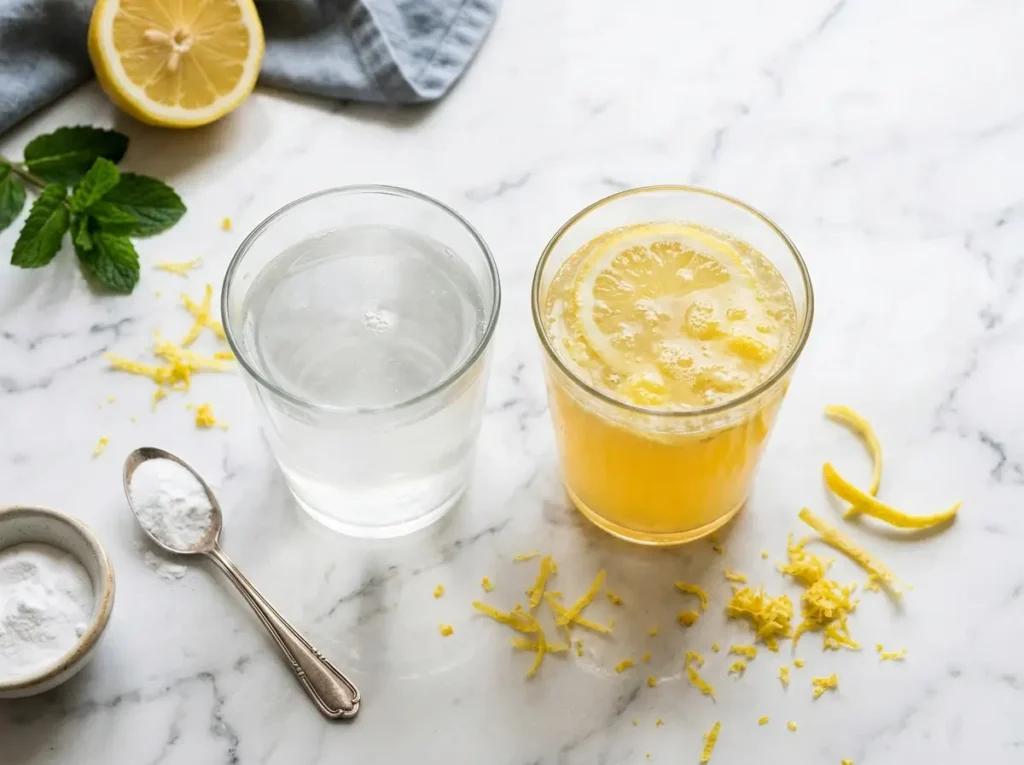
The fizzing you see when you combine them is the acid-base reaction between citric acid and sodium bicarbonate — producing carbon dioxide bubbles. This is completely normal and not a sign of anything harmful.
Recipe tip: Always dissolve the baking soda in the water first, then add the lemon. Adding lemon to dry baking soda produces an immediate vigorous reaction and can make a mess. Our full guide to lemon and chia seed water combines these two wellness drinks into one refreshing morning routine.
How Often Should You Drink It?
This is where most wellness guides skip the nuance. Baking soda water is not designed to be a daily habit the way chia seed water or lemon water can be.
- Occasional digestive discomfort (1–2 times per week maximum): 1/4 tsp in 8 oz water, after a meal.
- Pre-workout use (trained athletes, not daily): consult a sports dietitian for appropriate protocol.
- Everyday morning routine: not recommended. Use chia seed water or lemon water instead for daily hydration wellness habits.
If you find yourself reaching for baking soda water more than a couple of times a week for digestive issues, that is a signal to talk to a doctor about what might be causing the recurring discomfort — not a signal to drink more baking soda water.
For a gentler everyday approach, see ourMorning Wellness Drinks: A Complete Guide — covering all the drinks worth adding to your routine.
Frequently Asked Questions
How much baking soda should I put in water?
The typical amount used in wellness recipes is 1/4 teaspoon of baking soda dissolved in 8 oz (240 ml) of water. This is not a medical dose — it’s the amount most commonly used for occasional digestive comfort. Higher amounts increase the risk of side effects and are not recommended without guidance from a healthcare provider.
Is it safe to drink baking soda water every day?
No, daily use is not recommended. Baking soda water is meant for occasional use — a couple of times a week at most for digestive discomfort. Drinking it every day increases sodium intake and the risk of disrupting your stomach acid and blood pH over time.
Does baking soda water actually help with heartburn?
Yes, in the short term. Baking soda neutralizes excess stomach acid the same way many over-the-counter antacids do, which is why it can provide quick relief for occasional heartburn. It’s not meant to treat the underlying cause of frequent reflux — if that’s a regular issue for you, talk to a doctor.
Who should not drink baking soda water?
People with high blood pressure, kidney disease, or anyone on a sodium-restricted diet should avoid it. It’s also not recommended during pregnancy or breastfeeding without a doctor’s clearance, and it can interfere with how some medications are absorbed, so check with a pharmacist if you take any regularly.
Does baking soda water really improve exercise performance?
There’s real research behind this, but the doses studied (0.2 to 0.5 g per kg of body weight) are much higher than what typical wellness recipes use, and gastrointestinal side effects are common at those levels. For most people sipping a light wellness version, any performance effect will be far more modest than what’s seen in the research.
What are the signs I’ve had too much baking soda water?
Nausea, muscle twitching, hand tremors, and confusion can signal metabolic alkalosis, which happens when your blood’s pH rises too high. This is rare at wellness-recipe amounts, but if you notice these symptoms, stop and speak with a healthcare provider.
Final Thoughts
The drinking baking soda water benefits that have real backing are narrower than wellness culture sometimes implies: digestive relief for occasional use, and modest exercise performance support in trained athletes. It is not a weight loss solution, it is not a daily detox ritual, and it is not appropriate for everyone.
Used occasionally, at the right amount, and with an understanding of who should avoid it — it is a simple, inexpensive tool with a specific purpose. The key word in all of this is “occasionally.”
If you are building a broader wellness drink routine, start with the everyday options first: our chia seed water benefits guide and lemon and chia seed water recipe are both great starting points — no medical caveats required.