
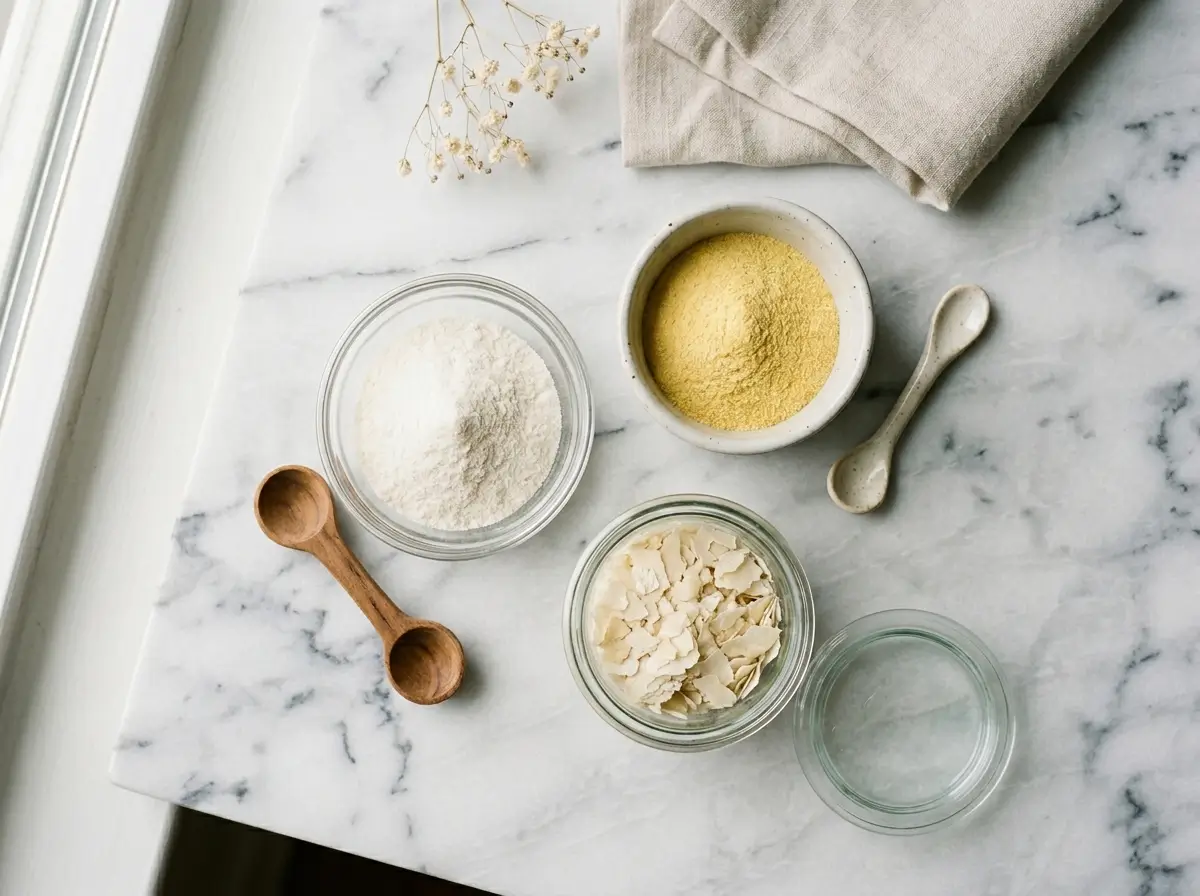
Gelatin substitute — these two words open a rabbit hole that many home cooks fall into right in the middle of a recipe. Maybe you realized your box of Knox is empty. Maybe you cook for a vegetarian friend, keep a halal kitchen, or simply want to skip animal-derived ingredients. Whatever the reason, the good news is that several plant-based gelling agents can step in with minimal fuss — once you know the rules.
In this guide, Hannah Bell walks you through the six most reliable gelatin alternatives, with exact substitution ratios, best use cases, and honest notes on texture so you get the result you actually want.
Looking for the bigger picture first? Read our does gelatin have protein guide to understand what gelatin does and why swapping it out changes your recipe.
What Is Gelatin and Why Do People Look for Substitutes?
Traditional gelatin is a protein derived from the collagen in animal bones, skin, and connective tissue — most often from pigs or cows. When dissolved in hot liquid and cooled, it forms that iconic wobbly, semi-transparent gel that makes jello bounce and panna cotta tremble.
The reasons people look for an alternative fall into a few clear categories:
- Dietary restrictions — vegetarian, vegan, halal, kosher, or bariatric diets all have different constraints on animal-derived ingredients.
- Allergies — some people react to specific animal proteins in standard gelatin.
- Texture goals — certain plant-based gels hold up better in heat, making them useful in warm climates or desserts served at room temperature.
- Availability — agar-agar is easier to source in many Asian and Middle Eastern grocery stores than unflavored gelatin.
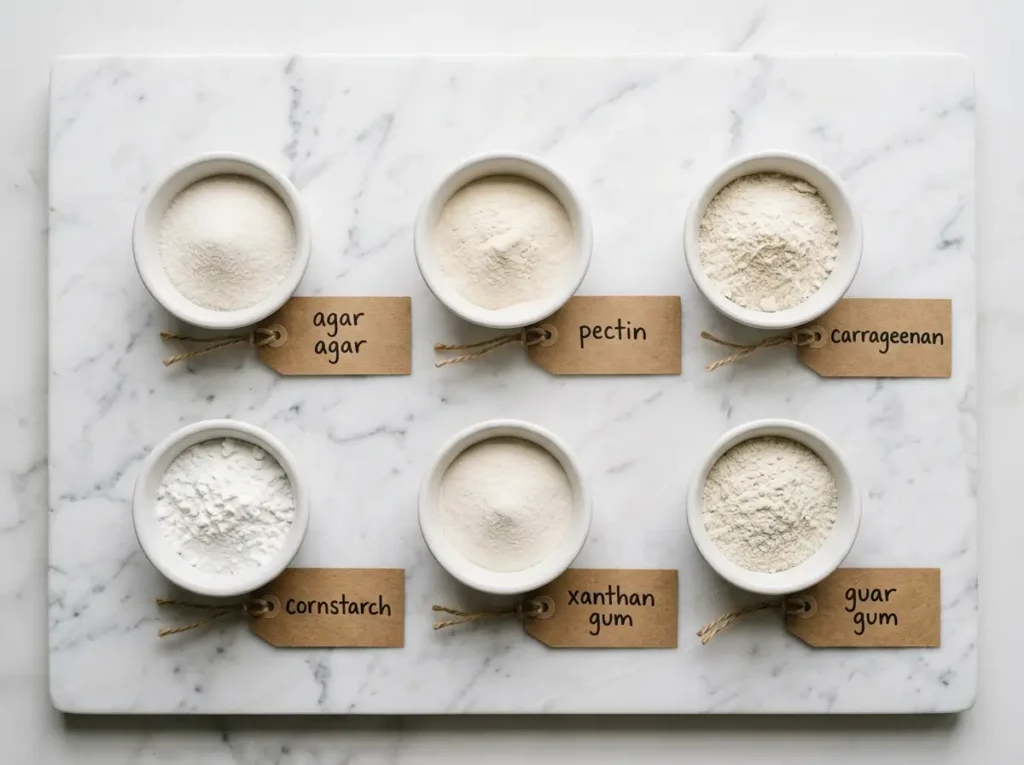
Quick Comparison: The 6 Best Gelatin Substitutes
Use the table below as a cheat sheet before diving into each substitute in detail.
| Substitute | Source | Ratio vs Gelatin | Best For | Vegan? | Texture |
| Agar-agar | Red algae | 1:1 (powder) | Jello, panna cotta, mousse | Yes | Firm, less jiggly |
| Pectin | Citrus/apple peel | Follow recipe | Jams, gummies, fruit gels | Yes | Soft, fruity |
| Carrageenan | Red seaweed | By weight (1 oz = 1 cup) | Creamy desserts, dairy alt | Yes | Soft, creamy |
| Cornstarch | Corn | 1–2 tbsp slurry / 1 cup | Sauces, pie fillings | Yes | Thick, not gelling |
| Xanthan gum | Fermented sugar | Half the gelatin amount | Gluten-free baking | Yes | Gluey if overused |
| Guar gum | Guar bean | ~1/5 gelatin amount | Cold recipes, smoothies | Yes | Slightly slimy |
1. Agar-Agar — The Closest Match
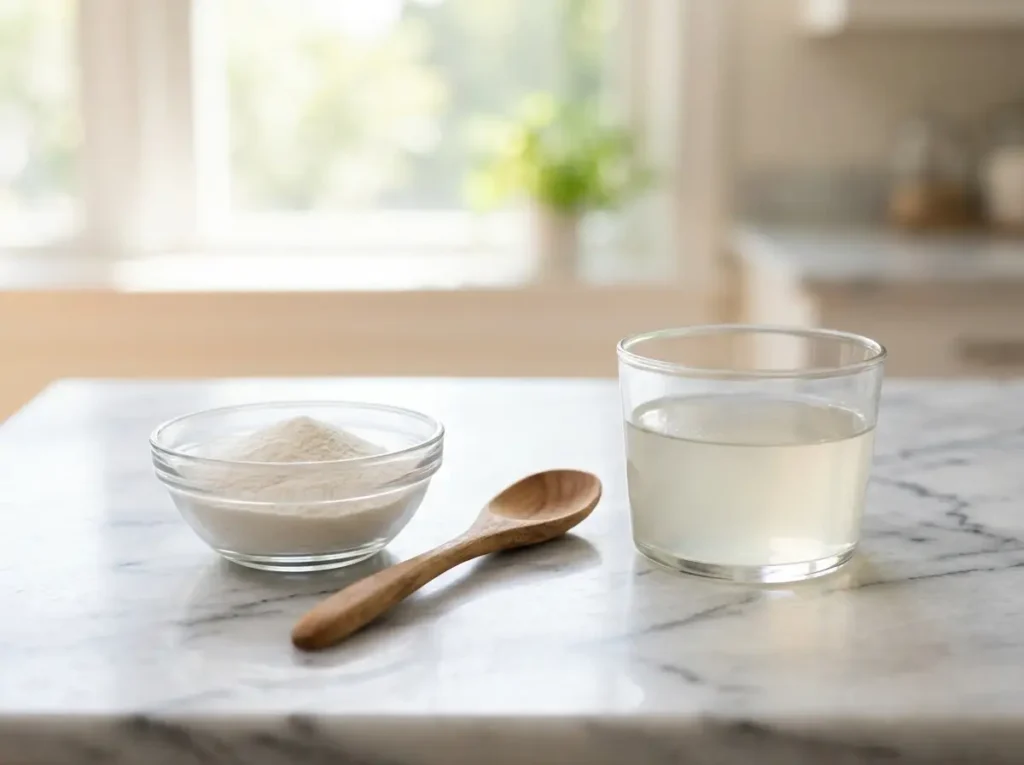
Agar-agar is the gold standard among plant-based gelling agents. Derived from red algae (source: Wikipedia), it is flavorless, odorless, and naturally clear — making it the cleanest swap in most jello and dessert recipes.
How it behaves
Agar sets firm at room temperature and holds its structure in warm environments — a major advantage over standard gelatin, which melts above roughly 35°C (95°F). The trade-off: agar gels are less elastic and less wobbly. Think firm Japanese anmitsu rather than quivering American Jell-O.
One important technique note: unlike gelatin, which blooms in cold water first, agar must be added directly to a hot or warm liquid and brought to a simmer (90–100°C) for 1–2 minutes to activate. Once it starts cooling, it sets quickly — so pour and position your dessert before it firms up.
Substitution ratio
- Powder: 1 teaspoon agar powder = 1 teaspoon gelatin powder (1:1)
- Flakes: 1 tablespoon agar flakes = 1 teaspoon gelatin powder
- Bar: use about one-third of a bar per cup of liquid
Watch out for acidic fruits
Kiwi, pineapple, mango, papaya, and peaches contain enzymes that interfere with setting. Boil the fruit puree first to deactivate those enzymes before adding agar — then increase the agar amount slightly.
If you’re making a jello-style dessert, check our bariatric gelatin recipe which uses agar-agar as the default gelling agent for a post-op friendly result.
2. Pectin — Best for Fruit-Based Recipes
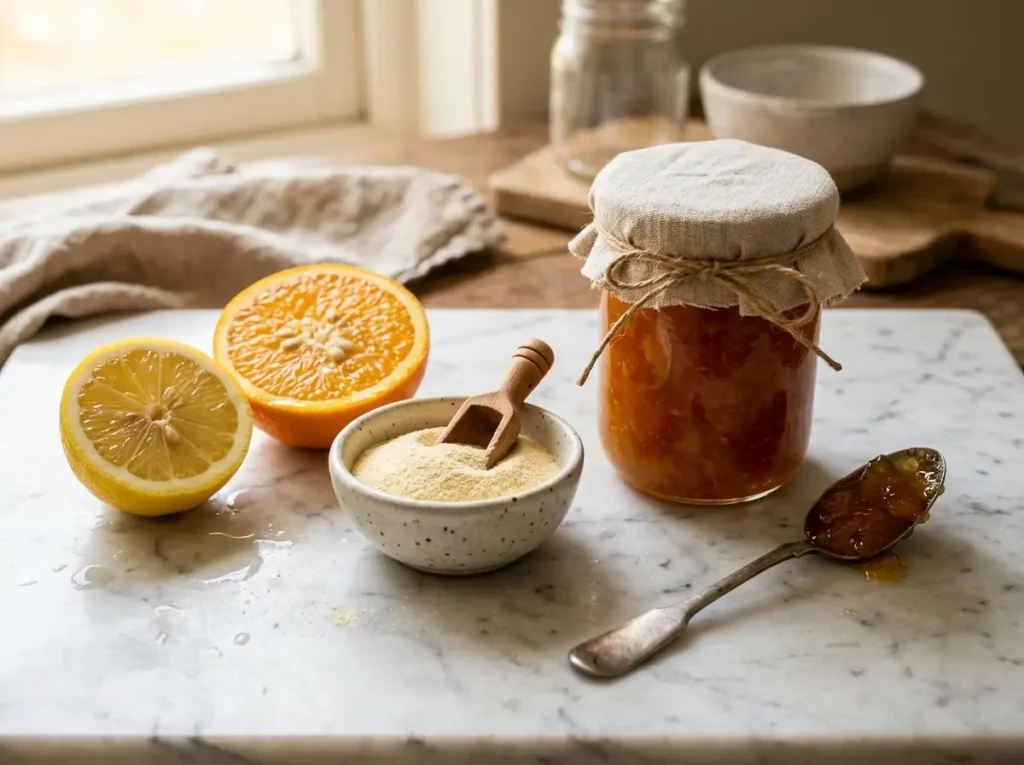
Pectin is a naturally occurring polysaccharide found in the cell walls of citrus peels, apples, and many other fruits. Research published in Polymers (PubMed) confirms that pectin’s gelling behavior depends on its molecular structure and the presence of sugar and acid — which is why pectin works beautifully in jams and fruit gels but less predictably in savory applications.
How it behaves
Pectin creates a soft, yielding gel — not the firm bite of agar, and not the wobbly elasticity of gelatin. It requires both sugar and acid to set properly, which means it works best in fruit-forward recipes: jams, jellies, fruit tarts, and gummies made with real juice.
Pectin vs Gelatin: The Key Differences
The two are often mentioned together, but they are not interchangeable — they come from different sources and gel through entirely different mechanisms.
| Pectin | Gelatin | |
|---|---|---|
| Source | Citrus peel, apple (plant) | Animal collagen |
| What it needs to set | Sugar + acid | Hot water, then cooling |
| Texture | Soft, spreadable | Firm, elastic wobble |
| Sets at | Room temperature | Melts above ~95°F (35°C) |
| Vegan | Yes | No |
| Best use | Jams, fruit gels, gummies | Jello, panna cotta, mousse |
The practical takeaway: pectin cannot replace gelatin in a molded dessert, and gelatin cannot replace pectin in a jam. Match the gelling agent to the job, not to the ingredient list.
Substitution ratio
Follow the specific recipe rather than a fixed ratio. Most pectin packages provide gel tests — heat a small amount of the mixture, let it cool on a cold plate for 30 seconds, then check consistency before committing.
- High-methoxyl pectin (standard): needs sugar + acid (lemon juice) to gel
- Low-methoxyl pectin: gels with calcium, less dependent on sugar — useful for low-sugar recipes
Best for
- Homemade gummies with real fruit juice
- Glazes and fruit fillings for tarts
- Jams and jellies
- Not ideal for panna cotta, jello molds, or mousse — it won’t give a clean wobble
3. Carrageenan — Best for Creamy Textures
Carrageenan (also called Irish Moss) is extracted from red seaweed and has been used commercially for decades as a thickener in plant-based dairy products, ice cream, and puddings. It creates a softer, creamier gel than agar — closer in mouthfeel to gelatin when used in dairy-style desserts.
Substitution ratio
Carrageenan is measured by weight, not volume: 1 ounce of carrageenan sets approximately 1 cup of liquid. Use whole-form carrageenan for firm results; powdered form for smooth, creamy applications.
Note on controversy: Some research has raised questions about the long-term effects of degraded carrageenan (poligeenan) in digestive health. The carrageenan used in food is a different, non-degraded form. If you have gut sensitivities, agar-agar is the safer choice.
4. Cornstarch — The Pantry Backup
Cornstarch is not a gelling agent — it thickens, but it does not set. This means you cannot use it to make jello, panna cotta, or any molded dessert. However, it works well as a gelatin stand-in in sauces, pie fillings, and soups where you need a smooth, thick consistency rather than a firm structure.
Substitution ratio
Mix 1–2 tablespoons of cornstarch with an equal amount of cold water to form a slurry, then stir it into your hot liquid. Simmer for several minutes to activate. Unlike agar or gelatin, cornstarch will not firm up further as it cools — what you see on the stove is approximately what you get.
5. Xanthan Gum — For Gluten-Free Baking
Xanthan gum is produced through fermentation of sugar with the bacteria Xanthomonas campestris. It is a soluble fiber that adds elasticity and viscosity without heat activation — making it particularly useful in gluten-free baking where structure is needed without a gelling step.
Substitution ratio
Use roughly half the amount of gelatin called for. Xanthan gum is extremely concentrated — overuse creates a gluey, unpleasant texture. Start with 1/4 teaspoon per cup of liquid and adjust.
Gut health note: Xanthan gum is a soluble fiber that does not digest in the body. People with irritable bowel syndrome or gut sensitivities sometimes report bloating with high doses. Use sparingly. See our gut health recipes for gentler fiber sources.
6. Guar Gum — Cold Applications Only
Derived from the guar bean (Indian cluster bean), guar gum thickens cold liquids more effectively than xanthan and does not require heat. It is often used in smoothies, ice creams, and cold sauces where you want a thicker consistency without cooking.
Substitution ratio
Use approximately one-fifth the amount of gelatin — guar gum is more powerful than most people expect. A little goes a long way; start at 1/8 teaspoon per cup.
- Best for: cold smoothies, ice cream, cold salad dressings
- Not ideal for: hot applications — guar gum loses thickening power when heated above 80°C
How to Choose the Right Gelatin Substitute
The fastest way to pick the right substitute: identify what your original recipe is actually trying to accomplish.
- You want a firm, clear, jiggly mold (jello, gummies, panna cotta) → agar-agar powder at 1:1
- You are making a jam, fruit tart filling, or gummy with real juice → pectin
- You are making a creamy plant-based pudding or dairy alternative → carrageenan
- You need to thicken a sauce or pie filling but not set it firm → cornstarch slurry
- You are baking gluten-free and need structure → xanthan gum (sparingly)
- You are making a cold smoothie or ice cream base → guar gum
For gelatin-based wellness recipes and weight loss drinks, agar-agar is Hannah’s default choice on this site — it is vegan, halal-compliant, and behaves predictably. See how it works in practice in our gelatin water recipe, adapted with an agar-agar variation.
Basic Agar-Agar Jello (Gelatin-Free)
This simple recipe replaces standard gelatin with agar-agar powder — the cleanest swap for a classic jello texture.
Ingredients
- 2 cups (480 ml) 100% fruit juice — grape, strawberry, or apple
- 1 teaspoon agar-agar powder
- 1 tablespoon honey or maple syrup (optional, adjust to taste)
Instructions
- Pour the fruit juice into a small saucepan. Sprinkle agar-agar powder evenly over the surface.
- Bring to a simmer over medium heat, stirring constantly. Once the mixture reaches a full simmer, continue stirring for 2 full minutes until the agar is completely dissolved.
- Stir in honey or maple syrup if using. Remove from heat.
- Pour immediately into a glass dish or individual molds. Do not delay — agar begins setting as it cools.
- Refrigerate for at least 1 hour before serving. The jello will be slightly firmer than traditional gelatin. To achieve a softer texture, reduce agar to 3/4 teaspoon.
Makes: 4 servings | Prep: 5 min | Cook: 5 min | Chill: 1 hour | Vegan, halal, gluten-free
Frequently Asked Questions
Is agar-agar a 1:1 replacement for gelatin?
Agar-agar powder substitutes for gelatin at a 1:1 ratio by volume. Flakes are less concentrated — use 1 tablespoon of flakes for every 1 teaspoon of gelatin powder called for. If the recipe produces a result that is too firm, reduce agar by 25% in your next attempt.
Can I use cornstarch instead of gelatin in jello?
No. Cornstarch is a thickener, not a gelling agent. It will not produce a firm, moldable jello-style texture. It works for thickening sauces and pie fillings but cannot replace gelatin structurally. Agar-agar is the correct choice for jello.
What is the best vegan substitute for gelatin in gummies?
Agar-agar produces the firmest, clearest gummies. Pectin works well in fruit-juice gummies and creates a slightly softer, chewier texture that many people prefer. For a traditional gummy-bear style texture, agar-agar is the closer match.
Is pectin the same as gelatin?
No. Pectin is a plant-derived polysaccharide extracted from fruit peels. Gelatin is an animal-derived protein from collagen. Their gelling mechanisms are entirely different — pectin requires sugar and acid to gel, while gelatin simply needs hot water and cooling. They are not interchangeable at a 1:1 ratio without adjusting the recipe.
Does agar-agar taste like gelatin?
Agar-agar has no flavor, color, or smell — just like unflavored gelatin. The difference is textural: agar produces a firmer, slightly more brittle gel. In a fruity jello dessert, most people cannot taste any difference.
Is there a gelatin substitute for bariatric patients?
Yes. Agar-agar is commonly recommended because it is protein-free, easy to digest, and produces a soft, smooth gel when used at slightly lower concentrations. See the bariatric gelatin recipe for a post-op adapted version.
The Bottom Line
There is no single universal gelatin substitute — the right choice depends entirely on what your recipe needs to do. Agar-agar handles 80% of use cases cleanly, pectin covers fruit-forward applications, and cornstarch steps in for thickening without setting. Keep all three in your pantry and you will never be caught mid-recipe again.
Ready to put these substitutes to work? Start with the gelatin for weight loss guide, explore jello desserts that use agar-agar, or try the recipe for gelatin weight loss that started the conversation.
Sources
1. Agar — Wikipedia / Agar
2. Structure-Related Gelling of Pectins — Polymers, MDPI (PubMed PMC)
3. Gelation behaviors of apple pectin as a gelatin substitute — PubMed PMC 37094647
About Hannah Bell: Hannah Bell is the wellness recipe developer behind Jello and Wellness. She focuses on practical, plant-forward recipes for people navigating dietary restrictions — from bariatric eating to vegan cooking — without sacrificing flavor or texture. All recipes are tested in her home kitchen and reviewed against peer-reviewed nutritional literature.