
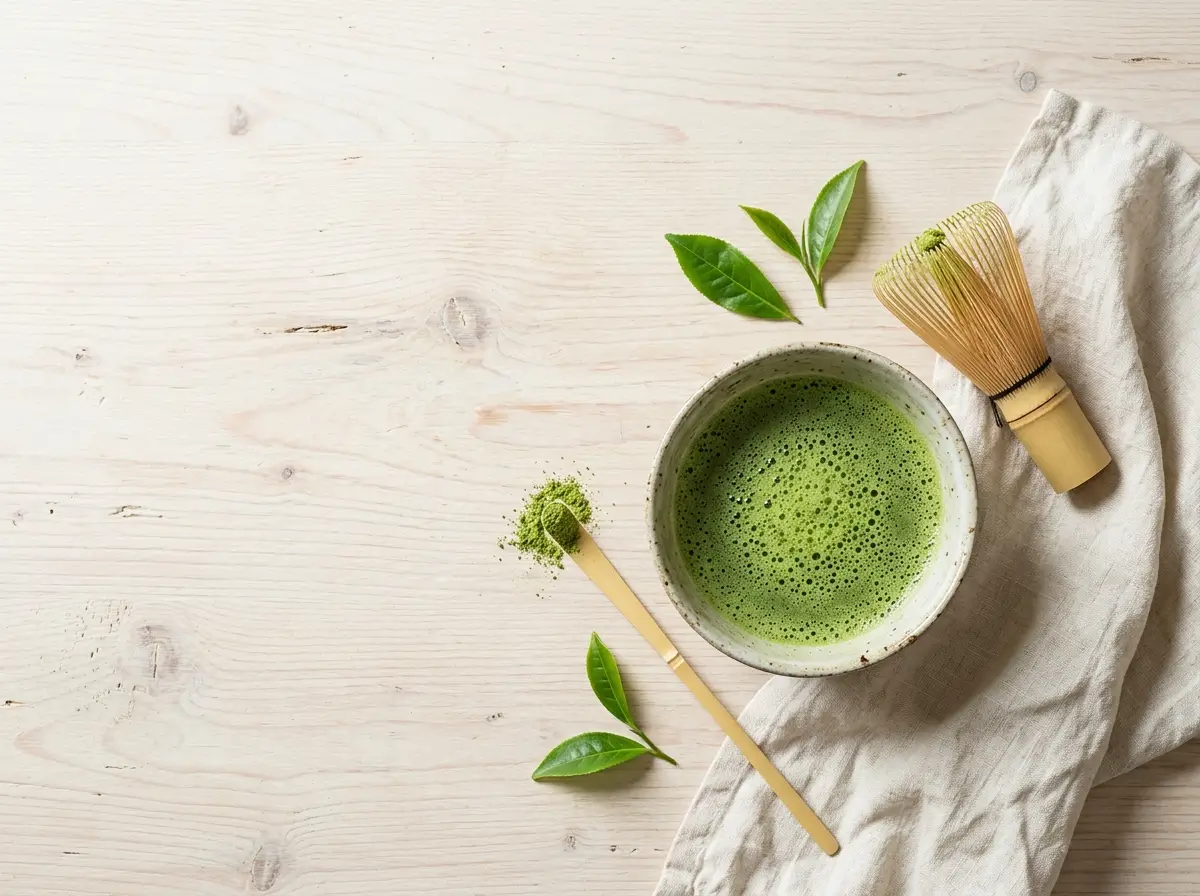
How to make matcha tea from powder takes about five minutes, one bowl, and a few details most quick guides skip: how much powder to use, how hot the water should be, and how much caffeine ends up in your cup. This guide shows you how to whisk a smooth, frothy bowl at home, which grade to buy, and what the research does and does not say about matcha’s benefits.
| ⚕️ Medical Disclaimer This article is for informational purposes only and does not constitute medical advice. The information shared here is not designed to treat, prevent, or cure any condition. If you are pregnant, breastfeeding, taking medication, sensitive to caffeine, or managing a health condition, speak with a licensed healthcare provider before making matcha a daily habit. |
What Is Matcha, and How Is It Different From Regular Green Tea?
Matcha is a type of green tea. According to Harvard Health, it is grown in the shade, which is linked to higher levels of certain beneficial plant compounds than other green teas contain. The biggest difference is how you drink it: instead of steeping leaves and throwing them away, you whisk the powdered leaf straight into hot water.
That detail matters for everything that follows. Because you drink the ground leaf itself rather than a strained infusion, you take in the whole leaf, including all of its caffeine.
Ceremonial vs Culinary Matcha: Which Grade Should You Buy?
The grade on the label tells you what the powder is meant for. Cleveland Clinic describes ceremonial matcha as the smoothest and most delicate, which makes it the best choice for drinking as tea, while culinary matcha is slightly more robust and suited to smoothies, baking, and cooking.
| Grade | Flavor | Best for |
|---|---|---|
| Ceremonial | Smoothest, most delicate | Whisking into a bowl of tea |
| Culinary | Slightly more robust | Smoothies, baking, cooking |
| Premium | In between | Both tea and everyday recipes |
If your goal is a bowl of plain matcha tea, start with ceremonial grade. Since matcha is the whole ground leaf, it is also worth choosing a brand that tells you where the tea was grown and shares third-party lab testing. Labels vary a lot between brands, so treat that as a sourcing habit rather than a guarantee.
How to Make Matcha Tea From Powder
This is the traditional thin-tea method, called usucha in Japanese. Just One Cookbook recommends it for beginners and everyday drinking, and it is the version in the recipe card below. It makes one bowl and takes about five minutes.
What You Need
- 1 teaspoon (about 2 g) of ceremonial grade matcha powder
- About 70 ml (a little over 2 oz) of hot water at roughly 185°F (85°C)
- A wide bowl, ideally at least 4¾ inches (12 cm) across
- A bamboo whisk (chasen) or an electric milk frother
- A fine-mesh sieve, which is optional but helps prevent clumps
For the water, let freshly boiled water cool in a separate cup for about a minute. Cleveland Clinic’s advice is simply to use hot water that is not boiling, and 185°F is the target Just One Cookbook uses.
Step by Step
- Warm the bowl and whisk with a little hot water, then discard the water and dry the bowl.
- Sift the matcha through the sieve into the dry bowl.
- Add just a splash of hot water and stir it into a smooth paste.
- Pour in the rest of the water, about 70 ml in total.
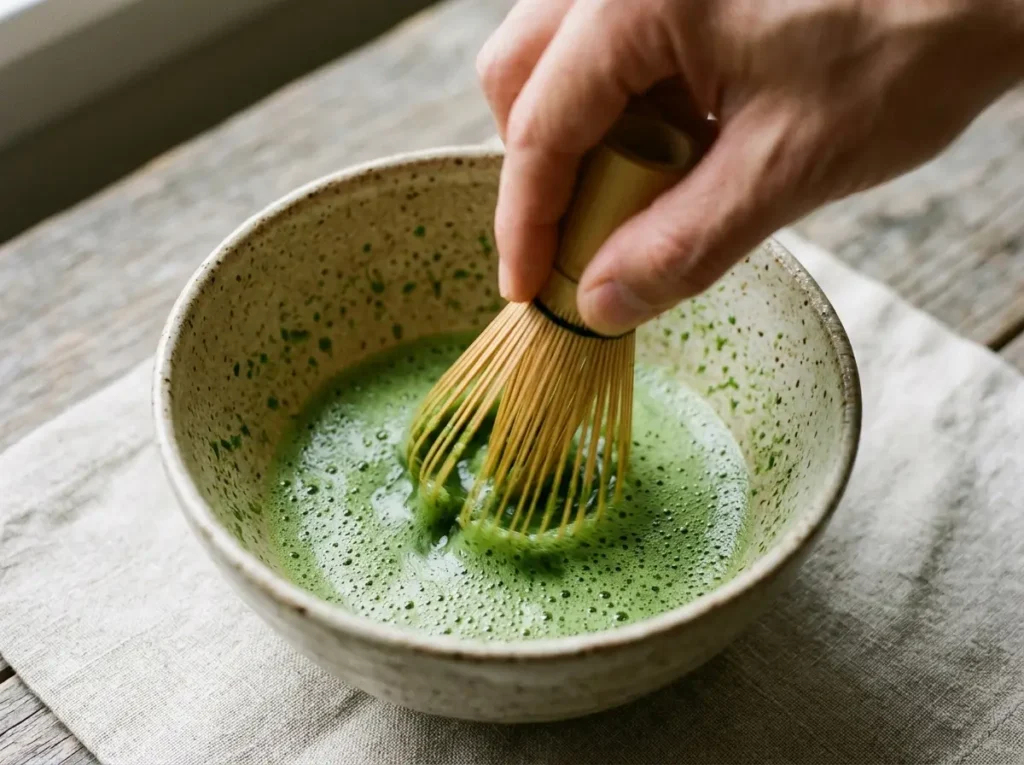
- Whisk with a quick back-and-forth “W” or “M” motion, moving from the wrist rather than the whole arm, until a fine froth covers the surface. Cleveland Clinic suggests whisking for at least 30 seconds.
- Drink it while it is warm and frothy.
Thick Matcha (Koicha)
Koicha is the thicker, fuller-bodied style used in formal tea ceremonies. It calls for 2 teaspoons of powder and only about 40 ml of water, mixed with a slow kneading motion instead of a froth-making whisk. More powder means more caffeine, so I would not make this your daily bowl.
If Your Matcha Is Clumpy or Too Strong
Clumps usually come from skipping the sieve or the paste step. If the flavor feels too intense, use less powder: as Cleveland Clinic puts it, a little goes a long way.
How Much Caffeine Is in Matcha?
Harvard Health lists the following ranges per 8-ounce cup:
| Drink (8 oz) | Caffeine |
|---|---|
| Brewed green tea | 23 to 49 mg |
| Matcha | 38 to 89 mg |
| Coffee | 100 to 120 mg |
Cleveland Clinic adds that, depending on how it is prepared, matcha can have roughly as much caffeine as a shot of espresso. The FDA cites 400 mg a day as an amount not generally associated with negative effects for most healthy adults, though it stresses that people vary widely in how sensitive they are to caffeine.
Matcha also contains L-theanine, an amino acid Harvard Health says has been associated with improved concentration and alertness. Cleveland Clinic points out that L-theanine may soften caffeine’s stimulating effects, so it is easy to underestimate how much caffeine you are taking in. Counting each bowl, along with your coffee, keeps the total honest.
If you want a warm drink in the evening without any caffeine, our guide to chamomile tea before bed and our reishi mushroom tea recipe are two caffeine-free options to try.
Does Matcha Have Health Benefits? What the Evidence Says
Matcha is rich in polyphenols such as catechins, plant compounds with antioxidant and anti-inflammatory effects. Harvard Health cites a meta-analysis in which green tea catechins were associated with lower blood pressure and LDL cholesterol, and notes that polyphenols may also improve insulin sensitivity.
It is worth reading that carefully. Harvard Health calls these findings promising but says more research in humans is needed, and the studies it cites concern green tea catechins in general, not matcha bowls specifically. It also notes that antioxidants are sensitive to heat, which fits with the advice to skip boiling water. In short, matcha can be a pleasant part of a balanced routine, but it is not a treatment for anything.
Making a Matcha Latte Without the Sugar
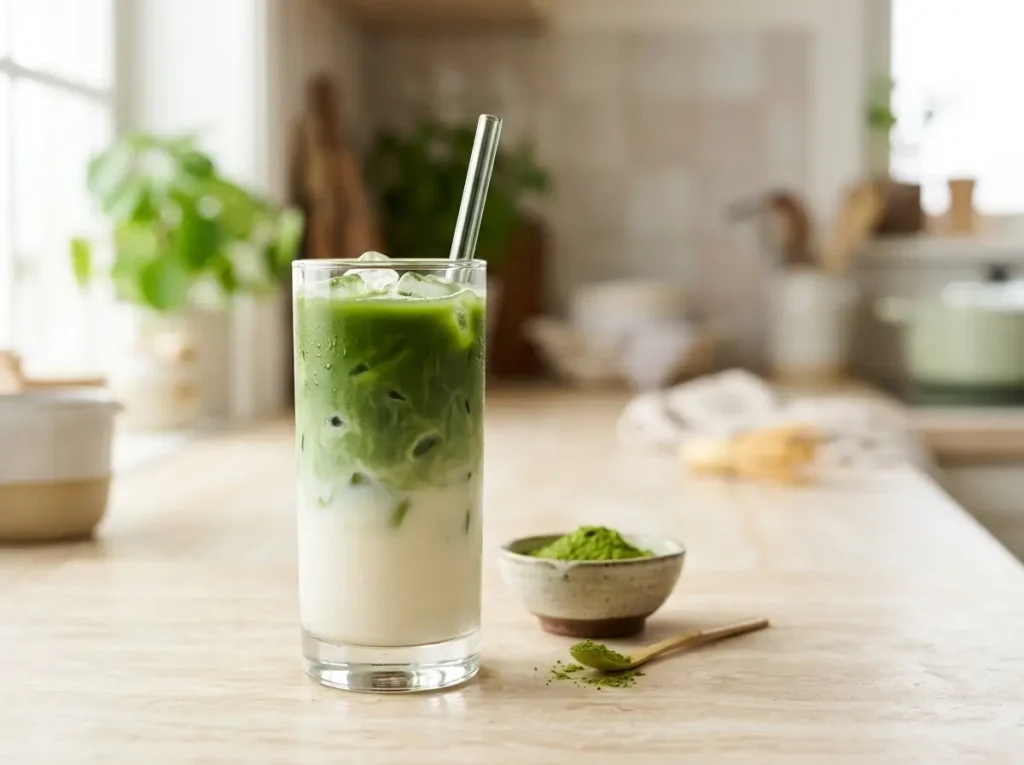
Coffee shop matcha drinks can be sweet. Cleveland Clinic notes that some contain about 20 to nearly 50 grams of sugar, while the American Heart Association recommends no more than 25 grams a day for women and 36 grams for men.
At home, you control that. Sift your matcha, mix it with a few ounces of warm water into a smooth paste, then pour in steamed milk of your choice. Prefer it cold? Our iced matcha latte recipe uses the same paste method over milk and ice. Cleveland Clinic also notes that dairy can lower some of matcha’s antioxidant activity, so a plant-based milk is worth trying if that matters to you.
Who Should Be Careful With Matcha?
- Caffeine-sensitive people: the FDA notes that certain conditions and medications can make you more sensitive to caffeine.
- Pregnancy and breastfeeding: the FDA recommends talking with your health care provider about whether you need to limit caffeine. NCCIH says caffeine intake during pregnancy should not exceed moderate levels, and that caffeine passes into breast milk.
- People taking medication: NCCIH reports that green tea can lower blood levels of some drugs, including the beta-blocker nadolol, and that green tea extract can lower levels of the cholesterol medicine atorvastatin. Ask your provider if you take any prescription.
- Anyone considering green tea supplements: NCCIH reports no safety concerns for green tea consumed as a beverage by adults, but rare liver injury has been linked mainly to extracts in tablet or capsule form.
One note on sources: NCCIH’s guidance covers green tea in general and does not single out matcha, so treat it as a reasonable guide rather than matcha-specific advice.
Matcha FAQ
Does matcha have caffeine?
Yes. Harvard Health lists 38 to 89 mg of caffeine per 8-ounce cup of matcha, more than most brewed green tea and less than most coffee. The exact amount depends on how much powder you use.
How much matcha powder should I use per cup?
For a traditional thin bowl, use 1 teaspoon (about 2 g) of powder with about 70 ml of water. For thick koicha, use 2 teaspoons with about 40 ml.
What water temperature is best for matcha?
Use hot water that is not boiling. A common target is about 185°F (85°C), which you can reach by letting boiled water sit for around a minute.
Can I use ceremonial matcha in a latte or smoothie?
You can, but culinary grade is designed for smoothies, baking, and cooking, and costs less. Save ceremonial grade for drinking as tea.
Can I drink matcha every day?
Cleveland Clinic says that for most healthy adults, enjoying matcha daily can be part of a healthy diet, but moderation matters. Keep your total daily caffeine in mind, and check with a healthcare provider if you are pregnant, breastfeeding, or taking medication.
Sources
- Harvard Health: Matcha: A look at possible health benefits
- Cleveland Clinic: 4 Health Benefits of Matcha
- Cleveland Clinic: How To Make Matcha: Teas, Lattes, Smoothies and More
- FDA: Spilling the Beans: How Much Caffeine Is Too Much?
- NCCIH: Green Tea
- Just One Cookbook: How To Make Matcha (preparation method and amounts)
For how this fits into a bigger picture, see our realistic wellness routine guide.
Bottom Line
Learning how to make matcha tea from powder comes down to a few repeatable habits: sift the powder, use hot but not boiling water, and whisk until frothy. Pick ceremonial grade for drinking, keep an eye on your total caffeine, and treat the health research as promising rather than proven. A simple daily bowl, made at home with little or no sugar, is an easy way to enjoy matcha without overthinking it.
Print
How to Make Matcha Tea From Powder: Easy 5-Minute Guide
- Total Time: 5 minutes
- Yield: 1 bowl 1x
Description
A simple 5-minute traditional thin matcha tea made with just matcha powder and hot water, whisked until smooth and frothy.
Ingredients
- 1 teaspoon (about 2 g) ceremonial matcha powder
- About 70 ml (a little under ⅓ cup) hot water, around 185°F (85°C)
Instructions
- Sift the matcha powder through a small fine sieve into a dry bowl to remove lumps.
- Heat the water until steaming but not boiling, around 185°F (85°C). Let it sit a minute after boiling if you have no thermometer.
- Pour a small splash of the water over the matcha and mix into a smooth paste.
- Add the rest of the hot water.
- Whisk quickly in a W or zigzag motion for 15 to 20 seconds, until the surface is frothy.
- Drink right away, straight from the bowl.
Notes
Use less water for a stronger tea. Culinary-grade matcha works better in lattes and baking.
Nutrition values are an estimate for 2 g of plain matcha powder, based on one brand nutrition panel (about 347 kcal per 100 g). Values vary by brand, and the drink has no added sweetener.
- Prep Time: 5 minutes
- Category: Drinks
- Method: Whisked
- Cuisine: Japanese
Nutrition
- Serving Size: 1 bowl (about 70 ml / 2.5 fl oz)
- Calories: 7
- Fat: 0.1g
- Carbohydrates: 0.9g
- Protein: 0.5g
Keywords: how to make matcha tea from powder, matcha tea