
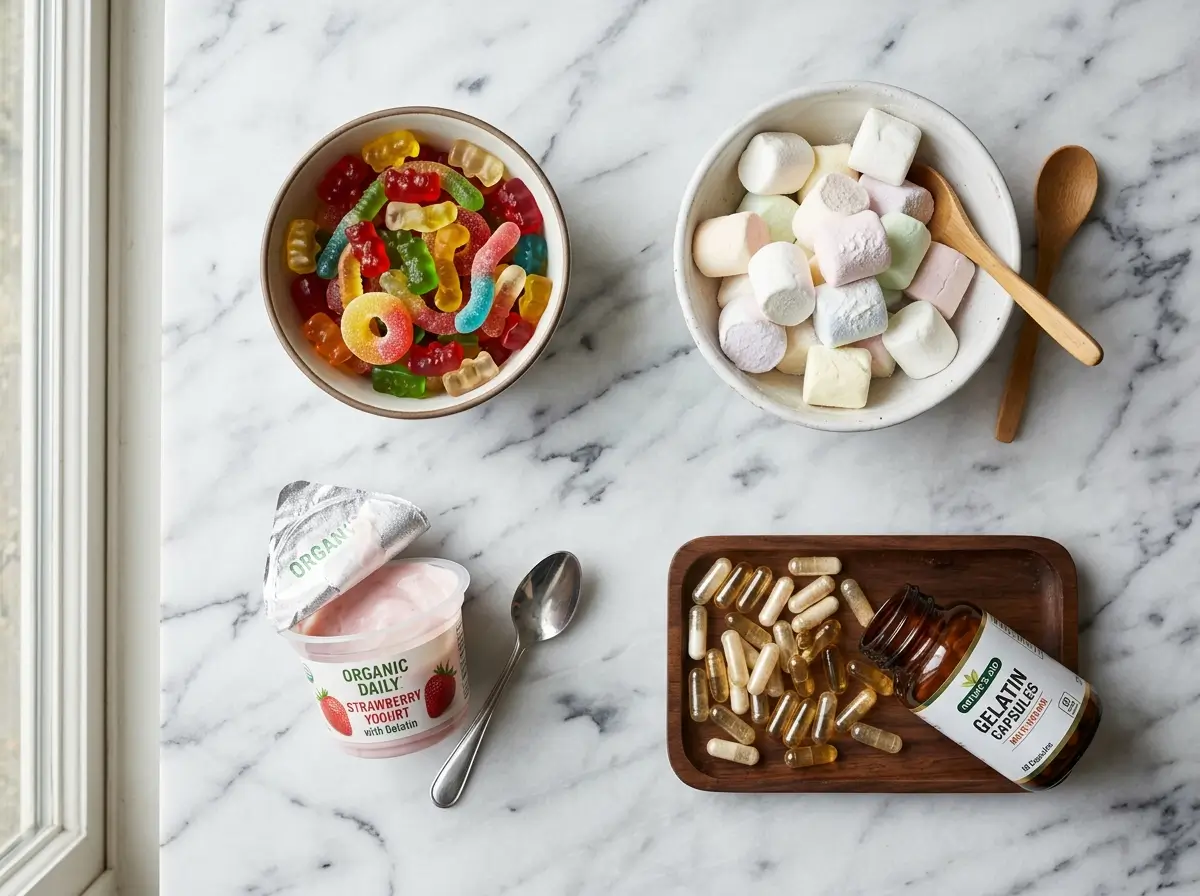
What foods contain gelatin? More than most people expect. Gelatin shows up well beyond the obvious jiggly dessert — it’s in candy, some yogurts, marshmallows, certain medications, and even a few products you’d never think to check. If you’re avoiding it for dietary, religious, or ethical reasons, the tricky part is that the label often just says “gelatin” without telling you where it came from.
This is the overview guide: every category to check, what to look for, and where to go for the details on each one.
Quick Answer
What foods contain gelatin? The main categories are gummy candy and marshmallows, gelatin desserts, some yogurts and dairy products, certain marshmallow-based cereals and snacks, capsule-form medications and supplements, and a handful of processed foods that use it as a stabilizer. Plant-based alternatives exist for nearly all of them.
The Categories at a Glance
| Category | How Likely? | What to Check |
| Gummy candy, marshmallows | Very likely | Almost always gelatin-set — check for pectin versions |
| Gelatin desserts (Jell-O style) | Always | Gelatin is the defining ingredient |
| Yogurt, sour cream, cream cheese | Sometimes | Used as a thickener in some brands only |
| Capsules (medication, supplements) | Often | Look for “vegetarian capsule” or “HPMC” |
| Frosted cereals, snack bars | Sometimes | Marshmallow pieces are the usual culprit |
| Some juices, broths, processed meats | Occasionally | Used as a clarifier or binder |

Candy and Marshmallows
This is the biggest category, and the one people ask about most. Gummy bears, gummy worms, marshmallows, and many chewy candies rely on gelatin for their bounce. But it’s genuinely brand-by-brand — some popular candies use pectin or a taffy base instead and contain no gelatin at all. We break down the specific brands, including Twizzlers, Skittles, Airheads and jelly beans, in our guide to which candy has gelatin.
Gelatin Desserts
The obvious one. Boxed gelatin dessert mixes and pre-made cups are gelatin by definition — there’s no version of a classic gelatin dessert without it. Plant-based “jelly” products made with agar-agar or carrageenan exist, but they’re a different product category rather than a substitution within the same brand.
Dairy Products
This one surprises people. Some yogurts, sour creams, and cream cheeses use gelatin as a thickener and stabilizer, particularly in low-fat versions where fat has been removed and texture needs rebuilding. It’s far from universal — plenty of brands use pectin, starch, or nothing at all. The only way to know is the ingredient list.

Capsules: Medications and Supplements
Standard capsule shells are frequently made from gelatin. If you take supplements or capsule medications and are avoiding gelatin, look for products labeled “vegetarian capsule,” “vegan capsule,” or listing HPMC (hydroxypropyl methylcellulose) — a plant-derived alternative that’s widely used.
This category matters especially for people avoiding gelatin for religious reasons, since the source animal is rarely disclosed on the packaging of medications.
Cereals and Snack Bars
Frosted or marshmallow-containing cereals, and some snack bars with marshmallow pieces, often contain gelatin in those marshmallow components even when the rest of the product doesn’t. Worth checking if this is a regular part of your breakfast.
Other Processed Foods
Gelatin occasionally appears as a clarifying agent in some juices and broths, or as a binder in certain processed meat products. These uses are less common and vary widely by manufacturer.
How to Tell If a Product Contains Gelatin
- Read the full ingredient list — “gelatin” will be listed by name if present.
- If it says only “gelatin” with no source, you can’t tell the animal it came from without asking the manufacturer.
- Look for a certification mark (halal, kosher, or vegan) if the source matters to you.
- For capsules, look specifically for “vegetarian capsule” or HPMC on the packaging.
Because “gelatin” alone doesn’t tell you the source animal, this is where most people get stuck. Our is gelatin pork guide covers how to identify the source, and our is gelatin halal guide goes into the certification and religious compliance side.
What to Use Instead
If you’re cooking at home rather than shopping, plant-based gelling agents replicate most of what gelatin does. Agar-agar, pectin, and carrageenan each behave a little differently — our gelatin substitute guide has the exact swap ratios for each. For a fish-based option, which is treated differently under several dietary frameworks, see our fish gelatin guide.
Frequently Asked Questions
Is gelatin always listed on the label?
Yes — in the US, gelatin must be declared by name on the ingredient list under FDA food labeling requirements. What isn’t required is disclosing which animal it came from.
What foods surprise people most for containing gelatin?
Yogurt and capsule medications, by far. Most people expect it in gummy candy but not in a low-fat yogurt or a vitamin capsule.
Are marshmallows always made with gelatin?
Traditional marshmallows are, but vegan marshmallows made with aquafaba or carrageenan are now widely available.
Can I tell if gelatin is pork-based from the label?
Usually not. Unless the label specifies “beef gelatin” or “fish gelatin,” or carries a halal or kosher certification, you’d need to contact the manufacturer.