
⚠ Medical Disclaimer: This article is for informational purposes only and does not constitute medical advice. It is not designed to treat, prevent or cure any condition, and it is not a substitute for guidance from your prescribing provider or a registered dietitian. If you are taking a GLP-1 medication, always follow your care team’s specific nutrition plan.
If you’re starting a GLP-1 medication, or supporting someone who is, the question that comes up almost immediately is practical: what does a GLP-1 diet actually look like day to day? There’s no official meal plan attached to these medications, but there is a consistent, well-documented pattern in how clinicians and dietitians guide patients through eating less while still eating well.
This isn’t about a specific medication, a specific brand, or a weight-loss promise. It’s about the nutrition strategy that shows up again and again in clinical guidance once appetite drops significantly — and how to apply it in your own kitchen.
Quick Answer
What is a GLP-1 diet? It’s not a formal diet plan, but a way of eating that prioritizes protein and fiber at every meal, since appetite and food intake both drop substantially on these medications. The goal is to make each smaller meal count nutritionally, rather than following a specific menu.
Why Nutrition Priorities Change on a GLP-1
GLP-1 medications work in part by slowing digestion and reducing appetite, which means most people eat noticeably less overall. A joint clinical advisory published on PMC/NCBI from the American College of Lifestyle Medicine, the American Society for Nutrition, the Obesity Medicine Association, and The Obesity Society emphasizes that adequate protein intake is essential during this kind of rapid weight loss, specifically to help preserve muscle mass rather than losing both fat and muscle indiscriminately.
Fiber matters for a different reason: slower digestion combined with lower food volume commonly leads to constipation, and consistent fiber intake is one of the most effective ways to manage that side effect.
What to Prioritize
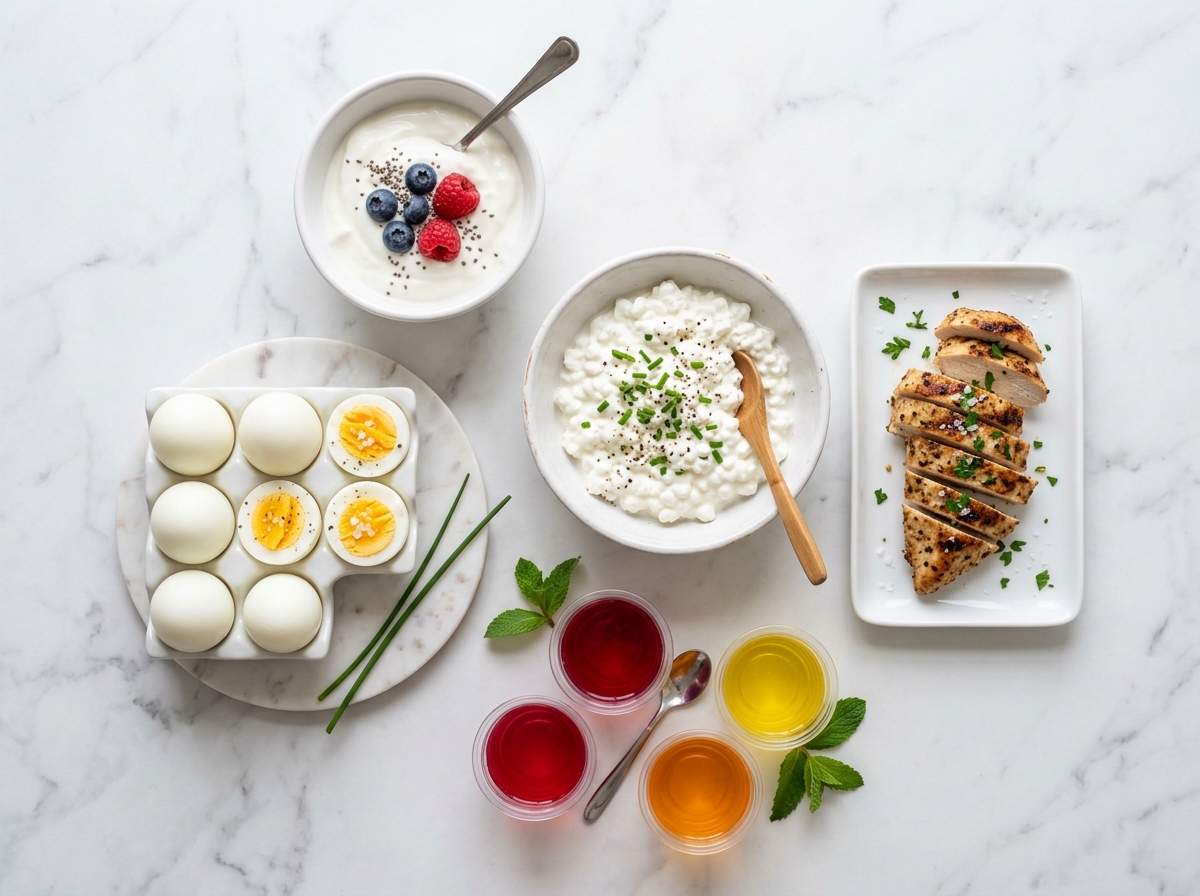
Protein, at every eating occasion
Since total food intake is lower, spreading protein across each meal and snack — rather than saving it for dinner — makes it easier to hit an adequate daily total without needing large portions.
Fiber-rich foods
Vegetables, fruit with the skin on, legumes, and foods like chia seeds are practical ways to add fiber without adding much volume or difficulty to a smaller meal.
Fluids, spaced through the day
Slower digestion can make it easier to feel overly full if you drink large amounts of fluid alongside meals. Sipping water between meals rather than during them is a commonly recommended adjustment.
Smaller, more frequent meals
Four to five smaller eating occasions tend to be easier to manage than three large meals, especially in the first weeks of adjusting to a lower appetite.
What to Be Mindful Of
- Very large meals, which are more likely to trigger nausea or discomfort when digestion has slowed
- Skipping meals entirely, which makes it harder to reach adequate protein and fiber totals across the day
- Relying on low-nutrient, low-protein snacks simply because they’re easy to get down — worth prioritizing nutrient density instead when appetite allows
A Sample Day (For Illustration, Not a Prescription)
| Time | Example | Why |
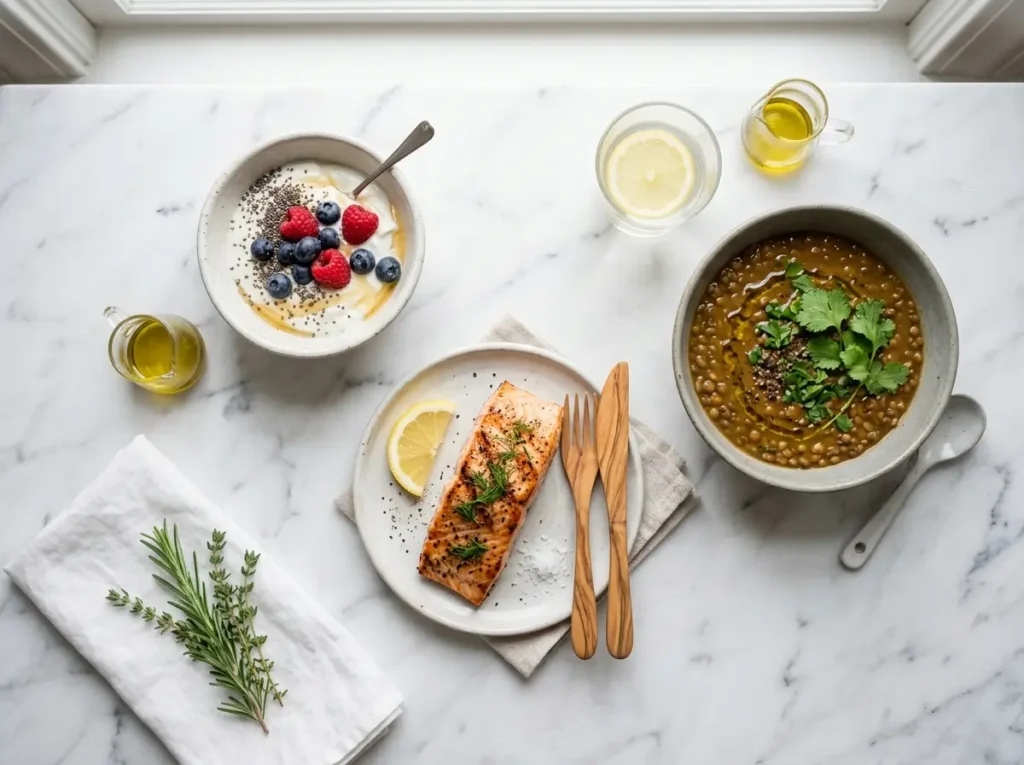
| Morning | Greek yogurt with chia seeds and berries | Protein plus fiber in one small bowl |
| Midday | Soup with beans or lentils | Easy to digest, fiber-rich, protein-rich |
| Afternoon | A small high-protein gelatin or cottage cheese snack | Low volume, high protein density |
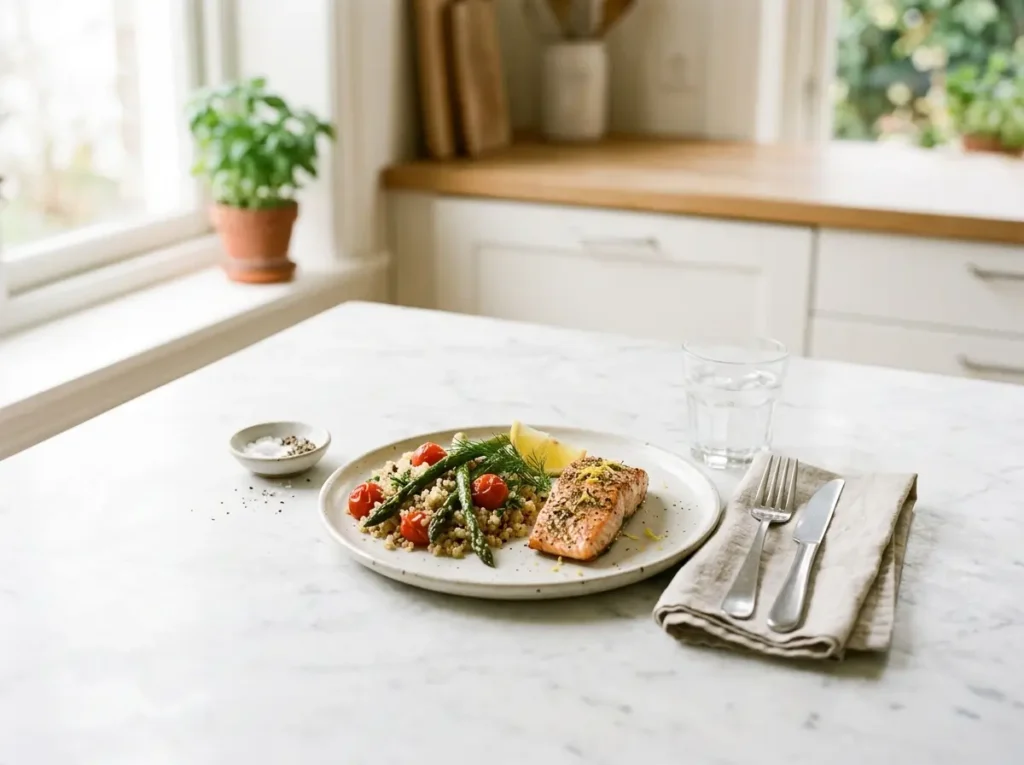
| Evening | Grilled fish or chicken with a soft cooked vegetable | Lean protein, gentle on digestion |
If you’re looking for a specific small, high-protein snack option to fit into a day like this, our bariatric gelatin recipe and gelatin for weight loss guide were both built around the same small-portion, high-protein logic described here.
Frequently Asked Questions
Do I need a completely different diet on a GLP-1 medication?
Not a different diet exactly — more a shift in priorities. The same general principles of balanced eating still apply; protein and fiber simply become more important to actively prioritize when you’re eating less overall.
Why do I feel fuller so much faster?
GLP-1 medications slow gastric emptying, which is part of how they work. This is well documented in clinical literature and is one reason smaller, more frequent meals tend to work better than three large ones. See the Cleveland Clinic overview of GLP-1 medications for more on how they work.
How much protein should I actually aim for?
This varies by body size, activity level, and your specific medication and goals — it’s genuinely worth asking your provider or a registered dietitian for a number tailored to you, rather than using a generic target.
Is this the same as a weight-loss diet?
Not exactly. The focus here is on nutrition quality within a lower food volume, not on restriction for its own sake. The goal is preserving muscle and managing side effects, not maximizing weight loss speed.
About Hannah Bell: Hannah Bell is the founder of JelloAndWellness.com, a recipe and wellness site focused on gelatin, jello desserts, and everyday wellness drinks. She tests every recipe in her home kitchen and cites peer-reviewed and clinical sources when discussing nutrition.