
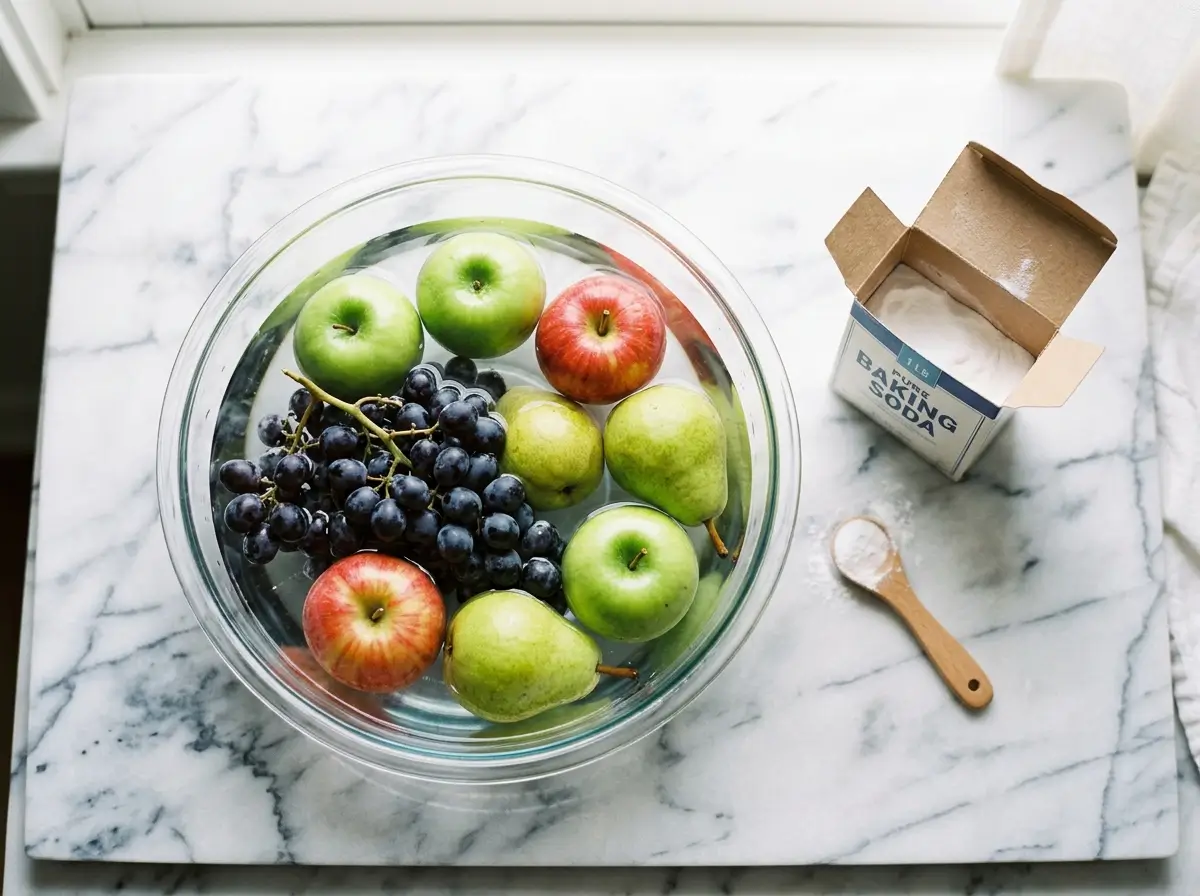
If you’ve been searching for the best way to clean fruit with baking soda, I get it — I used to just run my produce under the tap and call it a day, until I started digging into how much residue actually stays on the skin of fruit even after a quick rinse. Once I switched to a baking soda soak, it became part of my weekly routine, and honestly, it takes maybe two extra minutes.
In this guide, I’ll walk you through exactly how I do it, why it works, which fruits benefit the most, and a few mistakes I made early on that you can skip entirely.
Why I Started Washing Fruit with Baking Soda
I’ll be honest, I was skeptical at first. It felt like one of those “kitchen hacks” that sounds nice but doesn’t do much. Then I came across research showing that a baking soda soak can meaningfully reduce pesticide residue on the surface of produce — more than plain water alone in several comparisons. One review of household washing methods found that soaking produce in a baking soda solution showed greater efficacy compared to a plain rinse, with reductions reaching well over 90% in some studies, depending on the pesticide and the produce.
That’s not me promising it removes everything — it doesn’t, especially anything that’s been absorbed into the fruit itself rather than sitting on the skin. But for a two-minute step before I prep a fruit bowl or pack snacks for the kids, it felt like an easy win.
What You’ll Need
- 1 teaspoon of baking soda
- 2 cups of cold water
- A large bowl (big enough for your produce to be fully submerged)
- A colander for rinsing
- A clean towel or salad spinner for drying
How to Clean Fruit with Baking Soda — Step by Step
Step 1: Mix Your Soak
In a large bowl, stir 1 teaspoon of baking soda into 2 cups of cold water until it’s mostly dissolved. You don’t need a strong solution — a light one is enough, and it keeps the taste neutral.
Step 2: Soak the Fruit
Add your fruit to the bowl, making sure each piece is fully covered. Let it sit for 12 to 15 minutes for sturdier fruits like apples, pears, or grapes. A widely cited study from the University of Massachusetts found that a 15-minute soak in a 1% baking soda solution, followed by a rinse, was effective at removing residue from the surface of apples.
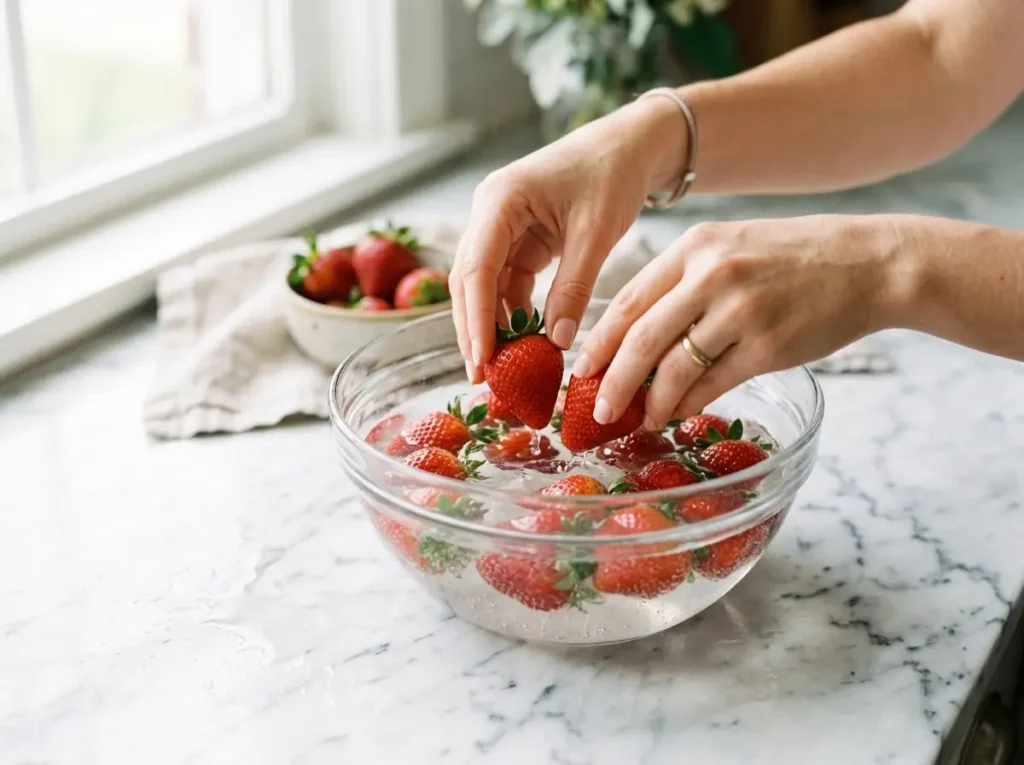
For delicate berries like strawberries or raspberries, I shorten this to a quick 1 to 2 minute swish instead of a long soak — longer soaking can make soft fruit mushy or cause it to absorb water. For a method built just for berries, see how to clean strawberries.
Step 3: Rinse and Dry Thoroughly
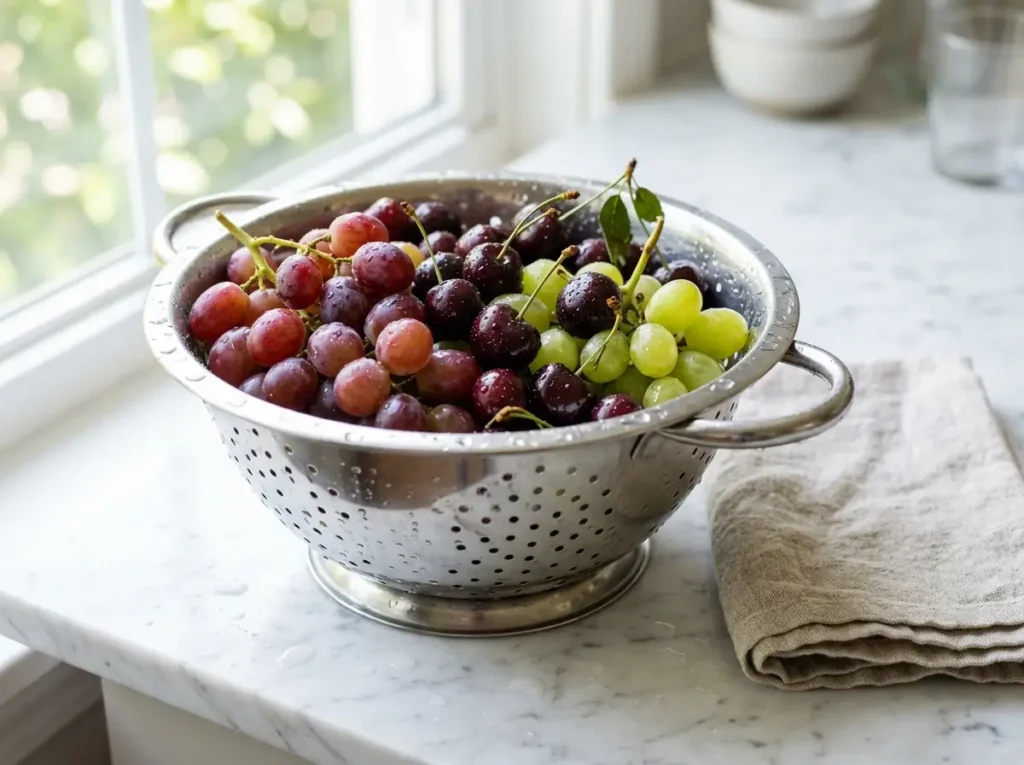
Drain the bowl and transfer the fruit to a colander. Rinse well under cold running water for about 30 seconds to remove any baking soda residue and loosened particles. Pat dry with a clean towel, or use a salad spinner for berries and grapes — this also helps them last longer in the fridge.
| A quick note before you start This article shares a simple food-prep technique many home cooks use, based on published research into household produce-washing methods. It’s a kitchen habit, not a guarantee — no washing method removes 100% of residue, and washing is just one part of a balanced approach to eating fruits and vegetables. |
Which Fruits Work Best with This Method
Not every fruit needs the same treatment. Here’s how I sort them:
Best for a Full 12–15 Minute Soak
- Apples
- Pears
- Grapes
- Plums and nectarines
- Cucumbers (technically a fruit, but I treat them the same)
Best for a Quick Rinse or Short Swish (1–2 Minutes)
- Strawberries
- Raspberries and blackberries
- Blueberries
- Cherries
Fruits I Don’t Bother With
For fruits with a peel I’m removing anyway — bananas, oranges, melons, avocados — I skip the baking soda soak entirely and just rinse before peeling. The EWG’s guide to washing produce notes that washing helps reduce residue and improve food safety overall, but the extra step matters most for produce you eat skin-on.
Does Baking Soda Actually Remove Pesticides?
This is the part most people want to know, so let’s look at what the research actually says. A peer-reviewed study from the Environmental Working Group found that soaking produce in a baking soda or vinegar solution was more effective than soaking or rinsing in water alone, on average — though effectiveness varies widely depending on the pesticide, the produce, and the washing method used.
Here’s the honest breakdown, based on the studies I read:
- Plain rinsing: helps, but is the least effective of the methods studied.
- Water soaking: a modest improvement over rinsing alone.
- Baking soda soaking: consistently outperformed plain water in most comparisons, especially for surface residues.
- Nothing removes residue that has been absorbed beneath the skin — washing only addresses what’s on the surface.
So is it a miracle fix? No. But is it a simple, low-effort upgrade to your regular wash routine? Based on what I’ve read and what I’ve experienced in my own kitchen, I’d say yes. If you’re curious about the chemistry behind it, see baking soda pH explained.
Common Mistakes to Avoid
- Using too much baking soda. A teaspoon per 2 cups of water is plenty — more isn’t necessarily better, and it can leave an aftertaste if you don’t rinse well.
- Soaking soft fruit too long. Berries left in a soak for 15 minutes can turn mushy and lose flavor fast.
- Skipping the final rinse. Always rinse after the soak so you’re not left with a soapy or chalky taste.
- Doing this right before serving. I prefer to wash a big batch at the start of the week so it’s ready to grab and go.
My Weekly Routine
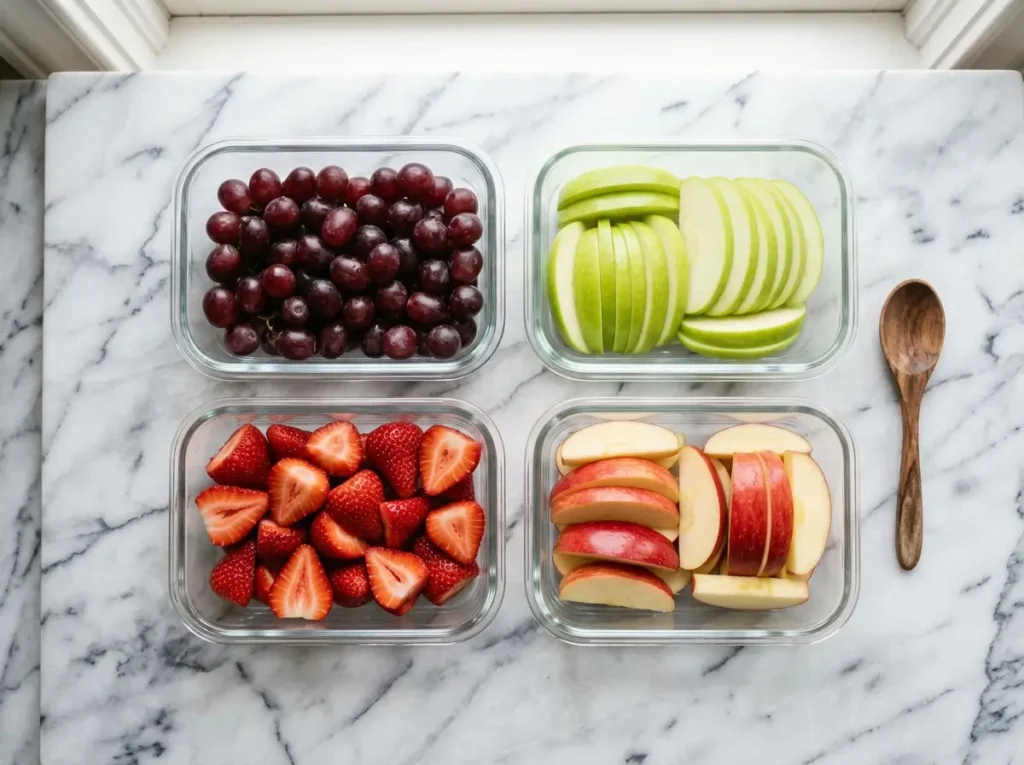
On grocery day, I fill a big bowl with the baking soda solution and run through my sturdier fruits first — apples, pears, grapes — while I’m putting away the rest of the shopping. Then I do a quick rinse for the berries separately. Everything goes into clear containers in the fridge so it’s ready whenever someone wants a snack.
If you’re also experimenting with healthier swaps in your kitchen, you might like my guide on chia seed water benefits — it pairs nicely with a fresh fruit bowl for breakfast.
Frequently Asked Questions
How much baking soda do I use to clean fruit?
A general guideline is 1 teaspoon of baking soda per 2 cups of cold water. This creates a light solution that’s enough for most produce without leaving a noticeable taste after rinsing.
How long should I soak fruit in baking soda water?
For sturdier fruits like apples, pears, and grapes, 12 to 15 minutes is the range most often cited in research. For delicate fruits like strawberries and raspberries, a 1 to 2 minute swish is gentler and avoids making them mushy.
Does washing fruit with baking soda remove all pesticides?
No single washing method removes all pesticide residue, especially anything absorbed below the surface. However, several studies have found that baking soda soaks can reduce surface residue more effectively than rinsing with water alone.
Do I need to rinse fruit after soaking it in baking soda?
Yes. Always rinse fruit under cold running water after a baking soda soak to remove any loosened residue and avoid an aftertaste.
Can I use this method on vegetables too?
Yes — the same baking soda soak works well for many vegetables, especially sturdier ones like cucumbers, bell peppers, and zucchini. Leafy greens generally do better with a quick rinse rather than a long soak.
Sources
EWG — Peer-reviewed study: produce washing options can reduce pesticide residue
EWG — Guide to Washing Produce
Frontiers in Environmental Health — Scoping review of household produce washing methods
America’s Test Kitchen — Can Baking Soda Remove Pesticides from Produce?