
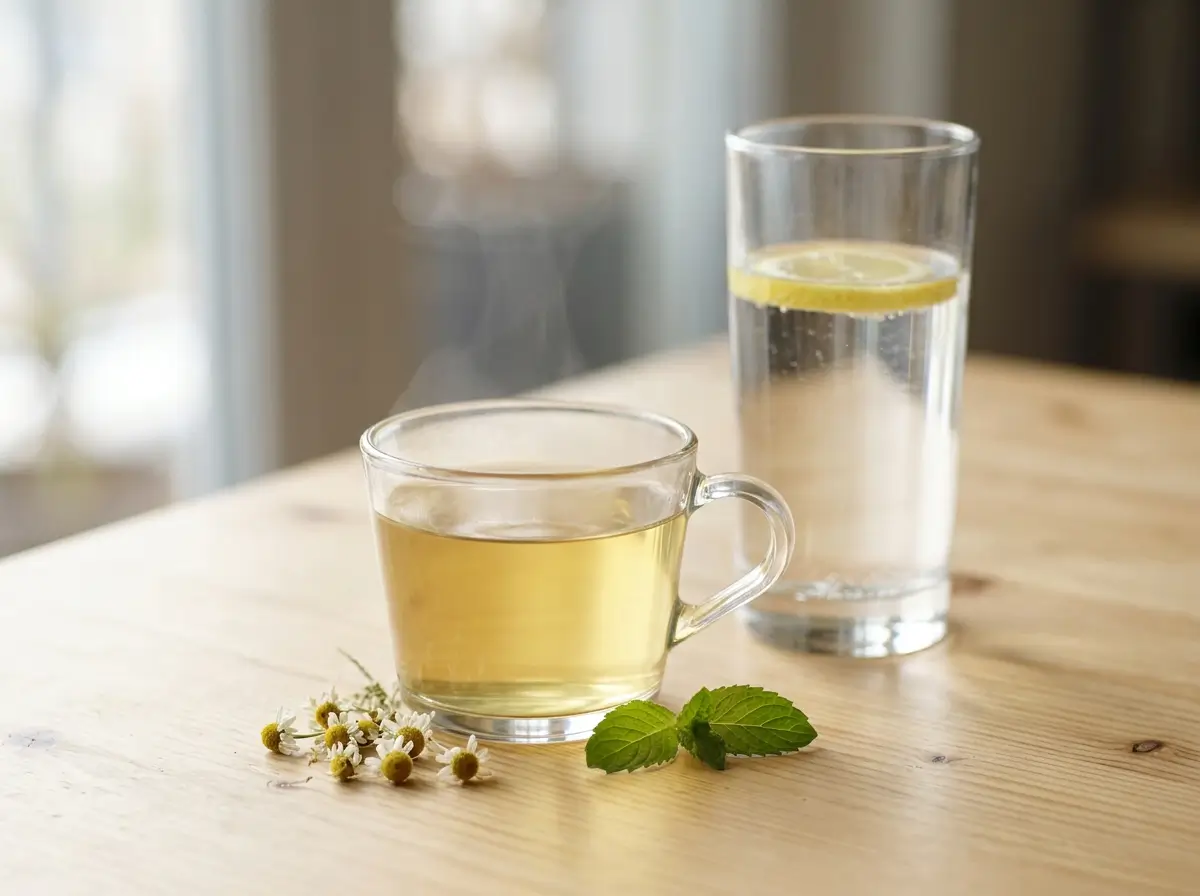
Yes, herbal tea counts toward your daily fluid intake. The British Nutrition Foundation states that “herbal or caffeine free alternatives also count towards our fluid intake,” and Mayo Clinic lists tea among the drinks that count toward your daily fluid total. Below you will find what the main sources say, what one well-known hydration study did and did not test, and what to watch for in your cup.
I rely on health organizations and published studies here, and I point out where the evidence has limits. If you have a medical reason to track how much you drink, ask your doctor or dietitian for your own target.
Does Herbal Tea Count as Water? Quick Answers
| Drink | Counts toward fluid intake? | Note |
|---|---|---|
| Plain herbal tea (no caffeine) | Yes | British Nutrition Foundation says caffeine-free alternatives count |
| Tea with caffeine | Yes | Mayo Clinic and Tufts both say tea counts |
| Coffee | Yes | Mayo Clinic lists coffee among drinks that count |
| Sweetened tea or soda | Yes, as fluid | Mayo Clinic advises watching the sugar, salt, and calories |

What Health Organizations Say
- British Nutrition Foundation: tea or coffee can count toward fluid intake, and moderate amounts do not seem to affect hydration. It also says herbal or caffeine-free alternatives count. UK advice is 6 to 8 glasses of fluid a day, about 1.2 liters.
- Mayo Clinic: the average healthy adult needs about 11.5 cups (2.7 liters) to 15.5 cups (3.7 liters) of total fluid a day. About 20% of that comes from food. Tea, coffee, and milk count toward the total. Needs vary with body type, activity level, and environment.
- Tufts Health & Nutrition Letter: coffee and tea count toward meeting fluid needs. It describes the idea that caffeine cancels out a drink’s water as disproven as far back as 1928, citing the Institute of Medicine.
What the Hydration Study Actually Tested
You will often see this claim backed by a 2016 study in the American Journal of Clinical Nutrition by Maughan and colleagues. In it, 72 healthy, fasted men drank 1 liter of water or another drink over 30 minutes, and researchers collected their urine for the next 4 hours. Drinks tested included hot tea, iced tea, coffee, cola, diet cola, orange juice, and sparkling water.
Most drinks produced about the same amount of urine as still water over 4 hours. Oral rehydration solution, full-fat milk, and skimmed milk produced less urine than water.
There are limits you should know about. The study included only men, and it tested hot and iced tea, not herbal tea. So it supports the idea that tea does not dehydrate you, but it does not directly measure herbal blends. For herbal tea, the organization guidance above is the stronger source.
What About Caffeine?
Most herbal teas are made from flowers, leaves, roots, or fruit rather than tea leaves, so they contain no caffeine. The British Nutrition Foundation notes that caffeine can make you produce more urine, but that moderate amounts do not seem to affect hydration. If a blend includes tea leaves, yerba mate, or another caffeinated ingredient, the label will say so.
Are Some Herbal Teas Diuretic?
Dandelion is the herb most often called a diuretic. A small study by Gavin, Caulfield, and Egan gave 14 healthy adults about 2.1 g of dandelion root powder in capsules with 1 liter of water. Four-hour urine output was not significantly different from drinking water alone (1,164 g with water versus 1,268 g with dandelion).
That is one small study using capsules, not a cup of dandelion tea, so I would not treat it as the final word. It does suggest that an ordinary cup of herbal tea is unlikely to leave you short of fluid. If you take a medication or have a health condition that affects fluid balance, ask your doctor before relying on any herbal drink.
How Much Can Herbal Tea Contribute?
Mayo Clinic’s range of 11.5 to 15.5 cups of total fluid includes food. If about 20% comes from food, the remaining 80% is roughly 9 to 12 cups of drinks a day. That is my own arithmetic from Mayo’s numbers, so treat it as a rough guide.
| Part of the day | Example drink | Approximate cups |
|---|---|---|
| Morning | Herbal tea | 1 |
| Midday | Water with lunch | 2 |
| Afternoon | Iced herbal tea | 1 |
| Evening | Water with dinner and a warm cup of herbal tea | 3 |
This is only an example of how tea fits into a day. Your own needs depend on your size, activity, and climate.
What to Watch For in Your Cup
- Added sugar: Mayo Clinic cautions about the sugar, salt, and calories in sweetened drinks and calls water the best choice. A teaspoon of honey in a cup is a small amount, but bottled sweetened teas can add up.
- Caffeine in blends: check the label if you avoid caffeine, because some blends include tea leaves or yerba mate.
- Medical limits: if your doctor has set a fluid limit or target for you, follow that advice rather than general guidelines.
Herbal Tea FAQ
Does herbal tea count as water intake?
Yes. The British Nutrition Foundation states that herbal or caffeine-free alternatives count toward fluid intake, and Mayo Clinic says tea counts toward your daily fluid total.
Does herbal tea dehydrate you?
Not in normal amounts. Herbal tea is mostly water. The hydration study by Maughan and colleagues found that hot and iced tea did not produce more urine than water, although it did not test herbal tea itself.
Is herbal tea as hydrating as water?
For counting fluid intake, yes. Water is still the simplest choice, and Mayo Clinic calls it the best choice when you compare it with sugary drinks. Unsweetened herbal tea is a good way to add variety.
Does hot herbal tea count as much as iced?
Both count. In the Maughan study, hot tea and iced tea both produced about the same urine output as still water over 4 hours.
Do diuretic herbs like dandelion make you lose water?
The one small study I found, using dandelion root capsules in 14 adults, showed no significant difference in urine output compared with water. It is a small study and did not test tea, so ask your doctor if you have a condition or take medication that affects fluid balance.
How many cups of herbal tea can I count?
Every cup of unsweetened herbal tea counts as fluid. Mayo Clinic gives a total fluid range of 11.5 to 15.5 cups a day for the average healthy adult, including water from food, so herbal tea can be one part of the total.
Sources
- British Nutrition Foundation: Hydration
- Mayo Clinic: Water, how much should you drink every day?
- Tufts Health & Nutrition Letter: Can coffee or tea help take the place of the recommended eight daily glasses of water?
- Maughan RJ et al. (2016), American Journal of Clinical Nutrition 103(3): a randomized trial to assess the potential of different beverages to affect hydration status
- Gavin J, Caulfield C, Egan B: dandelion root and diuresis study
Looking for something to sip? Browse the types of herbal tea, read how herbal tea differs from tea, or try our fresh ginger tea and cold brew hibiscus tea.