
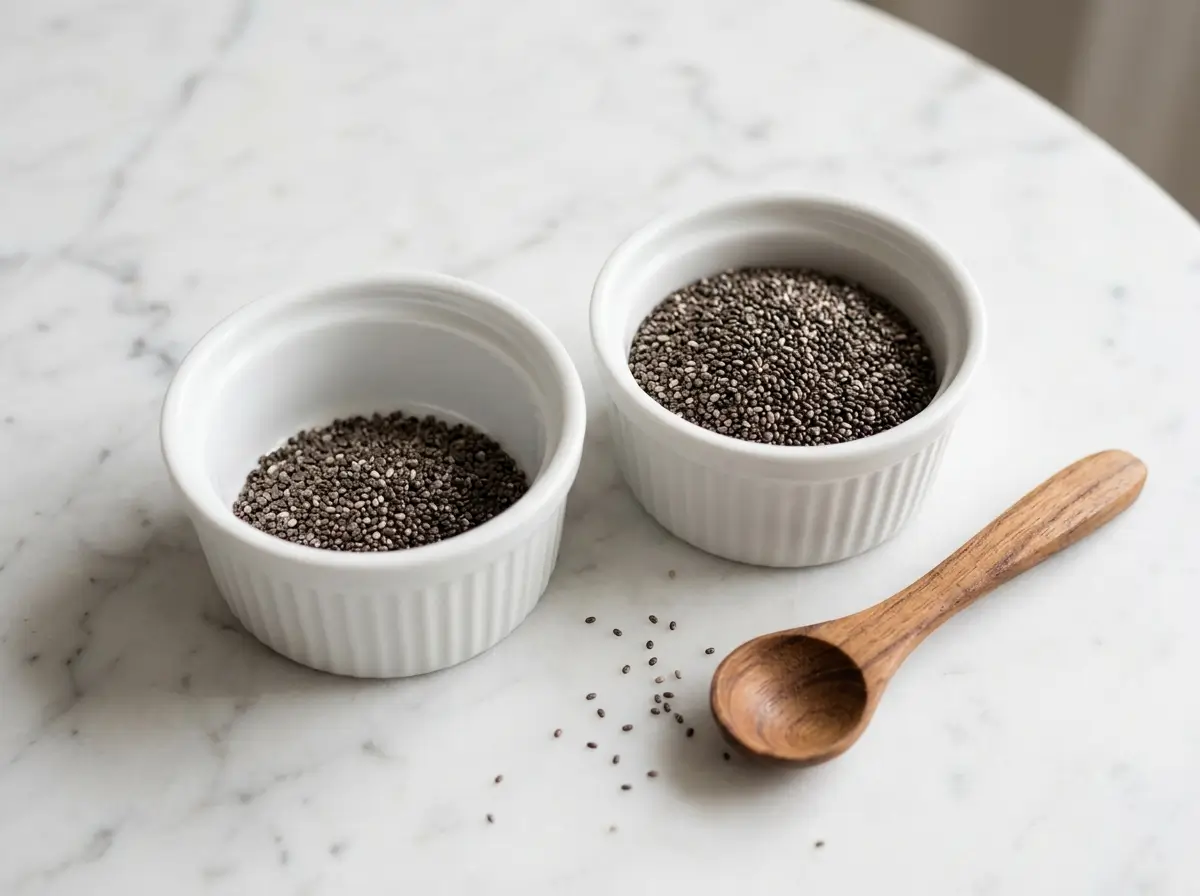
How many chia seeds per day is safe? For most healthy adults, about 2 tablespoons (roughly 1 ounce, or 28 grams) is a comfortable upper range, and 1 tablespoon is a smart place to start. Go much higher, or add them too fast without enough water, and bloating, gas, and constipation are the usual result.
Chia seeds are mostly fiber, which is why they’re so popular for digestion and fullness, and also why the amount matters. Below you’ll find a simple way to build up, the signs you’ve had too much, and the few situations where it’s worth checking with a professional first.
| ⚕️ Medical Disclaimer This article is for informational purposes only and does not constitute medical advice. The ideas shared here are not designed to treat, prevent or cure any condition. If you are pregnant, breastfeeding, taking medication, or managing a health condition, speak with a licensed healthcare provider before changing your diet. |
How Many Chia Seeds Per Day Is Normal? The Short Answer
There is no official daily limit for chia seeds. According to Healthline’s review of the research, most people have no side effects from up to about 1 ounce (28 grams) a day, which works out to around 2 tablespoons. One ounce also provides roughly 9 to 10 grams of fiber, about a third of a typical adult’s daily fiber target.
| Amount per day | Roughly | Who it fits |
| 1 tablespoon | 12 g, about 4 g fiber | Beginners and anyone with a sensitive stomach |
| 2 tablespoons | About 1 oz (28 g), 9-10 g fiber | Most healthy adults once they’ve adjusted |
| More than 2 tablespoons | Varies | Only if your body handles it well; some providers go higher, but tolerance differs a lot from person to person |
Values are approximate. Brands differ slightly, so check the label on your bag.

How to Build Up Without Upsetting Your Stomach
A sudden jump in fiber is what causes most chia complaints, not the seeds themselves. A gradual start gives your gut time to adapt.
- Week 1: 1 tablespoon a day, soaked, in a full glass of water or mixed into food.
- Week 2: If you feel fine, you can move to 1.5 tablespoons, or split 2 tablespoons across two meals.
- Week 3 onward: Stay at 1 to 2 tablespoons. There’s no need to push higher.
- Drink more water: Fiber needs fluid to move through comfortably, so sip plain water through the day as well.
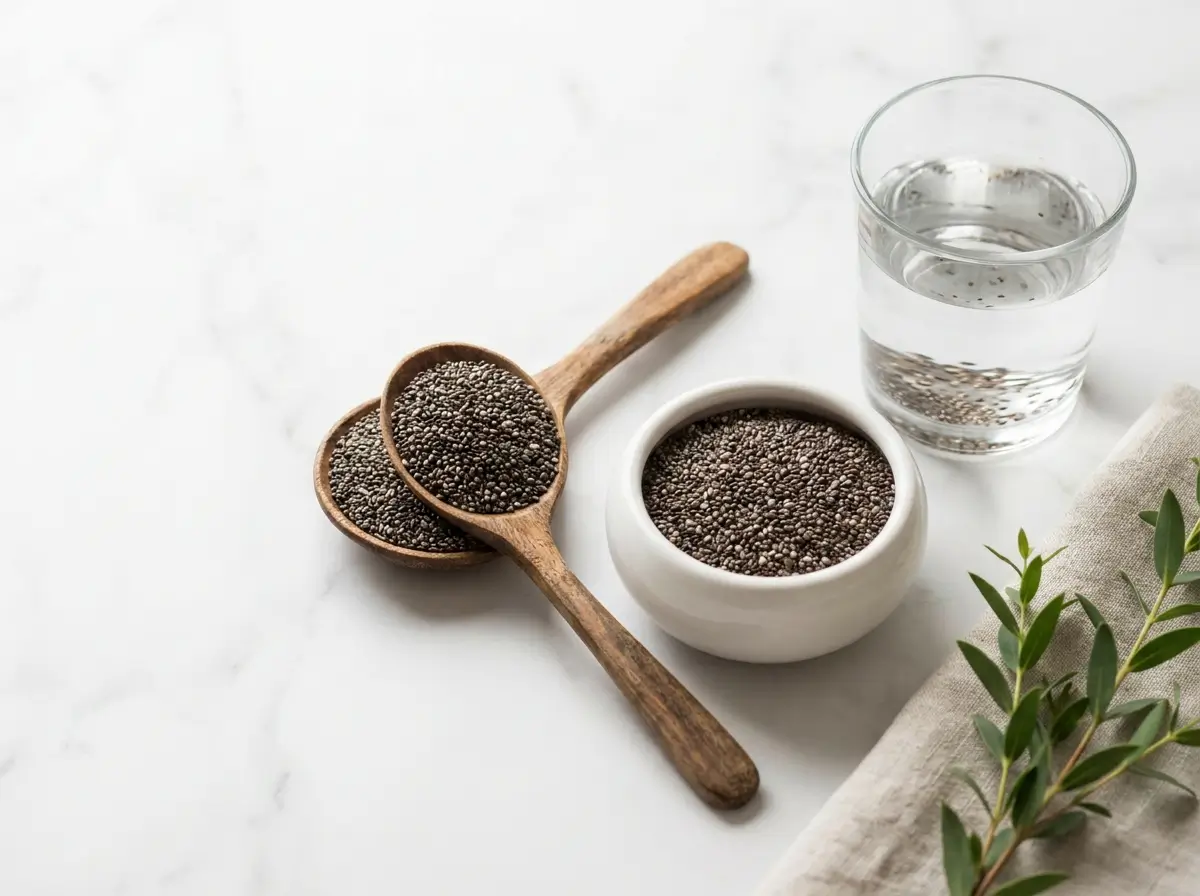
For a simple way to prepare them, see our guide on how to make chia seed water and the chia seed to water ratio chart. If you prefer solid food, our beginner’s guide to eating chia seeds has easy options.
What Happens If You Eat Too Many Chia Seeds?
Because chia is high in fiber (mostly the insoluble kind), eating a lot of it quickly can cause digestive discomfort. The most common signs are:
- Bloating and gas
- Stomach cramps or abdominal pain
- Constipation (especially if you haven’t drunk enough water) or loose stools
- In rare cases, a blockage if the seeds are eaten dry without enough fluid
A dietitian quoted by AOL Lifestyle also notes that very high intakes may get in the way of absorbing minerals such as zinc, calcium, and iron. If you notice these symptoms, cut back to 1 tablespoon, drink more water, and let your body settle before increasing again. Curious about the opposite effect? We cover it in does chia seed water make you poop.
The Dry Seed Risk: Always Soak First
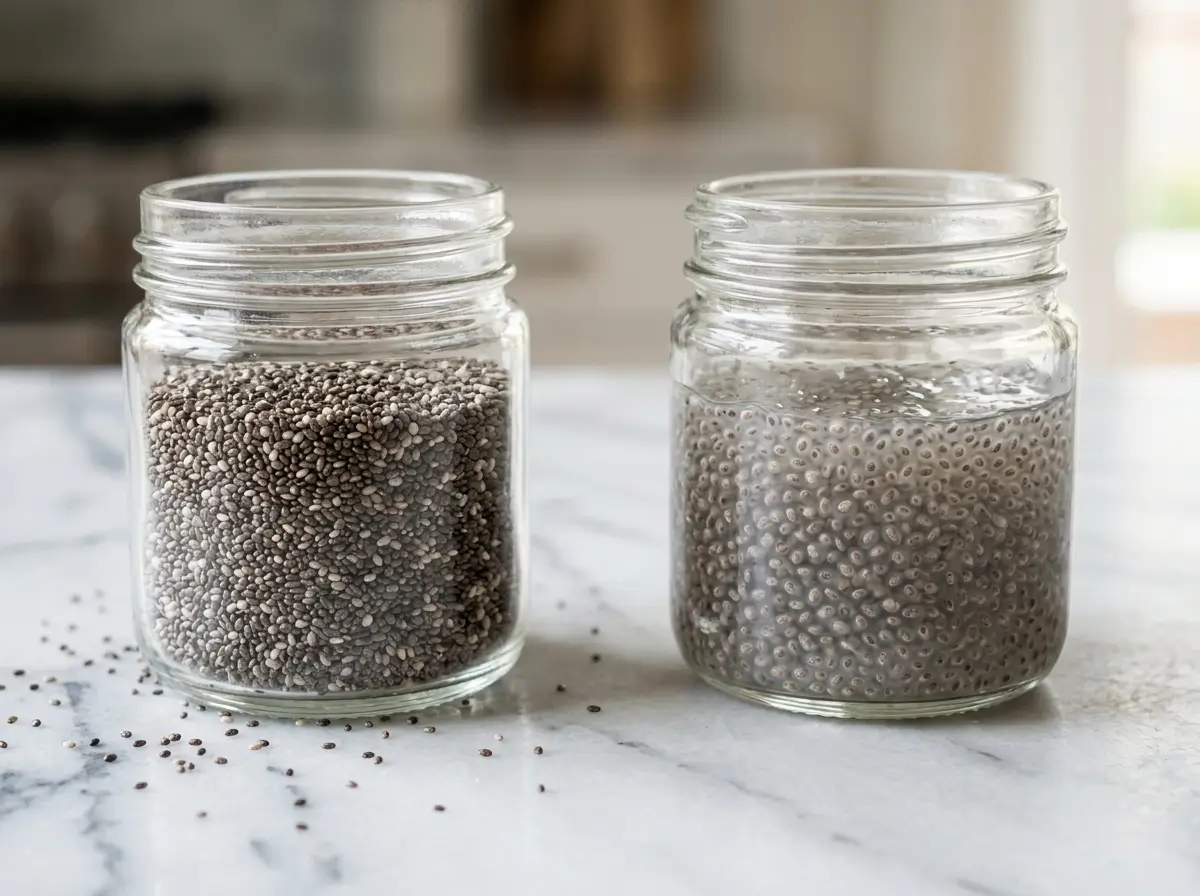
Chia seeds can absorb around 12 times their weight in liquid. That’s useful in a pudding, but not in your throat. Healthline describes a 2014 case in which a man ate a tablespoon of dry seeds followed by a glass of water, and the seeds swelled and blocked his esophagus, which needed emergency removal.
The takeaway is simple: don’t eat dry chia seeds by the spoonful. Sprinkling a small pinch on yogurt or oatmeal is generally fine because the food moisture hydrates them, but a soaked gel, a pudding, or a drink is the safest way to get a full serving.
Who Should Be Careful With Chia Seeds?
- People with IBS, Crohn’s, or other digestive conditions: the fiber may be too much at once. Start with a very small amount and ask your provider.
- Anyone on blood thinners, blood pressure, or blood sugar medication: chia may lower blood pressure and blood sugar, so check with your doctor before making it a daily habit.
- People with swallowing difficulties: if you’ve been told to thicken liquids, ask a professional first, since chia thickens fluids a lot.
- A history of oxalate kidney stones: speak with your provider about whether chia fits your diet.
- Known food allergies: chia allergy is rare, but reactions have been reported in people allergic to sesame, hazelnuts, or peanuts.
Morning or Night: Does Timing Change the Amount?
Not really. The same 1 to 2 tablespoons applies whenever you take them. If you want to split the amount, our guide on the best time to drink chia seed water covers morning and pre-meal timing, and drinking chia seeds at night explains how to keep evening servings gentle.
The Bottom Line
One to two tablespoons of soaked chia seeds a day is a reasonable amount for most healthy adults. Start at 1, build up slowly, drink plenty of water, and skip the dry spoonfuls. If you take medication or have a digestive or swallowing condition, run it by your healthcare provider first. For the wider picture, start with chia seed water benefits.
Sources: Healthline, Chia Seeds Side Effects; AOL Lifestyle, Can Eating Too Many Chia Seeds Cause Side Effects?
Frequently Asked Questions
How many tablespoons of chia seeds should I eat per day?
Most healthy adults do well with 1 to 2 tablespoons a day. Start with 1 tablespoon and increase slowly while drinking enough water.
Is 2 tablespoons of chia seeds too much?
For most people, no. About 2 tablespoons is roughly 1 ounce, which is the amount most people tolerate without side effects. Build up to it gradually.
Can I eat chia seeds every day?
Yes, for most healthy adults. Stick to soaked seeds, keep the amount moderate, and drink plenty of water throughout the day.
What happens if I eat too many chia seeds?
Too many chia seeds can cause bloating, gas, stomach cramps, and constipation or loose stools, especially if you add them quickly or don’t drink enough water. Cut back to 1 tablespoon and increase again slowly.
Is it safe to eat dry chia seeds?
A small pinch on moist food is generally fine, but eating dry spoonfuls is risky because the seeds swell and can block the esophagus. Soak them first for the safest option.