
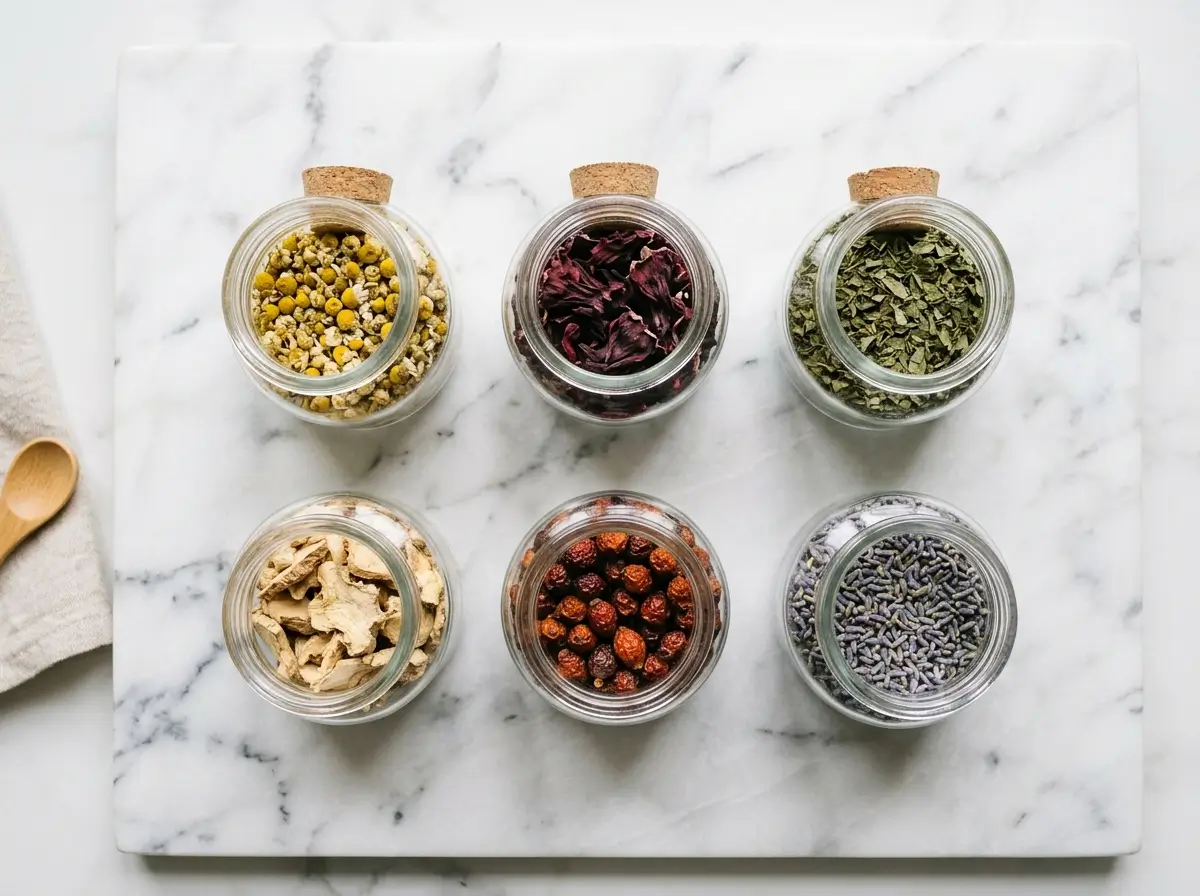
There are dozens of herbal teas out there, so instead of one long alphabetical list, we’ve grouped the 15 most common ones by what people actually reach for them — sleep, digestion, energy, or just flavor. Use the links throughout to go deeper on the ones we’ve covered in full.
There are many types of herbal tea, and each one tastes and works a little differently depending on what dried herb, flower, root, or fruit it’s made from. Technically, herbal tea isn’t tea at all — it’s called a tisane, since it comes from something other than the tea plant (Camellia sinensis). That’s also why herbal teas are naturally caffeine-free, unlike green, black, or white tea.
| ⚕️ Medical Disclaimer This article is for informational purposes only and does not constitute medical advice. The information shared here is not designed to treat, prevent or cure any condition. If you are pregnant, breastfeeding, taking medication, or managing a health condition, speak with a licensed healthcare provider before changing your diet. |
For Sleep and Relaxation
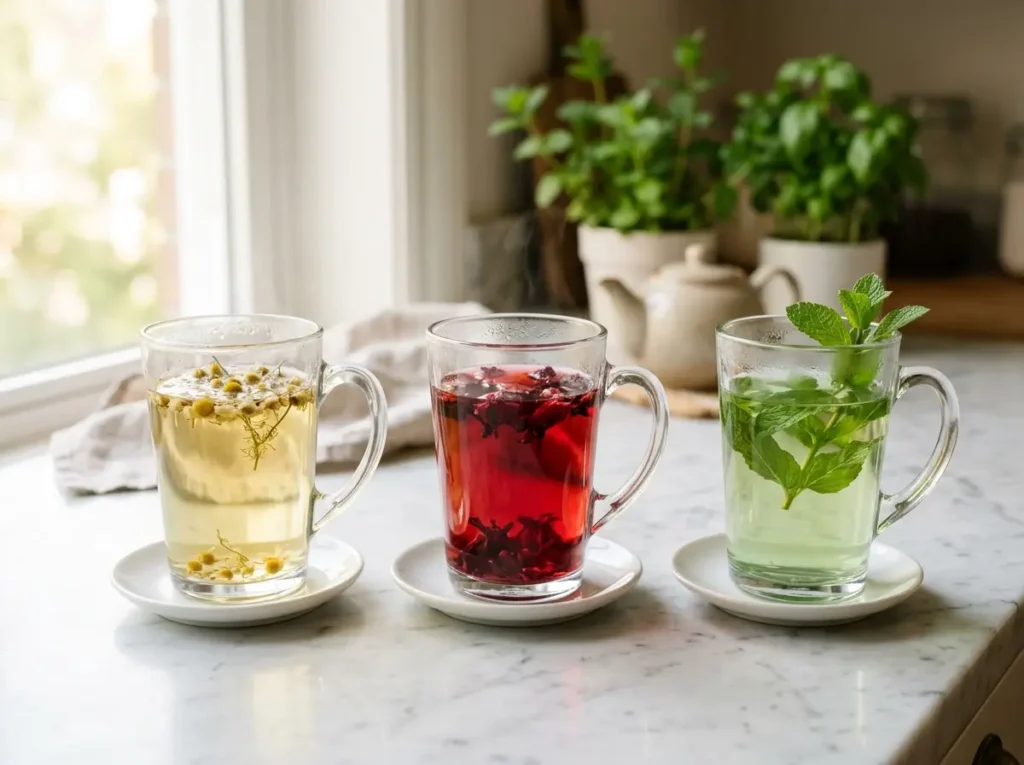
- Chamomile: the most well-known calming tea, with a mild, apple-like flavor. See our full guide on how to make chamomile tea and the right timing and dosage before bed.
- Lavender: floral and slightly sweet, often blended with chamomile for an extra-calming cup.
- Lemon balm: light, citrusy, and part of the mint family — a gentler alternative if chamomile’s flavor isn’t for you.
- Passionflower: earthy and mild, traditionally used in evening tea blends.
For Digestion
- Peppermint: cooling and sharp, one of the most popular after-meal teas.
- Ginger: warm and slightly spicy, a go-to for an unsettled stomach. It pairs well with citrusy lemongrass: see our lemongrass tea guide and the lemongrass ginger tea recipe.
- Fennel: mildly sweet with a light licorice note, often used after heavy meals.
- Dandelion root: earthy and slightly bitter, roasted versions taste closer to coffee.
For Energy and Immune Support
- Ginseng: earthy and slightly bitter, used traditionally as a natural energy support.
- Echinacea: mild and slightly floral, commonly reached for at the first sign of a cold.
- Rosehip: tart and fruity, naturally high in vitamin C.
- Green tea blends (technically not fully herbal, since they contain some real tea leaf): our copycat Starbucks Medicine Ball combines green tea with herbal notes of mint and chamomile for a soothing, low-caffeine option.
For Flavor and Everyday Drinking
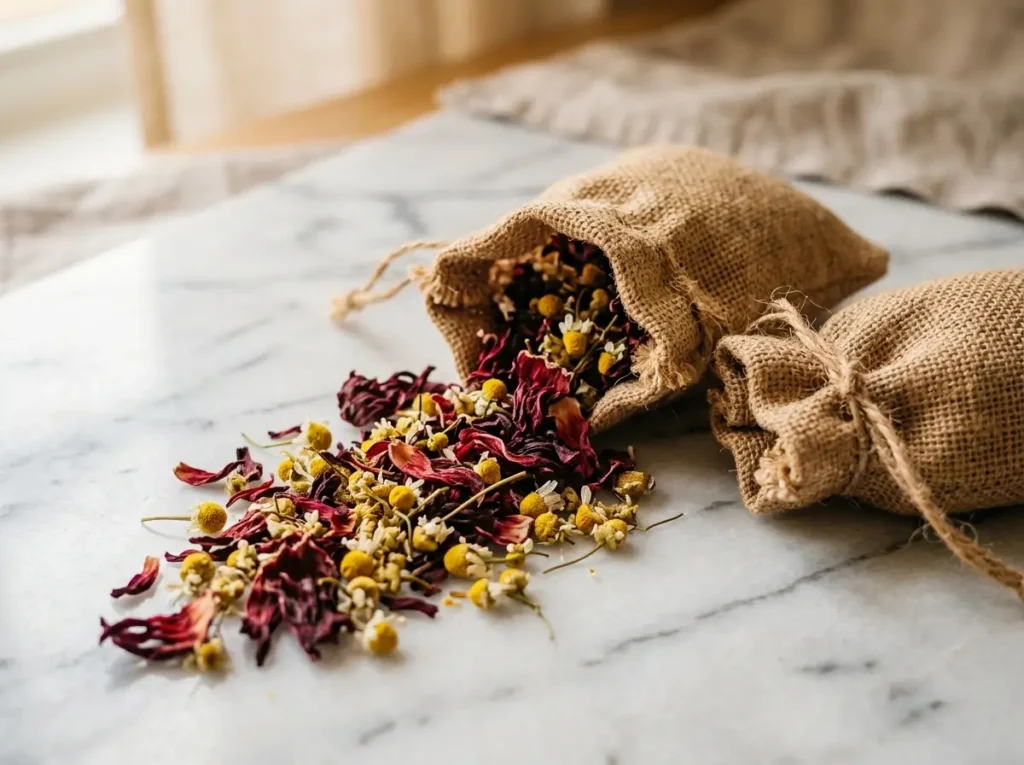
- Hibiscus: tart, deep red, and naturally tangy — great iced.
- Rooibos: naturally sweet and nutty, from South Africa, caffeine-free with a flavor close to black tea.
- Spearmint: softer and sweeter than peppermint, good for those who find mint tea too intense.
How to Pick One
| Goal | Try |
| Winding down at night | Chamomile, lavender, lemon balm |
| After a big meal | Peppermint, ginger, fennel |
| Cold or flu season | Echinacea, ginger, rosehip |
| Just want something tasty, hot or iced | Hibiscus, rooibos, spearmint |
Frequently Asked Questions
What is the healthiest type of herbal tea?
There’s no single “healthiest” herbal tea — it depends on your goal. Chamomile is well-studied for relaxation, peppermint for digestion, and hibiscus is rich in antioxidants. Rotating a few types is a reasonable approach rather than relying on just one.
Is herbal tea the same as regular tea?
No. Regular tea (green, black, white, oolong) comes from the Camellia sinensis plant and contains caffeine. Herbal tea is made from other plants, flowers, or roots and is naturally caffeine-free.
Can I mix different herbal teas together?
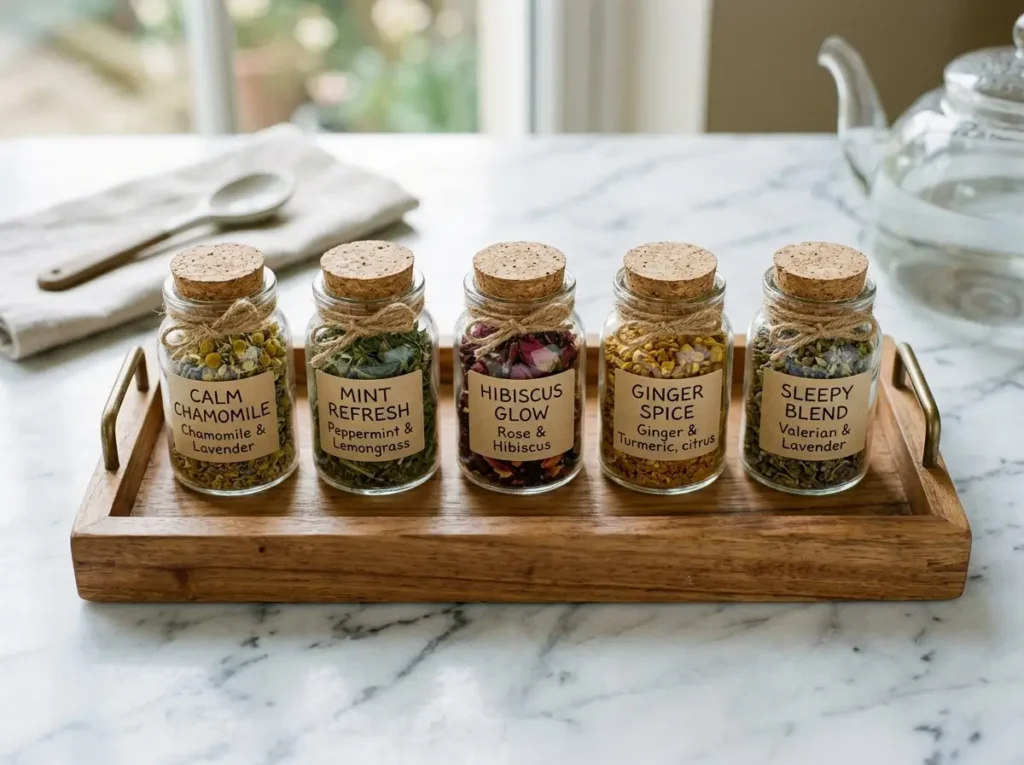
Yes, many people blend herbal teas — chamomile and lavender, or ginger and lemon balm, are common combinations. Start with a small amount of each until you find a ratio you like.
How many types of herbal tea are there?
Dozens of plants are used to make herbal tea worldwide. This guide covers 15 of the most common ones available in the US, grouped by what people typically drink them for.