
This article is for informational purposes only and does not constitute medical advice. The recipes and ideas shared here are not designed to treat, prevent or cure any condition. If you are pregnant, breastfeeding, taking medication, or managing a health condition, speak with a licensed healthcare provider before changing your diet.
Chia seed water has become one of the most talked-about morning drinks in wellness circles — and for good reason. Two tablespoons of chia seeds soaking in a glass of water overnight transform into a thick, gel-like drink packed with fiber, omega-3 fatty acids, and plant-based protein. But what does the science actually say about drinking it every day? This guide breaks it all down, from the real nutritional data to the best time to drink it and who might benefit most.
What Is Chia Seed Water?
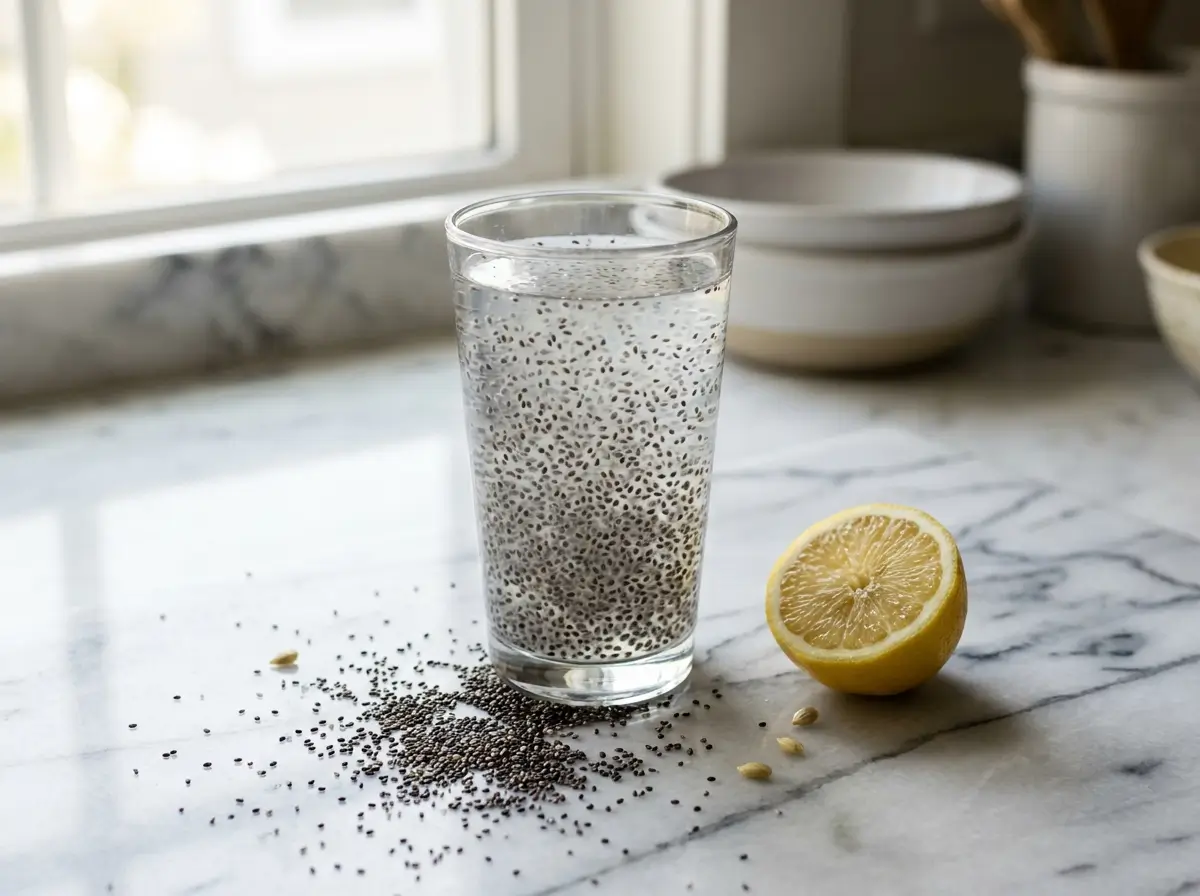
Chia seed water is exactly what it sounds like: chia seeds soaked in water for at least 20 minutes — ideally overnight — until they absorb liquid and swell into soft, tapioca-like beads. The resulting drink has a mild, neutral flavor and a gel-like texture that takes some getting used to but is easy to customize with lemon, mint, or a splash of juice.
The seeds come from Salvia hispanica, a plant native to Mexico and Guatemala that was a staple food for the Aztecs and Mayans. Today, chia seeds are classified as a functional food by nutritional researchers — meaning they provide health benefits beyond basic nutrition. For a broader look at the seeds themselves, read our complete guide to the benefits of chia seeds.
Chia Seed Water Nutrition Facts
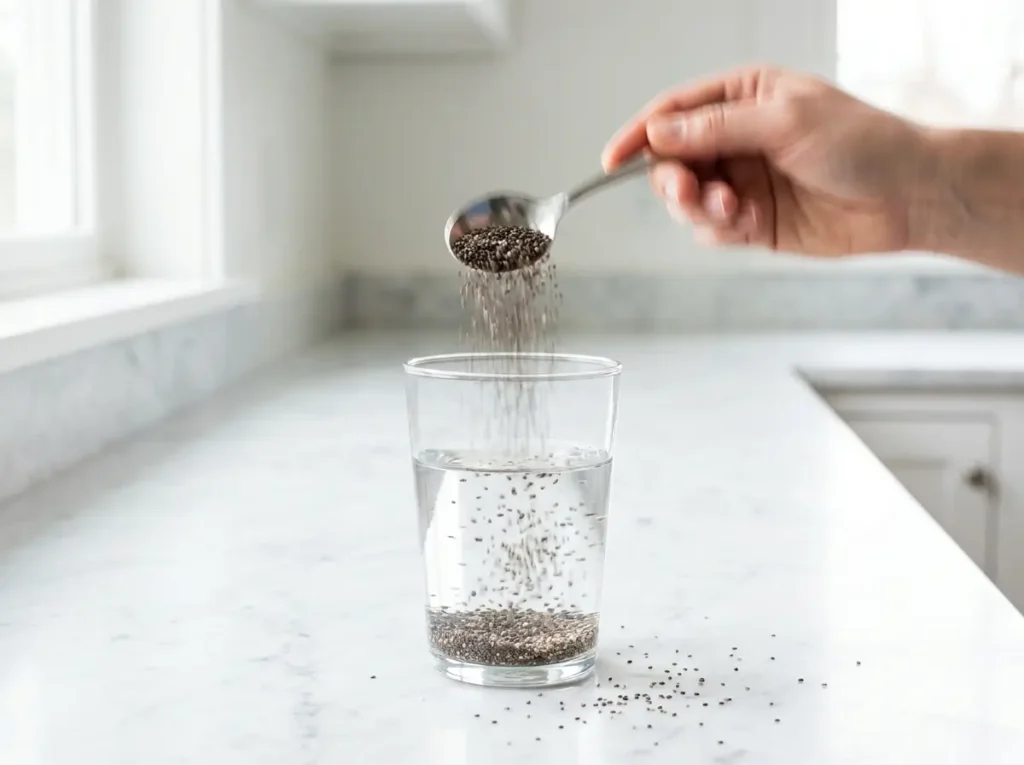
Before diving into the benefits, here’s what you’re actually consuming. The values below are based on 2 tablespoons (approximately 28g) of chia seeds, which is the standard amount used in one serving of chia seed water.
The table below compares chia seed water to plain water and coconut water — two popular hydration options — to put the nutritional profile in perspective.
| Nutrient (per serving) | Chia Seed Water | Plain Water | Coconut Water (8 oz) |
| Calories | 138 | 0 | 46 |
| Fiber | 9.8g | 0g | 2.6g |
| Protein | 4.7g | 0g | 1.7g |
| Omega-3 (ALA) | 5.1g | 0g | 0g |
| Calcium | 179mg | 0mg | 58mg |
| Magnesium | 95mg | 0mg | 60mg |
| Carbohydrates | 12g | 0g | 9g |
Source: USDA FoodData Central. The fiber content alone makes chia seed water stand out — nearly 10 grams per serving puts you a third of the way to the daily recommended intake for adults in a single drink.
The Real Chia Seed Water Benefits
1. Supports Digestive Regularity
Chia seeds are rich in soluble fiber, which forms a gel in the gut and helps slow digestion. This gel acts as a prebiotic, feeding the beneficial bacteria in your gut microbiome. A review published in Nutrients (2020) found that soluble fiber intake was consistently associated with improved bowel regularity and reduced constipation symptoms in adults.
That gel-forming property is also why many people find chia seed water filling — it physically slows down gastric emptying, keeping you satisfied longer. If regularity is your main goal, see does chia seed water make you poop.
2. Provides a Meaningful Hydration Boost
When chia seeds absorb water, they hold up to 10–12 times their weight in liquid. This means the chia gel in your drink releases water slowly as you digest it, contributing to prolonged hydration rather than a single flush through your system. For people who struggle to stay hydrated throughout the day, chia seed water can be a practical strategy — you’re consuming the water and a carrier that holds more of it.
3. Delivers Plant-Based Omega-3 Fatty Acids
Two tablespoons of chia seeds contain approximately 5.1g of alpha-linolenic acid (ALA), the plant form of omega-3. The body converts a small portion of ALA into EPA and DHA — the omega-3s most associated with heart and brain health — though the conversion rate is limited. For people who don’t consume fatty fish, chia seed water is still a valuable source of ALA, which has its own benefits including support for healthy inflammatory response.
The NIH Office of Dietary Supplements notes that ALA is an essential fatty acid, meaning the body cannot produce it and must obtain it from food.
4. Contributes to Calcium Intake
One serving of chia seeds provides approximately 179mg of calcium — about 18% of the recommended daily value for adults. This makes chia seed water a noteworthy non-dairy calcium source for people avoiding dairy or looking to diversify their mineral intake.
5. May Support Blood Sugar Balance
Several small studies have examined chia seeds’ effect on postprandial (after-meal) blood sugar. A 2017 study in the European Journal of Clinical Nutrition found that adding chia seeds to white bread significantly reduced the glycemic response in healthy adults. The mechanism appears to be the fiber gel slowing carbohydrate absorption. This does not mean chia seed water is a treatment for blood sugar issues — always speak with your healthcare provider if you manage a glucose condition.
6. A Convenient Source of Magnesium
Magnesium is involved in over 300 enzymatic reactions in the body and many Americans fall short of the recommended intake. Two tablespoons of chia seeds contribute about 95mg — roughly 23% of the daily value. Magnesium supports muscle function, sleep quality, and energy metabolism.
How to Make Chia Seed Water (Basic Recipe)
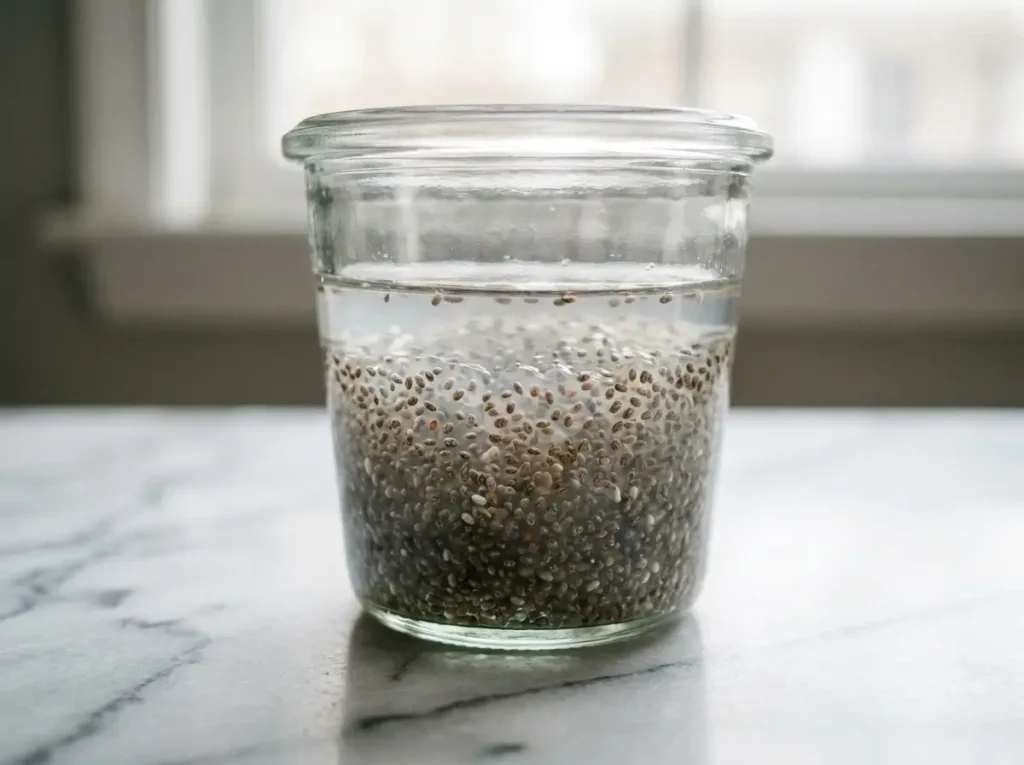
The base preparation is simple. The key is giving the seeds enough time to fully hydrate so the texture is smooth rather than gritty.
- Add 2 tablespoons of chia seeds to 16 oz (2 cups) of filtered water
- Stir well to prevent clumping
- Let sit for at least 20 minutes, or refrigerate overnight
- Stir again before drinking
- Optional: add a squeeze of lemon, a pinch of sea salt, or a few mint leaves
The ratio matters. Using too few seeds produces weak gel; too many makes it uncomfortably thick. The 2 tbsp / 16 oz ratio is the sweet spot most people find palatable. For exact amounts at other serving sizes, see our chia seed to water ratio chart, or follow the full how to make chia seed water guide for a no-clumps method.
Best Time to Drink Chia Seed Water
Timing is a common question — and the honest answer is that the evidence does not point to one specific window that unlocks extra benefits. That said, most people who incorporate chia seed water into their routine do so at one of three times:
Morning (fasted or with breakfast): Many people find the fiber and hydration combination helps establish appetite and digestive rhythm for the day. The slow-release water content is particularly useful if you exercise in the morning.
Before meals: Drinking chia seed water 20–30 minutes before a meal may help reduce overall food intake at that meal, due to the satiety effect of the fiber gel expanding in the stomach.
Before bed: The magnesium content has led some people to prefer an evening drink, given magnesium’s association with relaxation and sleep quality. There is limited direct research on this specific timing.
If you are new to chia seed water, start with one serving per day and increase gradually. The fiber jump can cause bloating if your gut is not used to it. Our guide to the best time to drink chia seed water goes deeper on timing.
Chia Seed Water vs. Whole Chia Seeds: Is There a Difference?
Soaking chia seeds before consuming them is generally recommended over eating them dry. Here is why the hydration step matters.
| Factor | Dry Chia Seeds | Soaked (Chia Water) |
| Nutrient bioavailability | Lower — hard shell may limit absorption | Higher — outer shell breaks down during soaking |
| Digestibility | Can be hard on sensitive stomachs | Gentler — gel is easy to digest |
| Choking risk | Higher (especially for children/elderly) | Very low — seeds are soft and hydrated |
| Hydration contribution | Seeds absorb body water while digesting | Pre-hydrated — no dehydration effect |
| Convenience | Instant — no prep needed | Requires 20+ min or overnight prep |
Bottom line: soaked chia seeds are the better choice for most people, particularly anyone with a sensitive digestive system or swallowing difficulty.
Are There Any Side Effects?
Chia seed water is well-tolerated by most healthy adults, but a few situations call for extra attention.
Digestive discomfort: Starting with more than 2 tablespoons per day before your gut has adapted can cause bloating, gas, or loose stools. Start with 1 tablespoon and build up.
Blood thinners: Chia seeds have mild blood-thinning properties due to their omega-3 content. If you are taking anticoagulant medication, speak with your doctor before adding chia seed water to your daily routine.
Seed allergies: Rare, but people with allergies to sesame or mustard seeds may have a cross-reaction to chia seeds.
Calorie consideration: At approximately 138 calories per 2-tablespoon serving, chia seed water is not a zero-calorie drink. Factor this into your daily intake if you are tracking calories.
Chia Seed Water Benefits: What the Research Actually Supports
Here is a plain-language summary of what is well-supported by evidence versus what is still being studied.
| Claimed Benefit | Evidence Level | What the Research Says |
| Supports digestive health | Strong (fiber research) | Soluble fiber consistently linked to improved gut regularity |
| Helps with satiety / appetite | Moderate | Fiber gel slows gastric emptying — well-documented mechanism |
| Supports hydration | Moderate | Seeds hold 10–12× their weight in water — plausible sustained release |
| May support blood sugar balance | Moderate (small studies) | Glycemic response reduced in some trials — not a treatment |
| Boosts energy | Weak | No direct clinical evidence; may be indirect via sustained nutrition |
| Promotes weight loss | Insufficient | Some may experience less snacking due to satiety — not a weight loss treatment |
Chia seed water is a genuinely nutritious drink with solid evidence behind several of its benefits. What it is not: a quick fix, a detox, or a weight loss treatment on its own. Pair it with a balanced diet and consistent habits and it becomes a useful daily addition.
How to Add Chia Seed Water to Your Routine
The simplest habit: prep your chia seed water the night before and have it ready in the refrigerator each morning. Here are a few variations to keep things interesting.
Lemon Chia Water: Add the juice of half a lemon and a pinch of sea salt. Refreshing, slightly tangy, and a good electrolyte boost. Get the full method in our chia seed lemon water recipe.
Mint Chia Water: Muddle 3–4 fresh mint leaves in the glass before adding the seeds and water. Let soak overnight for a clean, cooling drink.
Cucumber Chia Water: Add 3–4 thin cucumber slices. Mild and hydrating — great for summer mornings.
If you love the fiber and texture of chia seeds in a different format, our Classic Chia Seed Pudding recipe on this site is a good next step — it uses the same soaking principle but turns the gel into a creamy, dessert-like breakfast.
Frequently Asked Questions
How much chia seed water should I drink per day?
Most research on chia seeds uses 1–2 tablespoons per day as the standard serving. For chia seed water, starting with one serving (2 tbsp in 16 oz of water) per day is a reasonable approach, especially if you are new to high-fiber foods.
Does chia seed water need to be refrigerated?
If you are soaking overnight, yes — refrigerate it. At room temperature, soaked chia seeds can begin to ferment after a few hours. Prepared chia water keeps in the refrigerator for up to 4–5 days in a sealed jar.
Can I drink chia seed water every day?
Yes, for most healthy adults, daily chia seed water is safe and can be a consistent part of a balanced diet. The fiber content means your gut may need a week or two to adjust if you are not used to high-fiber foods.
Do chia seeds need to be soaked before eating?
They do not strictly need to be soaked, but soaking improves digestibility and nutrient bioavailability, and reduces the (small) risk of the dry seeds expanding in the esophagus. Soaking is the preferred method for most people.
Is chia seed water the same as the internal shower drink?
They overlap but are not identical. The so-called internal shower drink (popularized on TikTok) typically combines chia seeds, lemon juice, and water and is consumed first thing in the morning. Standard chia seed water may or may not include lemon. The gut health effects come primarily from the chia seeds themselves.
Can chia seed water help with weight loss?
Chia seed water is not a weight loss treatment. Some people find that the fiber and satiety effect helps them manage appetite, which may support a calorie-controlled diet over time. Any weight-related goals should be discussed with a healthcare provider.