
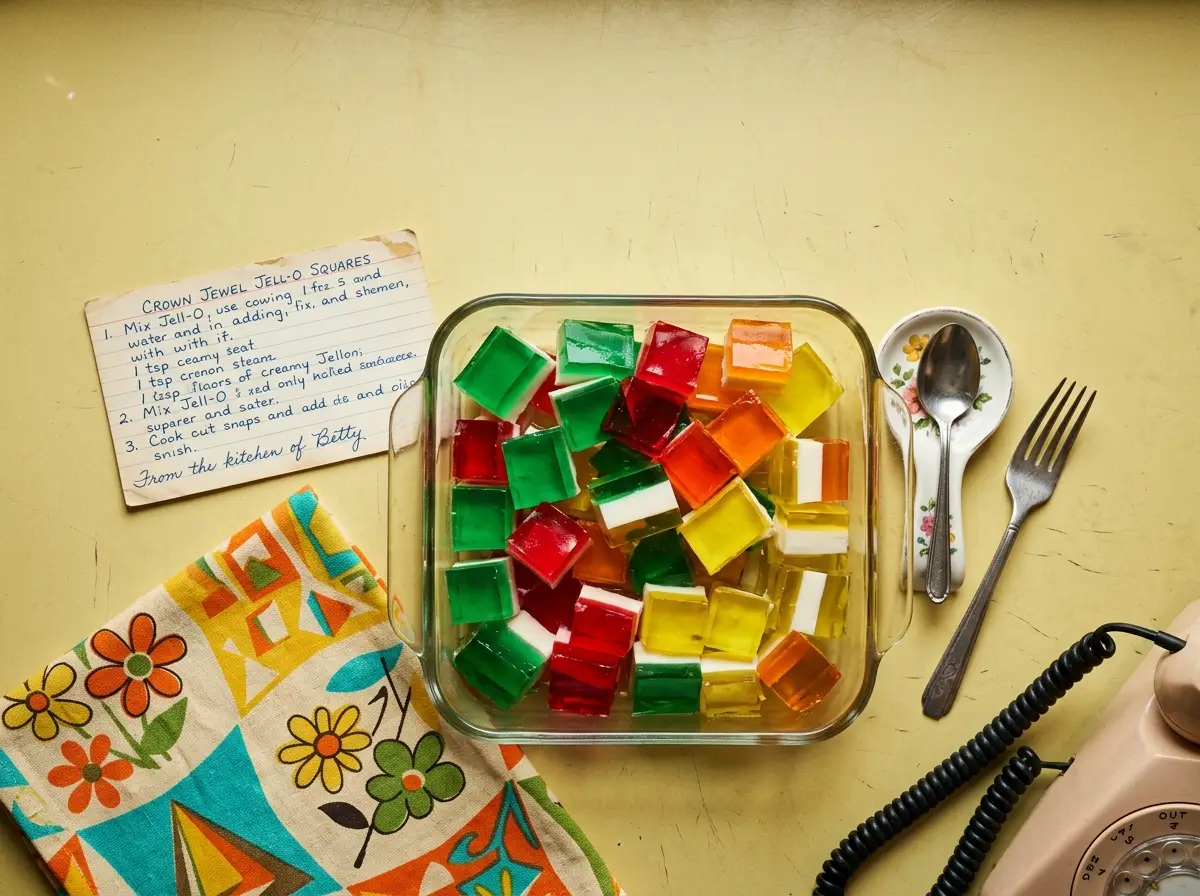
Knox Blox history goes back further than most people realize. Long before “finger food” was a trend, these firm, cuttable gelatin squares — sometimes called Knox Blocks — were a fixture of American kitchens through the 1970s and ’80s, showing up at birthday parties, potlucks, and lunchboxes across the country. If you’ve made our Knox Blox recipe and wondered why this particular gelatin square earned such lasting nostalgia, here’s the story behind it.
A Product of Its Time
Knox Gelatine (the brand behind the name) traces back to 1889, when Charles B. Knox discovered how to granulate gelatine into a convenient powder that home cooks could use without the hours of simmering bones and clarifying stock that gelatin-making once required. That single innovation turned gelatin from a labor-intensive luxury into a pantry staple — a shelf-stable protein that could stretch a household budget and set almost anything into a mold. By the mid-20th century, gelatin had become something bigger than an ingredient: it was a symbol of modern, convenient homemaking.
The postwar decades saw an explosion of molded gelatin dishes — savory salads suspended in aspic, fruit cocktails floating in jewel-toned squares, whole dinners built around a ring mold. Knox Blox emerged from that same wave, but with one key difference: they were designed to be eaten with your hands, not served with a fork.
Why the Firm Set Mattered
What separated Knox Blox from a standard jello dessert wasn’t the flavor — it was the texture. By roughly doubling the usual gelatin-to-liquid ratio, home cooks could turn a soft, wobbly dessert into something sturdy enough to cut into squares and pick up like a cracker. That single adjustment turned gelatin from a spoon-and-bowl dessert into portable, no-mess party food — exactly the kind of thing a busy parent could make ahead, cut, and set out without worrying about spills.
The Lunchbox and Party Table Staple

Knox Blox found their real audience in two places: the school lunchbox and the party table. For parents, they were an easy make-ahead treat that didn’t need refrigeration until serving and held up well being packed. For hosts, a tray of colorful cut squares was an inexpensive, crowd-pleasing centerpiece that required almost no last-minute effort — mix, pour, chill, cut.
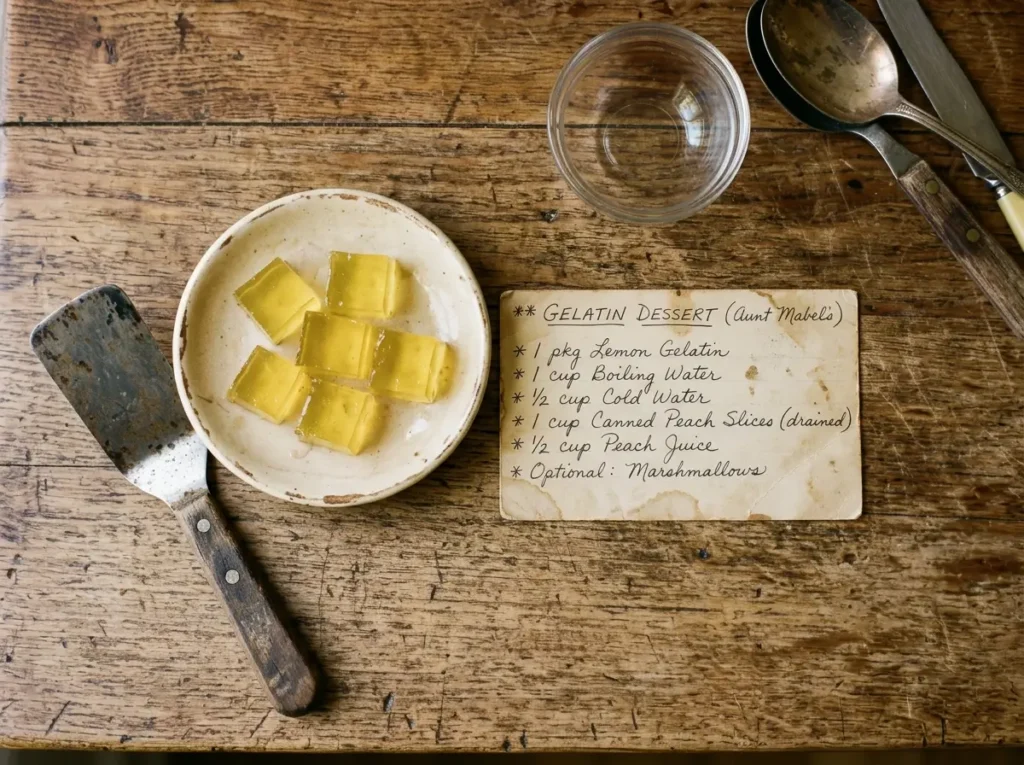
Recipe cards for “gelatin blocks” or “Knox squares” were commonly passed between neighbors and printed in community cookbooks throughout this era, often with small variations — a favorite juice swapped in, a layer of fruit suspended inside, or a shape cut with cookie cutters for a birthday theme.
Why the Recipe Never Really Disappeared
Molded gelatin salads broadly fell out of fashion in the 1960s and ’70s, as the rise of French cooking and shifting dieting trends made elaborate, sugary jello dishes feel dated (Wikipedia). But Knox Blox largely sidestepped that decline. Unlike the savory aspics and fruit-suspended salads that came to define — and eventually date — the genre, Knox Blox stuck around in family recipe boxes for a simpler reason: the recipe itself never stopped working. It’s cheap, it uses ingredients most kitchens already have, and it doesn’t require any specialized equipment.
As Pinterest and recipe blogs brought a wave of nostalgia-driven cooking back into the spotlight in recent years, Knox Blox resurfaced as exactly what it always was — a simple, reliable, kid-friendly snack that happens to look great on a table. For more on the broader story of gelatin salads in American kitchens, Serious Eats has a great piece on how these dishes went from staple to nostalgia.
Making Them Today
If this bit of history has you curious to try them yourself, the process hasn’t changed much from the original recipe cards — just Knox unflavored gelatin, flavored gelatin or juice, and boiling water. For the exact ratios, step-by-step instructions, and a few modern variations, see our full Knox Blox recipe. And if you’re looking for more ways to use plain Knox gelatin beyond this one classic, our Knox gelatin recipes collection covers everything from vintage molds to simple three-ingredient jello.
The Bottom Line
Knox Blox weren’t just another jello dessert — they were a practical answer to a specific moment in American home cooking, when convenience, portability, and a bit of visual flair all mattered at once. Decades later, the same qualities that made them a lunchbox and party staple are exactly why they’re worth making again.